
Taste of Varanasi Famous Foods Chaat Kachori and Lassi Through History

Varanasi does not serve food as a side attraction. It serves memory, faith, trade, family, and daily rhythm on a leaf plate, in a clay cup, or from a sizzling iron kadhai.
Walk through the old lanes near the ghats in the morning and food appears before you even look for it. A vendor presses hot kachoris into a bowl of spicy sabzi. Someone crushes tamarind chutney over chaat. A tall glass of lassi waits under a creamy layer of malai. The city’s food is quick enough for a packed day, yet deep enough to carry centuries of habit.
The famous food of Varanasi reflects the city itself: devotional, practical, intense, sweet, and unhurried when it wants to be. Chaat, kachori, and lassi are not just popular dishes here. They are part of how Banaras, as many still lovingly call it, eats, meets, celebrates, and remembers.
Varanasi food is shaped by pilgrimage, lanes, and the river
Varanasi is one of the world’s oldest living cities, and its food culture grew around movement. Pilgrims arrived for rituals on the ghats. Students came to study Sanskrit, music, philosophy, and literature. Traders moved through crowded lanes. Priests, boatmen, weavers, shopkeepers, travellers, and families all needed food that was filling, affordable, and easy to serve.
That is one reason street food became so central here. Many dishes can be prepared in batches, served fast, and eaten standing up. Yet fast does not mean careless. In Varanasi, a small plate of chaat may contain several textures and flavours: crisp, soft, sour, hot, sweet, salty, and cooling.
The city’s religious character also shaped its food. Much of the traditional street food is vegetarian. Onion and garlic may be avoided in some preparations, especially in areas close to temples or during certain observances. Milk, curd, ghee, grains, lentils, potatoes, peas, and seasonal produce appear often. The result is a cuisine that can feel rich without depending on meat.
Food here is also tied to time.
Morning often means kachori sabzi, jalebi, and tea.
Afternoon may call for lassi, thandai, or a simple snack.
Evening belongs to chaat, tamatar chaat, and sweets after a ghat walk.
Festive days bring richer preparations, more sweets, and longer queues.
Varanasi teaches one useful lesson: food is not only about recipe. It is about place, pace, and people.
Chaat in Varanasi is a lesson in balance
Chaat may be the most expressive street food category in North India, and Varanasi gives it a distinct local voice. The word “chaat” comes from the idea of licking or tasting with relish. That makes sense the moment tamarind chutney, green chutney, curd, spices, and crisp toppings meet on a plate.
Banarasi chaat often feels bold but balanced. It does not rely on one note. The best plates use contrast.
Crisp papdi gives structure. Soft potatoes or peas bring comfort. Tamarind adds sweetness and sourness. Green chutney brings heat and freshness. Curd cools the mouth. Roasted cumin, black salt, red chilli, and chaat masala add the unmistakable finish.
Tamatar chaat has a special place
Tamatar chaat is one of Varanasi’s best-known street snacks. It is not the same as the dahi-heavy chaat many people know from other cities. Here, tomatoes are cooked down with spices, potatoes, sometimes peas, and a tangy-sweet mix of flavours. It is served hot, often in a dona, a small leaf bowl.
The dish suits Varanasi perfectly. It is humble, intense, and warming. It also shows how the city adapts common ingredients into something memorable. Tomatoes, potatoes, and spices turn into a snack that feels both everyday and festive.
A quick reader survey for chaat lovers
If you were standing at a chaat stall in Varanasi right now, what would you choose?
[ ] Tamatar chaat, hot and spicy
[ ] Aloo tikki chaat with curd and chutneys
[ ] Papdi chaat with extra crunch
[ ] Dahi vada with sweet curd
[ ] Surprise me, whatever the vendor recommends
What makes your favourite chaat work? Is it the chutney, the spice level, the crunch, or the memory of where you first ate it?
Dishes in this image: Close-up of a leaf bowl filled with hot tamatar chaat from Varanasi
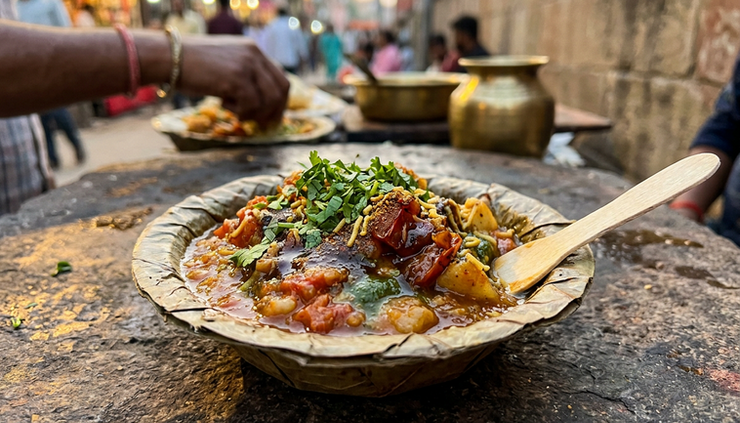
Image shows: Close-up of a leaf bowl filled with hot tamatar chaat from Varanasi.
Kachori is the morning heartbeat of Banaras
If chaat rules the evening, kachori owns the morning. In Varanasi, kachori is not merely a snack. It is breakfast, routine, and social habit.
The common Banarasi breakfast of kachori sabzi usually includes deep-fried kachoris served with a spicy potato curry. The kachori may be stuffed with spiced lentils or a mix of ground pulses and masala. The sabzi is often thin, hot, and fragrant, made to soak into the crisp bread.
A plate may look simple, but it carries the logic of old-city life. It is hot, filling, easy to serve, and affordable. It works for shopkeepers starting early, students heading to class, travellers leaving for temple visits, and families buying breakfast for everyone at home.
Why kachori became a local staple
Kachori has roots across North India, especially in regions where wheat, pulses, and frying traditions developed strong snack cultures. In Varanasi, it found the right conditions to become iconic.
The city’s old neighbourhoods are dense. Homes, temples, shops, and food stalls sit close to each other. Many people prefer buying fresh, hot breakfast rather than making elaborate food early in the morning. Kachori vendors fill that gap beautifully.
There is also a ritual quality to it. The oil crackles. The kachori puffs. The sabzi is ladled quickly. Customers eat from leaf bowls or metal plates. Regulars know which stall serves a sharper curry, which one has softer kachori, and which one finishes early.
The sweet companion is often jalebi
Kachori sabzi and jalebi together may sound heavy, but the pairing has a strong following. The spicy curry wakes the palate. Jalebi brings syrupy sweetness and crisp edges. Add a kulhad of tea and the meal feels complete.
This mix of spicy, sweet, fried, and hot says a lot about food in Varanasi. Meals are not always built around strict courses. They grow from appetite, weather, habit, and mood.
Dishes in this image: Eye-level view of fresh kachori sabzi and jalebi served at a Varanasi street stall

Image shows: Eye-level view of fresh kachori sabzi and jalebi served at a Varanasi street stall.
Lassi turns milk into a cultural experience
Varanasi takes dairy seriously. Milk, curd, rabri, malai, peda, and thandai all have a strong presence in the city’s food culture. Lassi sits proudly in that tradition.
A classic Banarasi lassi is thick, cooling, and often served in a kulhad. The clay cup matters. It gives a faint earthy aroma and keeps the experience rooted in place. A layer of malai on top makes it richer. Some versions include rabri, dry fruits, rose, saffron, or fruit, though many people still prefer the plain sweet version.
For travellers, lassi offers relief after walking through crowded lanes or standing in the sun near the ghats. For locals, it is a familiar pleasure, not a novelty.
The history behind the glass
Lassi belongs to the wider dairy traditions of North India. In Varanasi, its importance connects with both climate and culture. Summers can be intense, and curd-based drinks help cool the body. Religious and vegetarian food habits also make milk products central to daily eating.
The city’s association with devotion adds another layer. Milk and curd have long been used in ritual offerings in many Hindu traditions. That does not mean every glass of lassi is ritual food, but it does show why dairy holds such cultural value in Varanasi.
A good lassi slows you down. Unlike chaat, which is often lively and sharp, lassi is calm. It asks you to pause, sip, and scrape the malai from the side of the cup.
Tell us your lassi style
Which lassi would you order in Varanasi?
[ ] Plain sweet lassi with thick malai
[ ] Rabri lassi for a richer treat
[ ] Rose lassi with a floral note
[ ] Salted lassi for a lighter sip
[ ] Seasonal fruit lassi
Do you prefer lassi in a glass or a kulhad? Many people insist the clay cup changes everything. If you have tried both, which one stayed with you?
What these foods reveal about Varanasi culture
The food of Varanasi is not polished into one neat identity. That is its strength. It carries temple culture, student life, classical arts, trade, tourism, family rituals, and street-side friendships all at once.
Chaat shows the city’s love for conversation. It is rarely eaten in silence. People debate spice, compare stalls, and recommend favourites with confidence.
Kachori shows the city’s practical side. It feeds people early, quickly, and generously. It belongs to workdays as much as holidays.
Lassi shows the city’s slower mood. It gives the body rest and gives the mind a small pause. In a city where lanes twist and schedules bend around rituals, that pause matters.
Food also reflects Varanasi’s layered history. The city has seen kingdoms, saints, poets, merchants, musicians, and migrants. Each group added something to the way people eat. Spices travelled. Techniques settled. Local taste shaped everything. The result is not museum food. It is living food, still cooked, tweaked, argued over, and loved.
The real flavour of Varanasi is not only in the recipe. It is in the hand that serves it, the lane where it is eaten, and the story attached to the first bite.
For students, these foods offer a direct way to understand culture beyond textbooks. For busy professionals, they offer a reminder that even a short food walk can reveal history, economy, faith, and community in one evening.
Plan a thoughtful Varanasi food trail
If you want to experience the city through food, keep the plan simple. Varanasi rewards curiosity more than checklists.
Start early with kachori sabzi and jalebi. Choose a busy stall where food moves fast and is served hot. Later, try lassi when the day warms up. Save chaat for evening, when the lamps, crowds, and lanes give it the right setting.
A few practical tips help:
Carry cash in small denominations, as smaller vendors may prefer it.
Ask for spice levels if you are unsure.
Eat where turnover is high.
Use dustbins where available and avoid littering near ghats.
Try one dish at a time instead of rushing through too many stops.
Speak to vendors respectfully. Many have spent years perfecting one dish.
Food memories become stronger when you pay attention. Notice the sound of frying kachori. Watch how chutney is added to chaat. Smell the clay cup before drinking lassi. These details turn a snack into a story.
Dishes in this image: Top-down view of thick lassi in clay cups with malai at a Varanasi sweet shop

Image shows: Top-down view of thick lassi in clay cups with malai at a Varanasi sweet shop.
Share your Varanasi food memory
Every person who eats in Varanasi seems to leave with a favourite. For one person, it is the first bite of hot kachori after sunrise. For another, it is tamatar chaat eaten after a boat ride. Someone else remembers a kulhad of lassi so thick it needed a spoon.
Now it is your turn.
Which Varanasi food would you recommend first to a newcomer: chaat, kachori, lassi, or something else? Did you discover a small stall that deserved more attention? Did a family trip, college visit, work tour, or solo walk through the lanes introduce you to a taste you still remember?
Share your food stories, preferences, and friendly debates. Varanasi’s culinary heritage stays alive because people keep eating, talking, comparing, and returning. The next great plate is often recommended by someone who still remembers their first one.
Travel, landmark, location, and shop information is based on publicly available online data at the time of writing. Details such as names, addresses, opening hours, availability, prices, and operating status may change. Please verify current details directly with the venue or official source before visiting.
Landmarks and places to visit
• Kashi Vishwanath Temple — Vishwanath Gali, Old City
• Dashashwamedh Ghat — Ganges riverfront, near Godowlia
• Sarnath and Dhamek Stupa — Sarnath, approximately 10 km northeast of Varanasi
Authentic food shops and markets
• Ram Bhandar — Thatheri Bazaar; kachori-sabzi and jalebi
• Kashi Chat Bhandar — Godowlia area; tamatar chaat and palak-patta chaat
• Blue Lassi Shop — near Manikarnika Ghat; fruit and malai lassi. Recheck current operation and hours before visiting.
Sources checked: Varanasi district tourism, Shri Kashi Vishwanath Temple, and UNESCO Sarnath pages. Details are based on publicly available online data at the time of writing. Names, addresses, opening hours, menus, prices and operating status may change. Verify current details directly with the venue or official source before visiting.
Explore more city food guides
Continue exploring Indian food, landmarks and local markets: Pune · Surat · Srinagar · Leh · Port Blair


Comments