
Famous Foods of Rishikesh A Taste of Tradition History and Local Favorites

The food of Rishikesh is quieter than the city’s cliffs, temples, ashrams, and riverbanks, but it tells the same story. It is rooted in devotion, shaped by the Himalayas, and made memorable by small details: hot puris puffing in oil, a clay cup of chai near the Ganga, mandua rotis served with greens, and jalebis eaten while they are still crisp.
Rishikesh sits where the plains begin to rise into the Garhwal Himalayas. That location matters. Its food carries flavours from the hills, the pilgrim routes, the ashram kitchens, and the busy lanes around Ram Jhula and Triveni Ghat. The city is widely known for vegetarian eating, sattvic meals, yoga cafés, and simple North Indian favourites. Yet behind the familiar plates is a deeper food culture built around local grains, lentils, seasonal greens, and recipes designed for nourishment.
This guide explores the Famous food of Rishikesh through traditional dishes, local ingredients, cultural meaning, and reader polls that invite you to share your own favourites.
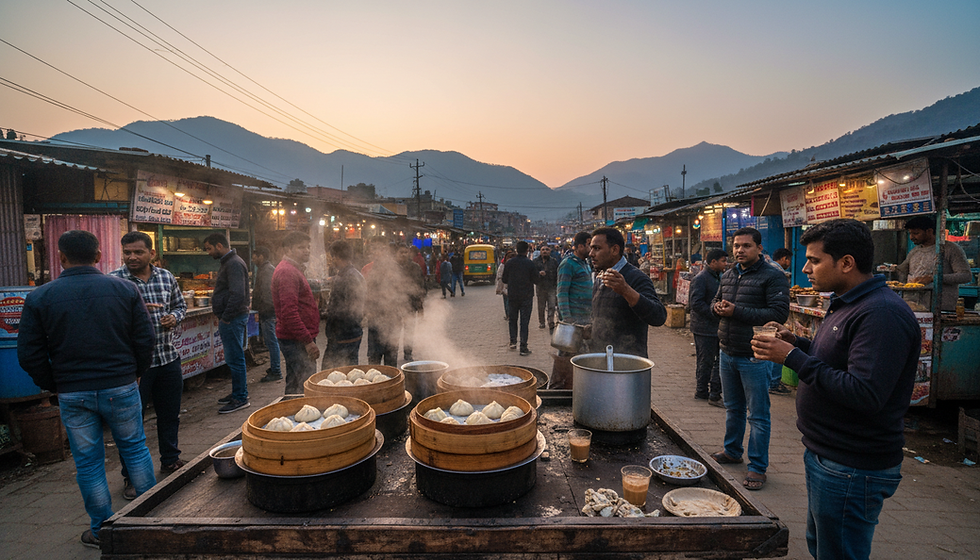
Dishes in this image: Wide-angle view of a vegetarian food stall near the Ganga in Rishikesh

Image shows: Wide-angle view of a vegetarian food stall near the Ganga in Rishikesh.
Rishikesh food is shaped by faith, travel, and the Garhwal hills
Rishikesh has long been a gateway to the Char Dham pilgrimage route and a centre for yoga and spiritual study. Food here developed around movement. Pilgrims needed filling meals that were affordable and easy to serve. Ashrams needed food that felt clean, light, and suitable for spiritual practice. Local families relied on hardy hill crops that grew well in mountain soil.
That mix created a food identity with three clear influences.
Pilgrim food brought simple plates like aloo puri, kachori, khichdi, kadhi rice, and halwa. These dishes are easy to cook in large quantities and suit travellers who want comfort more than complexity.
Sattvic food shaped the city’s ashram meals. Many kitchens avoid onion, garlic, meat, and alcohol. The aim is balance. Dal, rice, vegetables, curd, fruit, and mild spices form the centre of the meal.
Garhwali food gives Rishikesh its regional depth. Mandua, jhangora, gahat, bhatt, local greens, and simple spice tempering connect the city to the wider food culture of Uttarakhand.
Over time, yoga tourism added cafés, smoothie bowls, herbal teas, and international vegetarian menus. Still, the city’s heart remains local. The most satisfying meals often come from the oldest logic: seasonal food, modest spices, and recipes that suit the climate.
Traditional dishes that define the taste of Rishikesh
Rishikesh offers everything from quick street snacks to nourishing hill-style meals. Some dishes are everyday favourites, while others carry strong regional identity.
Aloo puri is the classic pilgrim breakfast
A plate of aloo puri feels almost inseparable from old North Indian pilgrimage towns. In Rishikesh, it is commonly eaten in the morning, especially around temple areas and local markets.
The puris arrive hot and puffed, paired with a mildly spiced potato curry. Some versions are thin and soupy, while others are thicker with tomato, cumin, coriander, and green chilli. The dish matters because it is practical. It fills the stomach, travels well in memory, and gives energy for walking along ghats, bridges, and hill paths.
It is not fancy food. That is part of its charm.
Kachori with sabzi brings crunch and spice
Kachori is another favourite in the lanes of Rishikesh. The crisp, flaky shell may be stuffed with spiced lentils or served plain with potato curry. It is richer than aloo puri and often eaten as a late breakfast or snack.
Its significance lies in the way it connects Rishikesh to the broader food culture of northern India. Pilgrim towns often excel at these fried morning foods because they are quick, affordable, and deeply satisfying.
Garhwali thali shows the region on one plate
A Garhwali meal gives a clearer view of Uttarakhand’s mountain cooking. A traditional-style thali may include mandua roti, dal, rice, leafy greens, curd, pickle, and local preparations made from pulses.
Mandua, also known as finger millet or ragi, has long been valued in hill regions because it grows well in tough terrain. It has an earthy flavour and pairs beautifully with ghee, leafy saag, or lentils.
A Garhwali thali is significant because it reflects food wisdom from the hills. It is not built around heavy sauces. It favours grains, pulses, greens, and warmth.
Dishes in this image: Close-up of a Garhwali thali with mandua roti and local dal

Image shows: Close-up of a Garhwali thali with mandua roti and local dal.
Kafuli celebrates mountain greens
Kafuli is a comforting dish made with leafy greens, often spinach or other local greens, cooked into a thick, smooth preparation. It is usually seasoned gently and may be thickened with rice paste or flour, depending on the household style.
This dish speaks to the seasonal rhythm of hill kitchens. Greens were not just side dishes. They were central to nutrition, especially in colder regions where meals needed warmth and substance.
In Rishikesh, kafuli may appear in restaurants serving Uttarakhand food, homestyle kitchens, and regional thalis.
Chainsoo and phaanu honour local pulses
Chainsoo is traditionally made from roasted black gram, ground and cooked into a rich dal-like preparation. Phaanu is also pulse-based, often made with soaked lentils cooked slowly for depth.
These dishes show how Uttarakhand cuisine treats lentils with care. Roasting, soaking, grinding, and slow cooking create flavour without needing too many ingredients. They are examples of food built from patience rather than excess.
Jhangora kheer turns a local grain into dessert
Jhangora, or barnyard millet, grows in Uttarakhand and appears in both savoury and sweet dishes. Jhangora kheer is one of the most loved sweet uses of this grain. It has a gentle, creamy texture and is often cooked with milk, sugar, and cardamom.
Its significance is simple but important. It shows how local grains were never limited to “basic” food. They carried celebration too.
Jalebi, rabri, and sweets add festival energy
Rishikesh has plenty of sweet shops selling jalebi, rabri, laddoo, peda, and other North Indian sweets. Jalebi is especially popular because it fits the city’s street-food mood. It is quick, festive, and best eaten fresh.
Some sweets associated with Uttarakhand, such as bal mithai and singori, are more strongly linked with other parts of the state, especially Kumaon. Still, travellers may find them in sweet shops because Rishikesh receives visitors from across Uttarakhand and beyond.
Chai and lassi are part of the city’s social rhythm
A cup of chai near the river can feel as memorable as a full meal. Tea stalls in Rishikesh serve students of yoga, pilgrims, trekkers, shopkeepers, and families. Ginger chai, masala chai, lemon tea, and herbal infusions are common.
Lassi offers the opposite mood: cool, thick, and filling. Sweet lassi, salted lassi, and fruit versions suit the warmer months, especially after a walk in the sun.
Tell us what you would eat first
Food memories are personal. One traveller remembers the first sip of chai near Lakshman Jhula. Another cannot stop thinking about a thali eaten after evening aarti. Someone else visits Rishikesh and falls for a plate of spicy kachori.
Use these quick reader polls as prompts. If this were an interactive page, each option would be a clickable vote. For now, treat them as a mini survey and share your picks in the comments or with friends.
Quick poll on the best first bite in Rishikesh
What would you choose as your first meal in Rishikesh?
Aloo puri with hot potato sabzi
Garhwali thali with mandua roti
Kachori with curry
Jhangora kheer
Chai and pakora by the river
Quick poll on your favourite food mood
Which Rishikesh food experience sounds most appealing?
Food mood | Best match |
Simple and spiritual | Ashram-style thali |
Crispy and indulgent | Kachori or pakora |
Regional and earthy | Garhwali meal |
Sweet and festive | Jalebi or kheer |
Calm and scenic | Chai near the Ganga |
Mini survey for readers
Answer these in one line each:
Which dish would you recommend to a first-time visitor?
Do you prefer street food, ashram food, or regional thalis?
Which local ingredient interests you most, mandua, jhangora, gahat, or bhatt?
Should traditional Garhwali dishes be easier to find in tourist areas?
The answers matter because they show how food culture changes. When travellers ask for regional dishes, more kitchens serve them. When people only order familiar café food, older recipes can become harder to spot.
Local ingredients show how recipes evolved over time
The older food of Rishikesh and the Garhwal region grew from what the land could support. Hill agriculture favoured grains and pulses that could survive uneven terrain, cooler weather, and limited irrigation.
Mandua became a dependable grain because it is hardy and nourishing. In modern kitchens, it now appears in rotis, dosas, biscuits, pancakes, and health-focused café dishes.
Jhangora was once a local staple and fasting-friendly grain. Today, it appears in kheer, pulao-style dishes, and lighter bowls for travellers looking beyond wheat and rice.
Gahat, also known as horse gram, has a strong place in Uttarakhand cooking. It is used in dal and other warming preparations. Many families value it especially in colder weather.
Bhatt, a local black soybean, is used in regional dishes such as bhatt ki churkani. It brings a nutty depth and shows how local pulses create flavour without heavy masalas.
This evolution is easy to see in Rishikesh. A traditional kitchen may serve mandua roti with ghee and dal. A café may turn mandua into a millet wrap. A sweet shop may sell classic jalebi, while a health café offers jaggery-based desserts.
The recipe changes, but the ingredient remains. That is how food cultures survive. They adapt without losing their roots.
There is another layer too. Many people come to Rishikesh for yoga, Ayurveda-inspired routines, meditation, or nature travel. This has increased interest in lighter meals, herbal drinks, millet-based foods, and fresh vegetarian cooking. The city’s food has responded, but the best versions still respect local taste.
How to enjoy Rishikesh food with more meaning
Eating in Rishikesh becomes richer when you look beyond a checklist of famous dishes. A little context helps.
Start with the time of day. Morning is best for aloo puri, kachori, chai, and fresh sweets. Lunch suits thalis, dal, rice, sabzi, and curd. Evening brings pakoras, tea, jalebi, and riverside snacks.
Look for regional words on menus. If you see mandua, jhangora, gahat, bhatt, kafuli, chainsoo, or phaanu, you are closer to the hill food story.
Ask simple questions. Many small eateries will explain what is fresh that day. In local thali places, the best dish may be the one cooked in small quantities, not the one printed most boldly on the menu.
Respect the city’s food culture. Rishikesh is strongly associated with vegetarian dining, especially around sacred areas. This is not just a rule for visitors. It reflects the city’s spiritual identity and its long relationship with pilgrims, saints, and ashram life.
Balance comfort with curiosity. Chole bhature, momos, parathas, pasta, pancakes, and smoothie bowls are easy to find in touristy areas. Enjoy them if you like, but save at least one meal for a regional plate. That is where the city speaks more clearly.
A simple Rishikesh food trail for one day
A good food day in Rishikesh does not need to be complicated.
Begin with chai and aloo puri near a local market or ghat. Walk slowly afterwards, because this is a filling start.
For lunch, choose a Garhwali-style thali if you can find one. Look for mandua roti, local dal, greens, rice, and curd. This meal gives the strongest sense of regional food.
In the late afternoon, stop for lemon tea, ginger chai, or lassi. Add pakoras if the weather is cool or rainy.
For dinner, keep it simple with dal, rice, sabzi, roti, and salad. If you spot kafuli, chainsoo, or phaanu, order one as a side or main dish.
End with a small sweet. Jalebi, rabri, or jhangora kheer all work, depending on what is fresh.
This kind of food trail covers the city’s core flavours: pilgrim comfort, hill ingredients, sattvic simplicity, and sweet-shop joy.
The Famous food of Rishikesh is not one single dish. It is a way of eating shaped by the Ganga, the hills, the pilgrim road, and generations of practical cooking. Aloo puri and kachori bring comfort. Garhwali thalis bring memory. Kafuli, chainsoo, and phaanu bring the hills to the plate. Jhangora kheer and jalebi add celebration.
The next time you think of Rishikesh, think beyond yoga mats and river views. Think of grains grown on slopes, lentils roasted for depth, chai shared by the river, and recipes that have travelled from village kitchens to city cafés. Then choose one dish, taste it slowly, and let the city explain itself through food.
Travel, landmark, location, and shop information is based on publicly available online data at the time of writing. Details such as names, addresses, opening hours, availability, prices, and operating status may change. Please verify current details directly with the venue or official source before visiting.
Explore more city food guides
Continue exploring Indian food, landmarks and local markets: Pune · Surat · Srinagar · Leh · Port Blair


Comments