
Exploring the famous foods of Dehradun A Taste of Local Specialties and Street Food

Dehradun has a way of making hunger feel sudden. One minute, the air smells of pine, rain, and hillside dust. The next, a plate of steaming momos or a paper-wrapped bun tikki appears from a roadside stall, and all travel plans pause for food.
The famous foods of Dehradun are shaped by the city’s geography and its history. This valley sits between the mountains and the plains, so its food carries many influences at once. You find Garhwali home-style meals, Tibetan snacks, North Indian street food, old-school bakery treats, and simple plates that taste best after a walk through Rajpur Road, Paltan Bazaar, or the lanes near colleges and bus stands.
My first proper food memory of Dehradun was not at a fancy restaurant. It was a chilly evening, my fingers wrapped around a paper cup of chai, while a vendor crushed a hot aloo tikki under chutneys, curd, and onions. That plate told me something useful: Dehradun is best understood slowly, one snack at a time.
Dishes in this image: Wide-angle view of a Dehradun street food lane with momo steamers and chai stalls

Image shows: Wide-angle view of a Dehradun street food lane with momo steamers and chai stalls.
What makes Dehradun’s food so memorable
Dehradun’s food culture feels relaxed but full of character. It does not try too hard. Many of the city’s best bites come from small shops, family-run bakeries, roadside carts, and local eateries where the menu is short but dependable.
The city’s location plays a big role. From Uttarakhand’s hills come dishes made with mandua, gahat, bhatt, jhangora, leafy greens, and simple spice mixes. From the plains of North India come chaat, tikki, parathas, jalebi, and chole. The Tibetan community has added momos, thukpa, and noodles to the everyday food map. Long-time bakeries have made rusks, cream rolls, plum cakes, and biscuits part of Dehradun’s identity.
That mix is what makes eating here so enjoyable. Breakfast can be bun tikki and chai. Lunch can be a Garhwali thali. Evening can bring momos near a busy market. Dinner can end with something sweet from a bakery counter.
Dehradun is also a city of students, walkers, families, and weekend travellers. Food here needs to be affordable, filling, and familiar. The best vendors understand that. They serve plates that comfort more than impress, which is exactly why people come back.
Breakfast, bakery treats, and old-school snacks
A good Dehradun food trail should begin early. Mornings in the city have a gentle rhythm. Shops open, tea boils, and breakfast counters start sending out the smell of frying batter, toasted bread, and fresh butter.
One of the most loved morning snacks is bun tikki. Think of a soft bun filled with a crisp potato tikki, chutney, onions, and sometimes a little butter or masala. It is simple, but when the tikki is hot and the bun is lightly toasted, it becomes the kind of snack you remember long after the trip.
Then comes bread pakora, a classic North Indian comfort food that Dehradun does very well. Slices of bread are stuffed with spiced potato, dipped in gram flour batter, and fried until golden. It is best with green chutney and a strong cup of chai. I once ate one on a rainy morning near a market lane, standing under a narrow shop awning with three other strangers. Nobody spoke much. Everyone was too busy trying not to burn their tongue.
Dehradun is also famous for its bakery culture. Old bakeries are part of the city’s food memory, especially around central areas and older shopping streets. Their display counters often carry:
Cream rolls with flaky pastry and sweet filling
Rusks that are made for dunking in chai
Butter biscuits with a crumbly texture
Plum cakes and tea cakes sold through the year
Fresh breads and buns used by homes, hostels, and snack shops
The appeal lies in the old-fashioned style. These are not overly decorated bakery items. They feel practical, nostalgic, and deeply satisfying. A packet of rusks from Dehradun has saved many long bus rides and early train mornings.
Dishes in this image: Close-up of cream rolls, rusks, and butter biscuits in a Dehradun bakery display

Image shows: Close-up of cream rolls, rusks, and butter biscuits in a Dehradun bakery display.
Street food that defines the city
Street food is where Dehradun feels most alive. The famous foods of Dehradun include plenty of dishes that are not exclusive to the city, but here they take on a local mood. They are eaten after coaching classes, during shopping breaks, on winter evenings, and after long drives from nearby hill roads.
Momos are a clear favourite. Steamed momos filled with vegetables or chicken are served with fiery red chutney and sometimes mayonnaise. The best ones have thin wrappers, juicy filling, and chutney that wakes you up in one spoon. Fried momos and tandoori momos are also easy to find, especially in areas popular with students.
A bowl of thukpa is perfect when the weather turns cool. This Tibetan noodle soup usually comes with vegetables, noodles, broth, and a warming spice profile. It is not flashy, but it fills you up and feels right in a valley city where winter evenings can be sharp.
Then there is chaat, a broad category that deserves its own hungry walk. Aloo tikki, papdi chaat, dahi bhalla, golgappa, and sev-topped plates appear across markets. Good chaat depends on balance. It must be tangy, spicy, sweet, crunchy, and soft all at once. When a vendor gets that balance right, one plate becomes two.
My favourite Dehradun chaat memory comes from an evening near a crowded shopping stretch. The vendor moved quickly, almost without looking, adding curd, tamarind chutney, coriander chutney, masala, and pomegranate seeds to a plate of tikki. The first bite had everything: hot potato, cold curd, sharp chutney, and that little crunch of sev. It tasted like the city at rush hour: fast, bright, and generous.
Other street foods worth trying include:
Chowmein
A student favourite, usually tossed on a hot tawa with cabbage, capsicum, onions, and sauces.
Chole kulche
Soft kulchas paired with spiced chickpeas, onions, and pickle. It is filling enough to count as a meal.
Pakoras
Onion, potato, paneer, and mixed vegetable pakoras taste especially good during rain.
Maggi
Common near viewpoints, cafés, and small stalls on the way towards Mussoorie. It is simple, but the mountain-road setting makes it special.
Golgappa
Crisp shells filled with spicy, tangy water. Ask for the flavour level that suits you, because some vendors do not hold back.
Street food in Dehradun is not only about taste. It is about timing. Momos taste better when steam fogs the steel pot. Pakoras taste better when rain darkens the road. Chai tastes better when the air begins to cool after sunset.
Local specialties that bring the hills to the plate
To understand Dehradun beyond snacks, look for Uttarakhand-style meals. These dishes may appear in local homes, regional restaurants, or thali places that serve Garhwali and Kumaoni food. They are usually humble, nourishing, and based on grains, lentils, greens, and spices suited to the hills.
Gahat ki dal is made with horse gram, a lentil common in the region. It has an earthy flavour and a hearty texture. It pairs well with rice, ghee, and simple vegetables.
Chainsoo is often made with roasted black gram dal, ground and cooked into a thick, rich preparation. Roasting gives it a deep flavour. It is the kind of dish that asks for plain rice instead of anything fancy.
Kafuli is a green curry made with leafy vegetables such as spinach and fenugreek leaves. It is lightly spiced and comforting. If you prefer food that tastes fresh rather than heavy, kafuli is a good pick.
Mandua roti is made with finger millet flour. It has a rustic taste and is often eaten with ghee, dal, or leafy greens. The texture is different from wheat roti, and that difference is part of its charm.
Jhangora kheer is a gentle dessert made with barnyard millet, milk, and sugar. It is creamy without feeling too rich. After a spicy meal, it works beautifully.
You may also find dishes like aloo ke gutke, bhatt ki churkani, and kandalee ka saag in regional food spots. Availability can vary, so it helps to ask what is freshly prepared that day.
I once ordered a Garhwali thali after days of snacking my way through the city. The plate arrived with dal, rice, greens, roti, chutney, and a small sweet portion. It was quieter than street food, but just as memorable. That meal reminded me that the famous foods of Dehradun are not only found on carts and counters. Some of the best flavours sit in simple thalis that taste close to home.
Dishes in this image: Eye-level view of a Garhwali thali with dal, rice, mandua roti, greens, and chutney
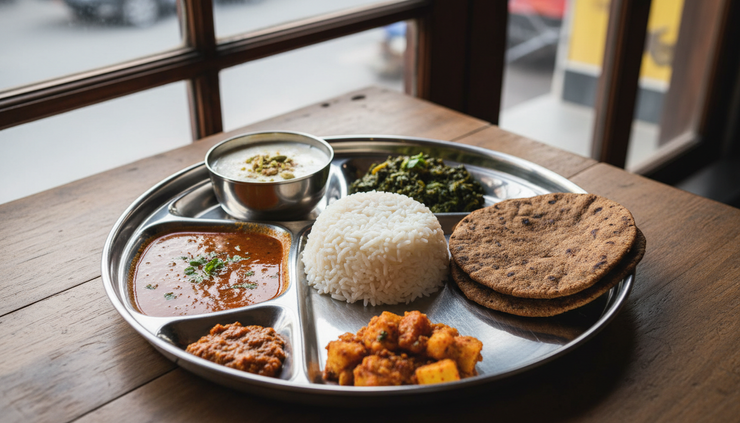
Image shows: Eye-level view of a Garhwali thali with dal, rice, mandua roti, greens, and chutney.
Sweet bites, chai stops, and what to bring home
No food trip through Dehradun feels complete without sweets and tea-time snacks. The city’s sweet options range from jalebi at local stalls to regional treats that arrive from nearby hill towns and become part of the city’s markets.
Jalebi with curd is a popular morning or evening indulgence. Hot jalebis taste best when they are still crisp at the edges and syrupy inside. Some people prefer them with rabri, while others like the sharper contrast of curd.
Bal mithai and singori are better known as Kumaoni sweets, but they are widely found in Uttarakhand’s food shops and make good edible souvenirs. Bal mithai is dense, chocolate-brown, and coated with tiny sugar balls. Singori is usually wrapped in a leaf and has a soft, milky sweetness.
For something lighter, bakery biscuits and rusks are easy to pack. They travel well and pair with tea at home. If you are carrying food on a long journey, choose dry items over cream-filled pastries.
A few good take-home ideas include:
Bakery rusks and butter biscuits
Local-style namkeen
Bal mithai or singori from a trusted sweet shop
Tea-time cakes if you can carry them safely
Handmade pickles, when available from reliable stores
Chai deserves its own mention. Dehradun chai is not one single recipe, but the city is full of small tea stalls where the tea is strong, milky, and sweet. It pairs with almost everything: bun tikki, pakora, rusks, biscuits, or a long conversation.
How to plan a Dehradun food trail
The best way to explore Dehradun’s culinary scene is to divide the day by appetite. Do not try to eat everything at once. The city rewards slow grazing.
Start the morning with chai, bun tikki, bread pakora, or a bakery stop. Around lunch, choose a Garhwali thali or a simple North Indian meal if you want something filling. Save late afternoon for chaat, golgappa, or momos. End the day with thukpa, noodles, or another round of tea and bakery sweets.
Markets and older food streets are usually better for snacks. Cafés and regional restaurants are better for sit-down meals. If a stall is crowded with locals and the food is moving quickly, that is often a good sign. For street food, choose places where ingredients look fresh and hot items are cooked in front of you.
Also keep the weather in mind. Winter calls for thukpa, chai, pakoras, and rich dal. Monsoon makes fried snacks hard to resist. Summer is better for lighter meals, curd-based chaat, fresh lime soda, and early evening walks.
Dishes in this image: Overhead view of a paper plate of aloo tikki chaat with chutneys and curd

Image shows: Overhead view of a paper plate of aloo tikki chaat with chutneys and curd.
Dehradun’s food is inviting because it feels familiar even when you are tasting something new. A momo stall, a thali kitchen, a bakery counter, and a chaat cart can all belong to the same food trail. Together, they show a city shaped by hills, students, travellers, families, and old neighbourhood routines.
If you visit, go beyond one famous dish. Eat breakfast from a small counter. Buy rusks from an old bakery. Try a regional thali. Stand at a street stall and let the vendor decide the chutney balance. The famous foods of Dehradun are not hidden. They are warm, affordable, and waiting in plain sight.
Travel, landmark, location, and shop information is based on publicly available online data at the time of writing. Details such as names, addresses, opening hours, availability, prices, and operating status may change. Please verify current details directly with the venue or official source before visiting.
Explore more city food guides
Continue exploring Indian food, landmarks and local markets: Pune · Surat · Srinagar · Leh · Port Blair


Comments