
Savor Ujjains Famous Foods A Flavorful Journey Through Local Delights and Traditions

Ujjain is known as a city of temples, ghats, aarti bells and ancient stories, but its food leaves an equally strong memory. A plate of hot poha at sunrise, a crisp kachori near a shrine, or a slow-cooked dal bafla meal after a long walk through the old lanes can tell you as much about the city as a guidebook.
Food in Ujjain is shaped by Malwa’s love for grain, spice, ghee and snacks, and by the city’s deep religious life. Many travellers arrive for Mahakaleshwar Jyotirlinga, but they soon learn that the darshan continues at the food stalls, sweet shops and family-run eateries around town.
The Famous Foods of Ujjain are not only about taste. They are about timing, place and habit. Poha belongs to the morning. Chaat feels right in the evening. Dal bafla asks you to sit down and eat slowly. Sweets often travel home in boxes, carrying the flavour of the city long after the trip ends.
Dishes in this image: Wide-angle view of a Ujjain street food lane with poha, jalebi and tea stalls at sunrise

Image shows: Wide-angle view of a Ujjain street food lane with poha, jalebi and tea stalls at sunrise.
Ujjain’s breakfast plates start the day with spice and sweetness
Breakfast in Ujjain is light enough for a pilgrim’s early start, but lively enough to wake up every sense. The most loved combination is poha with jalebi, served with sev, chopped onion, coriander, lemon and sometimes pomegranate seeds.
Poha with sev is the city’s morning comfort
Ujjain’s poha is soft, yellow and gently spiced. Flattened rice is washed and steamed with turmeric, mustard seeds, green chillies and curry leaves. A squeeze of lemon lifts the dish, while sev adds crunch. Some stalls garnish it with fresh coriander and a pinch of jeeravan masala, a spice blend common across Malwa.
The beauty of poha lies in its balance. It is warm but not heavy. It has spice but does not overpower. It tastes homemade, even when eaten from a paper plate near a crowded crossing.
There is a familiar morning scene across the city. People returning from temple stops stand beside students on their way to class. Someone asks for extra sev. Someone else tears a jalebi in half and places it over the poha, letting syrup meet lemon and chilli. It sounds unusual until the first bite explains it.
The cooking method is simple, but timing matters. Good poha should not be dry or sticky. The grains must remain separate, soft and warm. Stalls that get this right often develop loyal regulars who come back at the same hour every day.
Jalebi adds the crunch of celebration
Jalebi is made by piping fermented batter into hot oil in tight spirals, then dipping the fried coils into sugar syrup. In Ujjain, it is often eaten with poha, but it also stands proudly on its own.
Its flavour is direct and joyful. Crisp outside, syrupy inside, warm in the hand. During festivals and temple visits, jalebi feels less like a sweet and more like a small offering of happiness. Many families buy it fresh rather than reheating it at home, because jalebi loses its charm once the crunch fades.
In the old parts of the city, sweet shops often fry jalebi in wide kadhais near the front counter. The sight of orange coils rising and darkening in hot oil has a way of slowing down even the most hurried traveller.
Street snacks carry the real pulse of the city
Ujjain has a strong snack culture. Between temple visits, market walks and train journeys, people rarely wait for a formal meal. The city answers with kachori, samosa, chaat, sev and spiced tea.
Dishes in this image: Close-up of a plate of crispy kachori with chutneys and sev at a Ujjain food stall
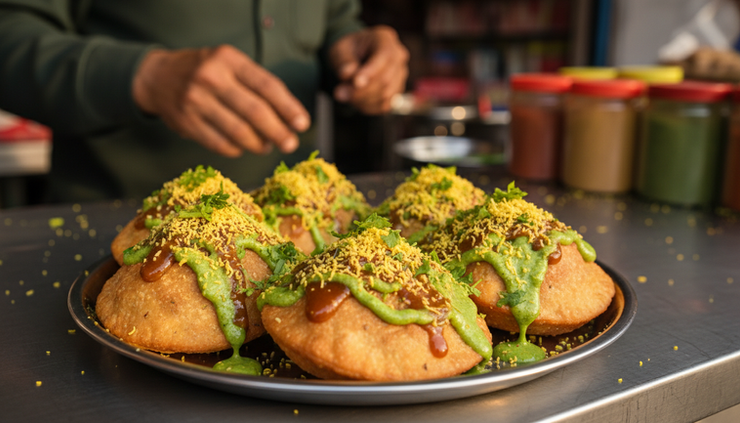
Image shows: Close-up of a plate of crispy kachori with chutneys and sev at a Ujjain food stall.
Kachori is the snack with a loyal following
A good Ujjain kachori has a flaky crust and a spicy filling. The filling may include ground lentils, fennel, coriander seeds, chilli and other warming spices. It is deep-fried until golden, then served with green chutney, sweet tamarind chutney, or sometimes a spoonful of curd.
The first bite breaks the crust. The filling follows with heat, earthiness and a little sweetness from the chutney. It is no surprise that kachori shops in Ujjain often have a crowd from morning till evening.
Ask a local about their favourite kachori place, and the answer may come with a story. Someone will remember eating it after school. Someone else will insist that the stall near a certain temple makes the flakiest version. Food loyalties in Ujjain can be deeply personal.
Kachori works so well here because of Malwa’s instinct for texture. The region enjoys contrast: crisp with soft, spicy with sweet, hot food with cooling curd.
Samosa and chutney make a dependable travel bite
The samosa in Ujjain is familiar, but that does not make it ordinary. Potatoes are mashed with peas, chillies and spices, wrapped in a flour shell and fried till crisp. The chutneys bring the snack alive.
For travellers, samosa is practical. It is easy to carry, easy to share and filling enough to delay lunch. At railway stations, bus stands and market corners, it becomes the food of waiting, meeting and moving on.
Chaat turns evening into a ritual
As the day cools, chaat stalls gain energy. You may find aloo tikki, dahi puri, sev puri, papdi chaat and variations shaped by local taste. Ujjain’s chaat often uses plenty of sev, curd, chutneys and masala, giving each plate layers of crunch, creaminess, tang and heat.
The method is quick, but the stall owner’s hand decides everything. Too much chutney makes it soggy. Too little curd makes it sharp. The best chaat feels balanced, even when it looks beautifully chaotic.
Chaat also suits Ujjain’s social rhythm. It is rarely eaten in silence. People stand close, compare plates, ask for extra spice, pass opinions and keep ordering “one more”.
Malwa’s hearty meals show Ujjain’s rustic side
Street snacks may get the first attention, but Ujjain’s sit-down meals reveal the strength of local cooking. The food of Malwa values wheat, lentils, gram flour, corn, garlic, ghee and seasonal produce. It is practical food, built for flavour and satisfaction.
Dal bafla is the meal to remember
Among the Famous Foods of Ujjain, dal bafla deserves a special place. It is often compared to Rajasthan’s dal baati, but it has its own Malwa character.
Bafla is made from wheat dough shaped into round dumplings. The dumplings are boiled first, then baked or roasted until firm and lightly crisp outside. Before serving, they are usually dipped in ghee. The dal is made with lentils and spices, often rich with garlic, cumin and tempering.
This meal asks you to slow down. You break the bafla by hand, pour dal over it, add more ghee if you wish, and eat it warm. It is filling, earthy and deeply comforting.
Dal bafla also carries the feeling of family gatherings. In many homes, it is a weekend or festive meal. Making it takes time, so the meal often becomes an event. Someone kneads the dough. Someone watches the dal. Someone insists the bafla needs more ghee. By the time it reaches the plate, the food already has a story.
Bhutte ka kees celebrates corn in a clever way
Bhutte ka kees is one of Malwa’s most distinctive dishes. Fresh corn is grated and cooked with milk, spices, green chillies, mustard seeds and sometimes a touch of sugar. The result is soft, mildly sweet, creamy and gently spicy.
It is a dish that shows how local cooks work with seasonal ingredients. Corn is common in the region, but bhutte ka kees turns it into something delicate. The grated texture matters. Whole kernels would not give the same creamy body.
In Ujjain, it often appears as a snack or light meal. It feels especially pleasant during the monsoon, when corn is at its best and hot food has extra appeal. A bowl of bhutte ka kees can feel like a pause in the middle of a busy travel day.
Dishes in this image: Eye-level view of dal bafla served with lentil dal, ghee and chutney on a traditional thali

Image shows: Eye-level view of dal bafla served with lentil dal, ghee and chutney on a traditional thali.
Sabudana khichdi fits fasting days and busy mornings
Ujjain’s religious calendar affects its food habits. Many people observe fasts on certain days, and sabudana khichdi is a common fasting-friendly dish. It is made with soaked tapioca pearls, peanuts, potatoes, green chillies, cumin and lemon.
When cooked well, sabudana stays separate and soft, not sticky. Roasted peanuts add crunch and protein, while lemon keeps the dish fresh. It is simple, but many cooks know it can be tricky. Too much water can spoil the texture.
For pilgrims, sabudana khichdi is useful because it is light yet filling. It appears outside temples, at small eateries and in homes, especially during fasting periods. Its cultural role makes it more than a snack. It is part of how the city balances devotion and daily appetite.
Sweets and drinks turn every walk into a food trail
No food journey in Ujjain feels complete without sweets. The city has a strong mithai culture, shaped by temple offerings, festivals and the Indian habit of marking every happy moment with sugar.
Malpua and rabdi bring richness to the plate
Malpua is a fried sweet pancake, often made with flour, milk and fennel, then soaked in sugar syrup. When served with rabdi, thickened sweet milk, it becomes rich and festive.
The flavour is warm, milky and aromatic. Fennel adds a gentle perfume. Rabdi adds depth. A plate of malpua rabdi is not an everyday light bite. It is the kind of sweet that invites sharing, especially after a meal.
During festive periods, sweets like malpua carry cultural weight. They appear at family tables, temple-linked food traditions and celebrations. In a city like Ujjain, where ritual and routine often meet, such sweets feel right at home.
Mawa bati and gulab jamun satisfy the love for milk sweets
Mawa bati is a rich sweet associated with Madhya Pradesh. It is made with mawa, or reduced milk solids, shaped into balls, fried and soaked in syrup. It resembles gulab jamun in spirit, but often feels denser and richer.
Milk-based sweets matter across this region because dairy is central to many traditional kitchens. Slow reduction of milk is a patient method. It turns a daily ingredient into something festive.
Visitors often carry sweets home from Ujjain. Boxes of mawa bati, namkeen and sev become edible souvenirs. They survive the train ride better than hot snacks and keep the trip alive for family waiting at home.
Lassi and thandai cool the spice
After fried snacks and spicy chaat, a cooling drink helps. Lassi, made with curd, sugar and sometimes cardamom, is thick and soothing. Thandai, often linked with shrine towns and festive occasions, may include milk, nuts, spices and fragrant seeds.
These drinks match Ujjain’s climate and food style. They cool the body, soften spice and add a sense of indulgence without needing a full dessert. Near temple areas and markets, a tall glass can feel like a reward after hours of walking.
Dishes in this image: Top-down view of malpua with rabdi and saffron served beside a glass of lassi

Image shows: Top-down view of malpua with rabdi and saffron served beside a glass of lassi.
How to taste Ujjain like a local
The best way to eat in Ujjain is to follow the city’s clock. Start early, snack often, sit down when the meal deserves respect, and leave space for sweets.
A simple food day could look like this:
Time of day | What to try | Why it works |
Early morning | Poha, jalebi and chai | Light, warm and deeply local |
Late morning | Kachori or samosa | Perfect between temple visits |
Lunch | Dal bafla or a thali | Filling and rooted in Malwa cooking |
Evening | Chaat and bhutte ka kees | Fresh, lively and easy to share |
Night | Malpua, rabdi or lassi | A sweet close to the day |
A few practical tips help:
Choose stalls where food moves quickly, as high turnover usually means fresher snacks.
Eat poha and jalebi early, when both taste best.
Ask for spice levels if you prefer mild food.
Keep cash handy for smaller stalls.
Try local namkeen and sev as take-home snacks.
The charm of Ujjain’s food is that it does not ask for formality. Some of the best bites come on steel plates, leaf bowls or paper sheets. What matters is freshness, balance and the joy of eating something rooted in place.
Ujjain feeds pilgrims, students, families, shopkeepers and travellers with the same generous spirit. Its dishes are simple at first glance, but each one carries memory, method and meaning. Come for the temples if you like, but let the food guide your walks. A city often reveals itself most honestly through what it serves hot, early and with pride.
Travel, landmark, location, and shop information is based on publicly available online data at the time of writing. Details such as names, addresses, opening hours, availability, prices, and operating status may change. Please verify current details directly with the venue or official source before visiting.
Explore more city food guides
Continue exploring Indian food, landmarks and local markets: Pune · Surat · Srinagar · Leh · Port Blair


Comments