
Famous Foods of Raipur Must Try Local Dishes Street Food and Cultural Flavors

Raipur eats with the comfort of a rice bowl and the excitement of a street corner. A plate here can move from steamed rice dumplings and tangy kadhi to crisp chila, hot poha, spicy chaat, and syrup-soaked sweets, all in one food walk.
The city is the capital of Chhattisgarh, a state often linked with rice, forest produce, simple home cooking, and hearty snacks. That shows clearly in its food. Many local dishes use rice flour, curd, gram flour, leafy greens, lentils, sesame, jaggery, and seasonal vegetables. The seasoning is usually direct and earthy, with mustard seeds, cumin, garlic, green chillies, coriander, and sometimes a bright touch of tamarind.
This guide to the Famous foods of Raipur covers the local specialities, street snacks, sweets, and cultural flavours that make the city worth exploring plate by plate.
Dishes in this image: Eye-level view of a Chhattisgarhi meal served on a steel thali in Raipur.

Image shows: Eye-level view of a Chhattisgarhi meal served on a steel thali in Raipur..
Raipur’s food identity begins with rice, spice, and simplicity
Raipur’s cuisine grows from Chhattisgarh’s farm culture. Rice is central, not just as steamed rice but as flour, batter, dumplings, rotis, and fermented preparations. Many homes use rice in clever ways because it is filling, affordable, and adaptable.
This rice-first food culture also connects to the rhythms of rural life. Dishes such as chila, fara, and bore baasi are practical. They use everyday ingredients, do not demand elaborate cooking, and suit the hot climate of central India.
The city also sits at a cultural meeting point. Food influences from nearby regions, including Odisha, Madhya Pradesh, Maharashtra, and tribal belts of Chhattisgarh, appear in its snacks and sweets. That is why Raipur’s plates often feel familiar yet distinct. A poha stall may remind you of central India, while a rice dumpling with chutney feels deeply Chhattisgarhi.
Some flavours define the Famous foods of Raipur:
Rice flour and fermented batter
Used in chila, roti-style dishes, and steamed snacks.
Gram flour
Essential for bafauri, kadhi, pakoras, and savoury street bites.
Curd and buttermilk
Often used for cooling dishes, kadhi, and summer meals.
Garlic, green chilli, and coriander
These give chutneys their sharp, fresh kick.
Jaggery and ghee
Common in sweets that feel festive but homely.
Leafy greens and seasonal vegetables
Local cooking respects the season, especially in rural and home-style dishes.
The result is food that does not rely on heavy gravies or rich restaurant sauces. The pleasure lies in texture, freshness, and balance.
Must-try local dishes that define Raipur
The best way to understand Raipur is to start with its local dishes. Many of these began as home food but are now found in eateries, breakfast shops, local markets, and cultural food festivals.
Dish | What it is | Why it stands out |
Chila | A savoury rice flour or gram flour pancake | Light, crisp-edged, and perfect with chutney |
Fara | Steamed rice flour dumplings | Soft, simple, and deeply local |
Bafauri | Steamed gram flour dumplings | A lighter alternative to fried snacks |
Bore baasi | Cooked rice soaked in water overnight | A cooling traditional meal linked to rural life |
Muthiya | Steamed or pan-finished dumplings | Comforting, spiced, and filling |
Dubki kadhi | Gram flour dumplings in curd-based kadhi | Tangy, soft, and warming |
Angakar roti | Thick rice flour roti | Rustic, smoky, and satisfying |
Dehrori | Rice and curd-based sweet fried and soaked in syrup | Festive, rich, and uniquely Chhattisgarhi |
Chila
Chila is one of Raipur’s most loved breakfast foods. It is usually made from rice flour batter, though gram flour versions are also common. The batter is spread thin on a hot tawa and cooked until the edges turn slightly crisp.
It tastes best with green chutney, tomato chutney, or a garlic-heavy chilli chutney. Some places serve it plain, while others add coriander, chopped onions, or green chillies.
Chila’s appeal is its balance. It feels light, but it still fills you up. It is also a strong example of how Raipur turns rice into something quick, tasty, and street-friendly.
Dishes in this image: Close-up of rice chila cooking on a hot iron tawa in Raipur.
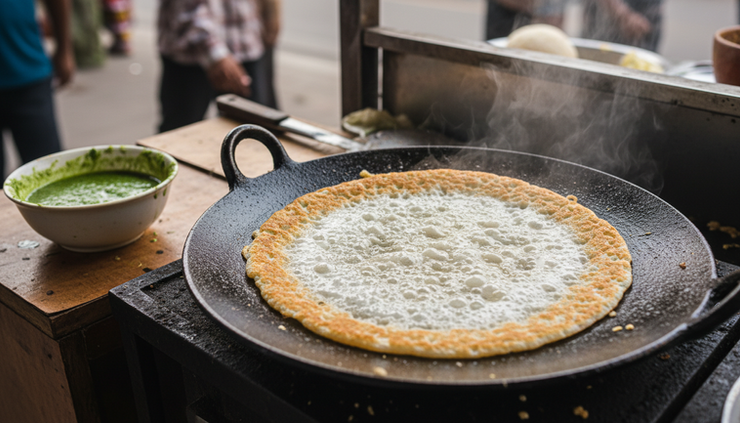
Image shows: Close-up of rice chila cooking on a hot iron tawa in Raipur..
Fara
Fara is a quiet star of Chhattisgarhi cooking. These steamed rice flour dumplings are shaped by hand and cooked until soft. They may be eaten plain with chutney or lightly tossed with spices.
The flavour is mild, which lets the chutney shine. A good fara has a soft bite and a clean rice taste. It is the kind of dish that shows the region’s love for simple food made with care.
Bafauri
Bafauri is made with gram flour and spices, then steamed instead of fried. That gives it a soft, dense texture while keeping the flavour savoury and satisfying.
It often includes onions, green chillies, coriander, and ajwain or cumin. Since it is steamed, bafauri feels lighter than pakoras but still has the comfort of a snack. It is popular at home and appears in local food conversations as a healthier traditional bite.
Bore baasi
Bore baasi is one of the most culturally significant foods of Chhattisgarh. It is made by soaking cooked rice in water overnight and eating it the next day, often with onion, green chilli, pickle, curd, buttermilk, or leafy vegetables.
This dish comes from agricultural life. Farmers and workers valued it because it was cooling, filling, and easy to prepare. In summer, its simplicity makes sense. It uses leftover rice and turns it into a refreshing meal.
Bore baasi has also become a symbol of Chhattisgarhi identity. It reminds people that food does not need to be elaborate to carry pride and memory.
Dubki kadhi
Dubki kadhi is comfort in a bowl. It includes small gram flour dumplings cooked in a curd-based gravy. The kadhi is tangy, lightly spiced, and often tempered with mustard seeds, curry leaves, cumin, or dried red chillies.
It pairs well with rice, which makes it a natural fit for Raipur’s food habits. The dish carries the warmth of home cooking and is often enjoyed during calm family meals rather than rushed street snacking.
Angakar roti
Angakar roti is a thick rice flour roti, usually cooked on a tawa or open heat. It has a rustic texture and a mild smoky note when prepared traditionally.
It pairs beautifully with chutney, dal, greens, or vegetable curries. In many ways, it reflects the older style of local eating, where grains, fire, and fresh accompaniments shaped the meal.
Street food in Raipur brings the city to life
Raipur’s street food is lively without losing its local character. Evening stalls, market lanes, and small breakfast shops serve food that is quick, hot, and full of flavour.
A street food walk in the city can include Chhattisgarhi snacks, central Indian favourites, and north Indian chaat. The mix reflects migration, trade, student life, and the everyday hunger of a growing capital city.
Poha and jalebi
Poha with jalebi is a classic morning combination across parts of central India, and Raipur enjoys it with the same enthusiasm. Poha is flattened rice cooked with mustard seeds, turmeric, onions, chillies, and peanuts. It is often topped with sev, coriander, lemon juice, and sometimes pomegranate.
The jalebi adds contrast. It is hot, crisp, sweet, and sticky. Together, poha and jalebi bring salt, spice, sourness, crunch, and sweetness to the same breakfast.
Samosa and kachori
Samosa and kachori stalls are easy to find in Raipur. The samosa usually comes filled with spicy potato, peas, and masala. Kachori may have a lentil or spiced filling, with a flaky outer layer.
They are best eaten hot, broken open, and covered with chutneys. Tamarind chutney gives sweetness and tang. Green chutney adds heat and freshness.
Chaat, pani puri, and dahi puri
Raipur has a strong chaat culture. Pani puri, aloo tikki, sev puri, and dahi puri attract evening crowds because they offer bold flavour in small portions.
The taste often sits between sweet, spicy, tangy, and crunchy. The best plates are not just about heat. They need balance, with fresh curd, sharp chutney, crisp sev, and well-spiced potatoes.
Bhajia and pakoras
Rainy evenings and hot bhajia make a natural pair. Onion pakoras, chilli bhajia, potato pakoras, and mixed vegetable fritters appear at tea stalls and snack shops.
These snacks are not unique to Raipur alone, but local chutneys and the habit of eating them with strong tea give them a Raipur mood.
Dishes in this image: Wide-angle view of a Raipur street food stall serving poha, jalebi, samosa, and chaat.
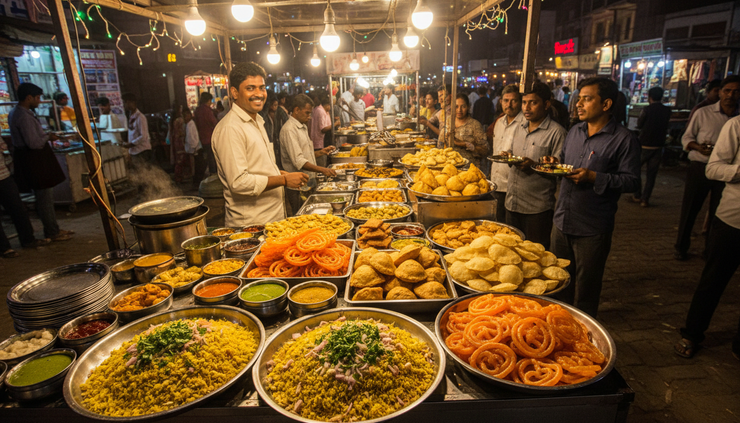
Image shows: Wide-angle view of a Raipur street food stall serving poha, jalebi, samosa, and chaat..
Sweets and festive bites show Raipur’s softer side
Raipur’s sweets often use rice, curd, jaggery, wheat flour, ghee, and sugar syrup. They appear during festivals, family functions, and seasonal celebrations. Some are easy to find in sweet shops, while others are more common in homes.
Dehrori
Dehrori is a signature Chhattisgarhi sweet. It is made using rice and curd, then fried and soaked in sugar syrup. The texture can be slightly crisp outside and soft inside, with a rich, festive sweetness.
This sweet is often linked with celebration. It shows how rice moves beyond daily meals into special cooking.
Khurma
Khurma is a fried sweet snack made with flour and coated or cooked with sugar. It is crisp, simple, and easy to store, which makes it common during festivals and travel.
Its charm lies in its old-style preparation. It does not need fancy decoration. A handful of khurma with tea feels complete.
Thekua-style sweets and jaggery snacks
In some homes and markets, you may find firm, fried sweets flavoured with jaggery, fennel, or coconut. These are influenced by food traditions across eastern and central India.
They reflect how Raipur’s food culture absorbs ideas without losing its own base. The textures stay hearty. The flavours stay familiar.
What makes Raipur’s flavours different
Raipur’s cuisine does not shout. It grows on you. The food is rooted in everyday life, so the flavours feel practical, seasonal, and honest.
A few qualities stand out.
The food is rice-led
Rice is not only a side dish. It becomes batter, roti, dumpling, porridge, leftover meal, snack, and sweet. This makes the city’s food identity different from wheat-heavy regions.
Steaming matters as much as frying
Many local foods, including fara, bafauri, and muthiya, are steamed. That creates soft textures and lets spices stay gentle.
Chutneys carry the punch
Green chilli, coriander, garlic, tomato, sesame, and tamarind can turn a simple rice dish into a memorable plate. In Raipur, the chutney often decides the mood of the meal.
The food respects heat and climate
Cooling dishes like bore baasi make sense in Chhattisgarh’s warm weather. Light breakfasts such as chila also fit the climate better than very heavy morning meals.
Home cooking and street food overlap
Many of the Famous foods of Raipur are not limited to restaurants. They come from homes, weekly markets, roadside stalls, and family kitchens. That keeps the food close to its roots.
Dishes in this image: Overhead view of Chhattisgarhi sweets with dehrori and khurma on a brass plate.
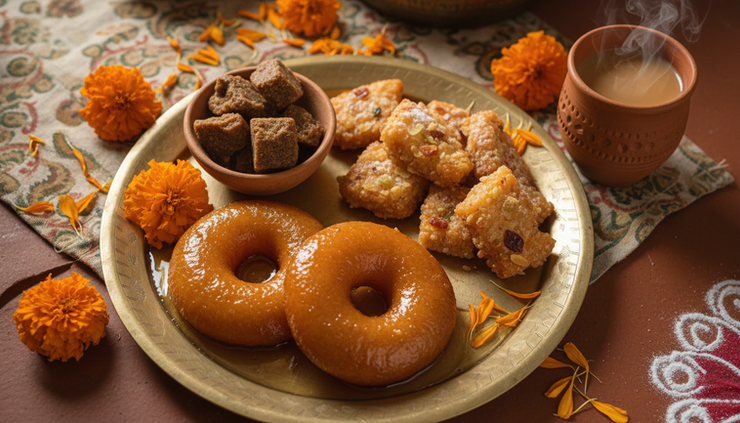
Image shows: Overhead view of Chhattisgarhi sweets with dehrori and khurma on a brass plate..
How to plan a Raipur food trail
A good food trail in Raipur should move with the day. The city’s food has a rhythm, and following it helps you enjoy each dish at its best.
Start the morning with poha and jalebi or chila with chutney. These are light enough for breakfast but full of flavour. If you find fara at a local stall or eatery, try it while it is fresh and warm.
For lunch, look for a Chhattisgarhi thali or a local meal with rice, dal, kadhi, sabzi, chutney, and a rice-based bread or dumpling. This is where dishes such as dubki kadhi, angakar roti, or seasonal greens make more sense.
Evening is the right time for street food. Try samosa, kachori, pani puri, dahi puri, bhajia, or tea with a savoury snack. Markets and popular food lanes usually offer the widest choice.
End with a sweet such as dehrori, khurma, jalebi, or a local milk sweet from a trusted shop.
A few simple tips help:
Eat chila and fara hot, as their texture changes once they cool.
Ask for local chutneys, especially garlic or coriander chutney.
Try at least one steamed snack, not only fried street food.
Keep space for sweets because Raipur’s festive foods are part of the story.
If trying bore baasi, choose a clean, trusted place or enjoy it in a home-style setting.
Raipur’s food is not built around one famous dish alone. Its strength lies in range. A humble bowl of bore baasi, a crisp chila, a plate of poha-jalebi, a serving of dubki kadhi, and a syrupy dehrori all tell different parts of the same story.
The Famous foods of Raipur are tied to rice fields, seasonal cooking, family kitchens, tribal and rural influences, and the city’s growing street food culture. For food lovers, that makes Raipur more than a stopover. It is a place to slow down, taste carefully, and discover how much comfort can fit on a simple steel plate.
Travel, landmark, location, and shop information is based on publicly available online data at the time of writing. Details such as names, addresses, opening hours, availability, prices, and operating status may change. Please verify current details directly with the venue or official source before visiting.
Explore more city food guides
Continue exploring Indian food, landmarks and local markets: Pune · Surat · Srinagar · Leh · Port Blair


Comments