
Famous Foods of Amritsar A Flavorful Journey Through Kulcha Chole Bhature and Lassi

Amritsar does not let you stay mildly hungry. The city has a way of turning a simple meal into a memory, especially when hot kulchas leave the tandoor, chole bubbles in deep iron kadhais, and lassi arrives in glasses large enough to slow down the rest of your day.
Food here is not just about flavour. It carries stories of migration, trade, faith, farming, and the old Punjabi habit of feeding people well. The famous foods of Amritsar are rich, generous, and deeply tied to the city’s identity. They suit early mornings, late lunches, crowded lanes, family kitchens, and the quiet satisfaction that follows a meal eaten with both hands.
This journey focuses on three icons: Amritsari Kulcha, Chole Bhature, and Lassi. Each one tells a different story about the city.
Dishes in this image: Wide-angle view of an Amritsar street food stall serving kulcha and chole

Image shows: Wide-angle view of an Amritsar street food stall serving kulcha and chole.
Why Amritsar tastes different from anywhere else
Amritsar sits close to old trade routes, the Wagah border, and the heart of Punjab’s wheat-growing belt. That matters. The food reflects all of it.
Wheat is central to the region, so breads are not side characters. They are the meal’s foundation. Tandoors, griddles, dairy, pickles, onions, and slow-cooked legumes shape the city’s everyday cooking. Add the Punjabi love for hospitality, and meals become large, layered, and full of warmth.
The city is also shaped by the Golden Temple, where the tradition of langar reminds everyone that food can be service, dignity, and community. While kulcha, chole bhature, and lassi are street and home favourites rather than langar staples, the spirit of sharing runs through Amritsar’s food culture. Plates are full. Refills are expected. No one wants a guest to leave hungry.
On my first proper food walk in Amritsar, I made the beginner’s mistake of saying yes to everything within the first hour. A kulcha plate before 9 am, a bowl of extra chole, a glass of lassi because “you cannot leave without it”, and then another stop because someone insisted the next shop had better pickle. By noon, I understood the city’s rhythm. You do not rush Amritsar’s food. You surrender to it.
Amritsari Kulcha is the city’s crisp buttery pride
If one dish deserves to stand at the centre of Amritsar’s culinary fame, it is Amritsari Kulcha. At first glance, it looks like a stuffed bread. One bite proves it is much more.
A good Amritsari kulcha has a crisp, flaky top, a soft layered centre, and a filling that pushes through just enough to flavour the whole bread. The stuffing usually includes spiced potato, onions, coriander, green chillies, and sometimes paneer or cauliflower. It is rolled, slapped against the wall of a hot tandoor, baked until blistered, then brushed with butter or ghee.
The result is rich but balanced. The kulcha crackles when torn. The filling is warm and sharp. The butter softens the spice. A side of chole gives it body, while pickled carrots, onions, or chutney cut through the heaviness.
A short history of kulcha in Amritsar
Kulcha has roots in the broader bread traditions of North India, influenced by Persian and Mughal-style leavened breads. Over time, Punjab made it its own. Amritsar’s version became distinct because of the tandoor, the generous stuffing, and the city’s taste for bold seasoning.
The kulcha also suited the local way of eating. It was filling, affordable, and energising. For traders, workers, students, and travellers, it offered a complete meal on one plate. For families, it became a weekend treat or a breakfast worth leaving home for.
The cultural power of Amritsari kulcha lies in its everyday popularity. It does not need fancy plating. It tastes best on a steel plate, eaten hot, with fingers slightly buttery and pickle within reach.
My kulcha rule after one messy breakfast
The best kulcha I had in Amritsar arrived too hot to handle. I tried to tear it neatly and failed. Steam escaped, the potato filling spilled onto the plate, and the vendor smiled as if he had seen this exact scene every day.
He told me to wait a minute, not because the kulcha needed it, but because I did. That small pause changed the meal. The bread settled, the butter soaked in, and the first bite had everything: crunch, heat, spice, tang, and comfort.
Since then, my rule is simple. Eat Amritsari kulcha fresh, but do not attack it in a hurry. Give it a moment. It rewards patience.
Dishes in this image: Close-up of Amritsari kulcha with chole and pickles on a steel plate

Image shows: Close-up of Amritsari kulcha with chole and pickles on a steel plate.
Chole Bhature brings comfort with a sense of occasion
Chole Bhature is not quiet food. It arrives with volume, aroma, and confidence. The bhatura is puffed, golden, and soft at the centre. The chole is deep, spicy, and slightly tangy. Together, they make a plate that feels festive even on an ordinary Tuesday.
In Amritsar, chole often carries a darker colour and deeper flavour than quick home-style versions. The chickpeas are cooked until tender, then simmered with spices such as cumin, coriander, cloves, black cardamom, dried mango powder, and sometimes tea leaves for colour. The exact mix changes from cook to cook.
Bhature, made from refined flour dough, are rolled and fried until they balloon. Good bhature should not feel greasy in the mouth. They should be light enough to tear, strong enough to scoop, and soft enough to soak up the chole.
How chole bhature became a Punjabi favourite
Chickpeas have long been part of North Indian cooking. Fried breads have also existed in many forms across the region. Chole bhature, as we know it today, became closely linked with Punjabi food culture, especially through roadside eateries, markets, and post-partition urban food habits.
After Partition in 1947, Punjabi migrants carried recipes, techniques, and food businesses across North India. Dhabas and small restaurants became places where hearty dishes could feed people quickly and affordably. Chole bhature fitted that world well. It was filling, tasty, and easy to love.
In Amritsar, it found a natural home. The city likes food that is bold but honest. Chole bhature brings spice, softness, sourness, and warmth in one meal. It is indulgent, yes, but it also feels familiar.
The plate that teaches you pace
My most memorable chole bhature plate came after a long walk near the old city. I was hungry enough to believe I could finish anything. Then the bhatura arrived, covering most of the plate like a golden pillow.
The first bite was all drama. The bhatura deflated under my fingers, the chole stained the bread, and the first hit of spice came with a sharp onion crunch. Halfway through, I slowed down. That is when the dish improved. Amritsari food often does that. It starts with impact but stays with you because of balance.
A squeeze of lemon brightened the chole. A green chilli on the side added heat. A few sips of water, then another bite. This is the joy of chole bhature. It asks for appetite, but also respect.
Lassi slows the city down
After kulcha and chole bhature, lassi feels like relief. Thick, chilled, and creamy, it cools the mouth and settles the meal. In Amritsar, lassi is often served in large steel tumblers or earthen cups, topped with malai, sometimes with a small lump of white butter.
A classic sweet lassi uses yoghurt, water or milk, sugar, and gentle churning. The texture matters. It should be smooth but not thin, rich but not cloying. Some places serve salty lassi too, seasoned with salt and roasted cumin. Both versions belong to Punjab’s dairy-loving food culture.
The older story behind lassi
Lassi is one of the oldest and most loved yoghurt-based drinks in the Indian subcontinent. In Punjab, it grew naturally from agrarian life. Milk, curd, butter, and ghee were central to rural kitchens. Churning curd was part of daily routine, and lassi made dairy refreshing in a hot climate.
Its cultural role is simple and powerful. Lassi is both drink and welcome. Offer someone lassi, and you offer them rest. It belongs to summer afternoons, farm meals, roadside stops, and family homes where guests are asked, “Sweet or salty?”
Amritsar’s version feels especially generous. Like much of the city’s food, it does not apologise for richness.
Dishes in this image: Eye-level view of a tall glass of Punjabi lassi topped with malai

Image shows: Eye-level view of a tall glass of Punjabi lassi topped with malai.
A lassi memory worth keeping
The first time I ordered lassi in Amritsar, I treated it like a drink. That was wrong. It was closer to dessert, snack, and nap invitation in one.
The glass was cold, heavy, and topped with malai so thick that the spoon stood for a second before sinking. I took one sip and stopped talking. The sweetness was gentle, the yoghurt had a pleasant tang, and the cream made the whole thing feel luxurious without being fussy.
A nearby family was sharing two glasses among four people, passing them around between bites of kulcha. That image stayed with me. Lassi in Amritsar is not just something to drink. It is part of how people pause together.
How to enjoy these dishes in Amritsar
The famous foods of Amritsar taste best when you leave room for surprise. Still, a little planning helps, especially if food is a main reason for visiting.
Start early for kulcha
Kulcha is a breakfast hero. Go in the morning when tandoors are active and dough is fresh. Order one plate first. Many travellers order too much too soon because everything smells irresistible.
Look for these signs:
The kulcha is served hot from the tandoor.
The top is crisp, not soggy.
The filling tastes fresh and well-spiced.
The chole has depth, not just chilli heat.
The pickle adds sharpness and crunch.
Save chole bhature for a hungry moment
Chole bhature works well as brunch or lunch. It is rich, so arrive with an appetite. If possible, share a plate before ordering more. The best version has bhature that puff well and chole that taste slow-cooked.
Do not skip the sides. Onion, pickle, lemon, and green chilli are not decoration. They help balance the meal.
Treat lassi as part of the experience
Lassi can follow a meal, but it can also stand alone as a mid-day treat. Sweet lassi is the classic choice for visitors, while salty lassi is lovely when the weather is hot and the meal has been heavy.
If you are walking through the city, a lassi break gives you a natural pause. Sit down if you can. Amritsar’s food is more enjoyable when you are not eating it like a checklist.
Dishes in this image: Overhead view of a food table with kulcha chole bhature and lassi
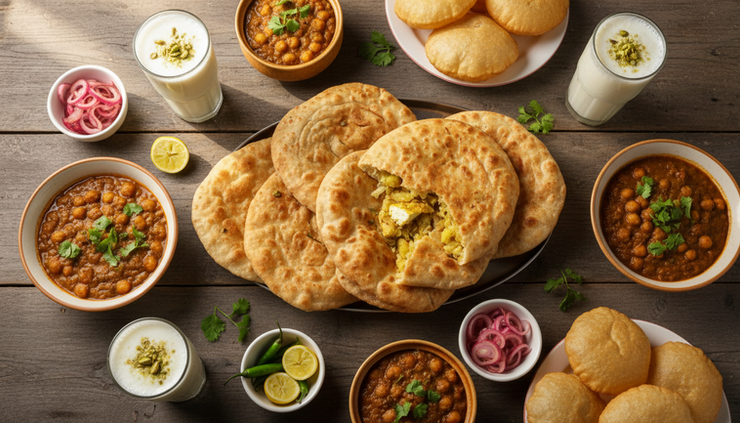
Image shows: Overhead view of a food table with kulcha chole bhature and lassi.
A final bite of Amritsar
Amritsar’s great food does not try to be delicate. It is bold, filling, and full of feeling. Amritsari Kulcha brings the crackle of the tandoor. Chole Bhature brings comfort with spice and softness. Lassi brings calm after all that richness.
Together, they explain why travellers remember the city through taste as much as sight. The Golden Temple may draw people to Amritsar, but the food keeps them talking long after they leave.
If you are planning a food trip, pace yourself. Start with kulcha, make space for chole bhature, and never treat lassi as an afterthought. The famous foods of Amritsar are best enjoyed slowly, with curiosity, appetite, and a willingness to let one more bite become the story you tell later.
Travel, landmark, location, and shop information is based on publicly available online data at the time of writing. Details such as names, addresses, opening hours, availability, prices, and operating status may change. Please verify current details directly with the venue or official source before visiting.
Landmarks and places to visit
• Golden Temple/Harmandir Sahib — Old Amritsar
• Jallianwala Bagh — beside the Golden Temple
• Wagah–Attari Border — Attari, approximately 28–30 km from Amritsar
Authentic food shops and markets
• Kesar Da Dhaba — Chowk Passian; dal, phirni and Punjabi food
• Makhan Fish & Chicken Corner — Majitha Road; Amritsari fish
• Kanha Sweets — Lawrence Road; puri-aloo, jalebi and Punjabi sweets
Sources checked: Punjab Tourism, Amritsar District Administration and Incredible India Amritsar. Details are based on publicly available online data at the time of writing. Names, addresses, opening hours, menus, prices and operating status may change. Verify current details directly with the venue or official source before visiting.
Explore more city food guides
Continue exploring Indian food, landmarks and local markets: Pune · Surat · Srinagar · Leh · Port Blair


Comments