
Famous food of Ranchi Jharkhand Traditional Flavors and Cultural Heritage

Ranchi’s food is earthy, filling, and full of character. It carries the warmth of home kitchens, the patience of slow cooking, and the taste of ingredients that come from fields, forests, weekly haats, and monsoon markets.
The Famous food of Ranchi is not built around one single dish. It is shaped by rice, pulses, mustard oil, leafy greens, forest mushrooms, gram flour, smoky chokha, and festive sweets. The city’s cuisine reflects Jharkhand’s tribal heritage, agrarian life, and the influence of neighbouring regions such as Bihar, Bengal, Odisha, and Chhattisgarh.
For travellers, Ranchi offers more than scenic waterfalls and cool weather. It offers plates that explain the region’s history better than any brochure can.
Dishes in this image: Wide-angle view of a traditional Ranchi meal served on a leaf plate with dhuska, chutney, saag, and rice dishes
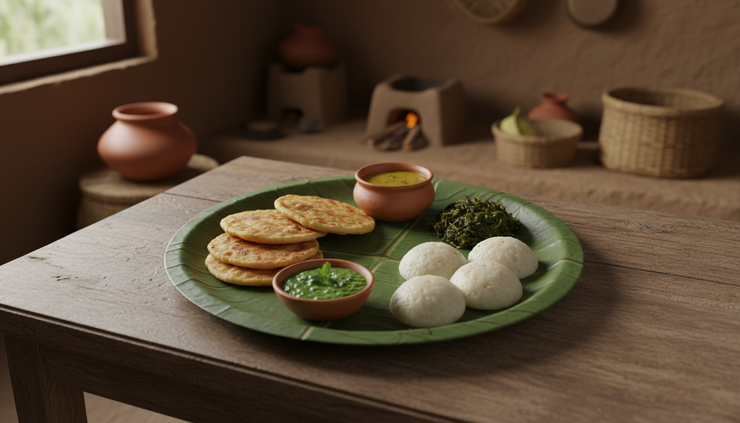
Image shows: Wide-angle view of a traditional Ranchi meal served on a leaf plate with dhuska, chutney, saag, and rice dishes.
The cultural roots that shape Ranchi’s food
Ranchi’s food culture grew from the lives of communities that worked closely with the land. Indigenous communities such as the Munda, Oraon, Ho, and Santhal have long used seasonal grains, forest produce, tubers, mushrooms, greens, and fermented foods in everyday cooking. Their food traditions value freshness, minimal waste, and simple methods that bring out natural flavour.
Rice sits at the centre of many meals. It appears as steamed rice, rice flour rotis, pithas, fermented batters, and festival sweets. Lentils and gram provide body, while mustard oil adds sharpness and aroma. Local greens, known broadly as saag, are cooked with garlic, chilli, and sometimes crushed pulses.
The history of Ranchi’s cuisine also shows the movement of people. Dishes such as litti chokha and ghugni became popular through regional exchange, while local versions developed their own taste. Ranchi’s snacks tend to be crisp, savoury, and practical. Many can be eaten at breakfast, during travel, or at roadside stalls with tea.
Traditional cooking methods are still central to the flavour:
Deep frying
Used for dhuska, pakoras, and festival snacks.
Roasting on fire or coal
Used for brinjal, tomato, garlic, and litti chokha.
Steaming
Used for rice pithas and dumplings.
Slow simmering
Used for mutton curry, chana, and seasonal vegetables.
Fermentation
Used in rice-based drinks and batters in some traditional homes.
These methods make Ranchi’s food bold without being overly complicated. The flavour often comes from smoke, mustard oil, roasted chillies, garlic, coriander, and the natural sweetness of rice or jaggery.
Signature dishes that define the Famous foods of Ranchi
The Famous foods of Ranchi are best understood through dishes that locals eat regularly, serve during festivals, or recommend to visitors with pride. Each one tells a small story about the region’s ingredients and way of life.
Dhuska is Ranchi’s beloved fried rice and lentil dish
Dhuska is one of the most recognisable foods of Jharkhand and a favourite in Ranchi. It is made from a batter of rice and lentils, often chana dal or urad dal, seasoned lightly and deep-fried until golden.
The texture makes it special. A good dhuska is crisp at the edges, soft inside, and slightly airy. It is usually served with aloo chana curry, ghugni, or spicy chutney. In many homes, it appears during festivals and family gatherings, but in Ranchi, it is also easy to find as a breakfast or snack.
The dish reflects the region’s rice-based food culture. It uses simple pantry staples, but the soaking, grinding, and frying give it a rich, satisfying taste. Mustard oil or local cooking oil adds a deeper flavour, while the curry served with it brings heat and spice.
Litti chokha carries smoke, spice, and comfort
Litti chokha is widely associated with Bihar, but it is also deeply loved in Ranchi and other parts of Jharkhand. The Ranchi version keeps the heart of the dish intact: wheat dough balls stuffed with sattu, roasted until firm, and eaten with mashed vegetables.
The stuffing is usually made with roasted gram flour, mustard oil, lemon juice, ajwain, green chilli, garlic, and pickle masala. The chokha is made from roasted brinjal, tomato, potato, garlic, onion, coriander, and mustard oil.
What makes litti chokha unforgettable is the smoky flavour. Traditionally, littis are roasted over coal or cow-dung cakes, which gives them a rustic aroma. Even when baked or cooked on a griddle, the dish is best when finished with ghee and served hot.
For travellers searching for the Famous food of Ranchi, litti chokha is one of the easiest and most satisfying dishes to begin with.
Dishes in this image: Close-up of crispy dhuska served with aloo chana curry and green chutney
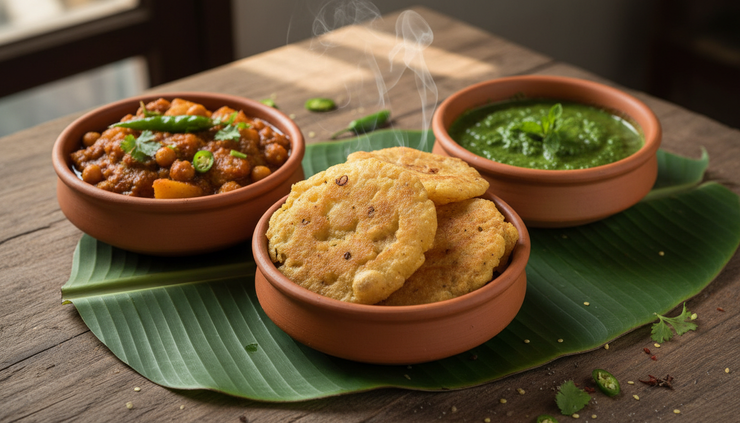
Image shows: Close-up of crispy dhuska served with aloo chana curry and green chutney.
Rugra brings the taste of Jharkhand’s monsoon forests
Rugra, also called rugda in some places, is a seasonal wild mushroom found during the monsoon in Jharkhand. It is highly prized in Ranchi’s local markets when available. Its taste is earthy, meaty, and unlike common button mushrooms.
Rugra is usually cleaned carefully and cooked with onion, garlic, chilli, turmeric, and spices. Some homes prepare it almost like a mutton curry, while others cook it dry with mustard oil and masala. Its firm bite and forest aroma make it one of Jharkhand’s most distinctive seasonal foods.
This dish connects Ranchi’s cuisine to the forest. Long before packaged ingredients became common, local communities relied on seasonal produce such as wild mushrooms, bamboo shoots, roots, leafy greens, and herbs. Rugra keeps that tradition alive.
Chilka roti shows the comfort of rice and dal
Chilka roti is another everyday favourite made from rice and chana dal or urad dal. The soaked ingredients are ground into a batter, then spread on a hot tawa like a thin pancake.
It is softer and lighter than dhuska because it is not deep-fried. People often eat it with chutney, vegetable curry, curd, or meat curry. It works well for breakfast and dinner, especially in homes where rice-based foods are preferred.
Chilka roti shows how Ranchi’s food uses the same core ingredients in many forms. Rice and lentils can become fried snacks, steamed pithas, thin rotis, or festive sweets, depending on the occasion and cooking method.
Local ingredients that give Ranchi cuisine its flavour
Ranchi’s food depends on ingredients that are local, seasonal, and practical. Some are grown in fields, some come from forests, and many are sold in weekly markets around the city.
Ingredient | How it is used | Flavour it brings |
Rice | Dhuska, chilka roti, pitha, steamed meals | Softness, body, mild sweetness |
Sattu | Litti stuffing and drinks | Nutty taste, roasted aroma |
Mustard oil | Chokha, curries, pickles, saag | Sharpness and depth |
Chana dal and urad dal | Batters, curries, snacks | Earthy richness |
Forest mushrooms | Rugra curry and dry preparations | Meaty, earthy flavour |
Leafy greens | Saag, stir-fries, rustic meals | Freshness and slight bitterness |
Jaggery | Thekua, pua, festive snacks | Warm sweetness |
Garlic and chilli | Chutneys, chokha, curries | Heat and punch |
Mustard oil deserves special mention. In Ranchi kitchens, it is more than a cooking medium. It gives chokha its signature sharp finish, deepens the flavour of curries, and makes pickles bold.
Sattu also plays a major role. Made from roasted gram, it adds protein, flavour, and substance. In litti, it becomes the heart of the dish. In summer, sattu drinks are valued for their cooling and filling nature.
Local greens change with the season. Depending on availability, homes cook different kinds of saag with garlic, dried chilli, and a light tempering. These dishes may look simple, but they balance heavier foods beautifully.
Dishes in this image: Eye-level view of a Ranchi market stall with rugra mushrooms, leafy greens, rice, and red chillies

Image shows: Eye-level view of a Ranchi market stall with rugra mushrooms, leafy greens, rice, and red chillies.
Street food and snacks that travellers should try
Ranchi’s street food scene is practical, spicy, and deeply satisfying. It includes traditional Jharkhand dishes as well as snacks influenced by nearby regions. Many of these foods are found near markets, bus stands, educational areas, and evening food stalls.
Ghugni is spicy, filling, and easy to love
Ghugni is made from yellow peas or black gram, cooked with onion, tomato, chilli, and spices. It is often served with chopped onion, coriander, lemon, and sometimes crunchy toppings.
It pairs beautifully with dhuska, but it also works as a snack on its own. The flavour is tangy, spicy, and hearty, making it popular among students and office-goers.
Pitha brings steamed tradition to the plate
Pitha is common across eastern India, and Ranchi has its own love for rice-based versions. These can be sweet or savoury. Some are stuffed with lentils, coconut, jaggery, or spiced fillings. Many are steamed, which gives them a soft texture and clean taste.
Pitha often appears during festivals and winter gatherings. It reflects the role of rice in celebration, not just daily meals.
Thekua and pua add festive sweetness
Thekua is a crisp, deep-fried sweet made with wheat flour, jaggery or sugar, ghee, and sometimes coconut or fennel. It is commonly linked with Chhath Puja, but it is enjoyed beyond festival days too.
Pua, often made during religious and family occasions, is softer and sweeter. It may include banana, fennel, jaggery, or flour, depending on the household recipe. Both sweets show how Ranchi’s festive food uses modest ingredients to create deep flavour.
Pakoras and chai complete the evening mood
Ranchi’s cool evenings make pakoras and tea especially appealing. Onion pakoras, aloo pakoras, and mixed vegetable fritters are common. The combination of hot tea, crisp snacks, and mild hill-station weather is a simple pleasure that many locals cherish.
Traditional cooking methods keep the heritage alive
The most memorable Famous food of Ranchi depends as much on technique as on ingredients. Many dishes need soaking, grinding, roasting, steaming, or slow cooking. These steps cannot be rushed without changing the taste.
For dhuska and chilka roti, the batter matters. The rice and dal must be soaked well, ground to the right texture, and rested enough to cook evenly. Too coarse, and the dish becomes heavy. Too watery, and it loses structure.
For litti chokha, roasting is everything. The outer dough needs to cook through while the sattu filling stays moist. Chokha tastes best when the brinjal and tomato are roasted until the skin chars and the flesh turns smoky.
For rugra, cleaning is part of the craft. Wild mushrooms need proper washing and trimming before cooking. The masala should support the mushroom, not bury its natural flavour.
For pitha, steaming gives softness and balance. This method also shows the older, gentler side of Ranchi cuisine, where flavour comes from grain, filling, and patience.
Ranchi’s traditional food is not complicated, but it asks for attention. The best dishes reward slow preparation and seasonal ingredients.
Dishes in this image: Top-down view of litti chokha with roasted brinjal mash, tomato chokha, green chillies, and ghee

Image shows: Top-down view of litti chokha with roasted brinjal mash, tomato chokha, green chillies, and ghee.
Where Ranchi’s flavours stand out the most
Ranchi’s cuisine is strongest when eaten in its natural setting: fresh, hot, and close to the people who make it. A roadside plate of dhuska with spicy curry can be more memorable than a polished restaurant meal. A home-style serving of rice, saag, and chutney can say more about Jharkhand than a long menu.
The city’s food is also seasonal. Winter is good for sweets, pithas, and richer snacks. Monsoon is the time when rugra becomes a prized find. Festivals bring thekua, pua, and special preparations. Daily meals bring rice, dal, chokha, saag, and simple vegetable curries.
Travellers should look for:
Freshly fried dhuska with aloo chana
Litti chokha with a strong mustard oil finish
Rugra during the monsoon season
Rice pitha in traditional homes or local food stalls
Thekua during festival periods
Local saag and chutneys with simple meals
The joy of Ranchi’s food lies in its honesty. It is not overly rich or decorative. It is rooted in weather, soil, harvest, and memory.
The lasting taste of Ranchi’s culinary heritage
Ranchi’s food culture proves that great cuisine does not need rare ingredients or complex presentation. It needs a strong connection to place. Rice, dal, sattu, mustard oil, forest mushrooms, jaggery, and greens form the base. Roasting, steaming, frying, and slow cooking turn them into dishes with identity.
The Famous food of Ranchi brings together tribal traditions, regional exchange, festival customs, and everyday comfort. Dhuska offers crunch and warmth. Litti chokha brings smoke and spice. Rugra carries the flavour of the forest. Chilka roti and pitha show the quiet beauty of rice-based cooking. Thekua and pua add sweetness to celebration.
For food enthusiasts and travellers, Ranchi is worth exploring one plate at a time. Start with dhuska, follow it with litti chokha, watch for seasonal rugra, and leave space for something sweet. That is the best way to understand the city, through food that is humble, historic, and full of flavour.
Travel, landmark, location, and shop information is based on publicly available online data at the time of writing. Details such as names, addresses, opening hours, availability, prices, and operating status may change. Please verify current details directly with the venue or official source before visiting.
Explore more city food guides
Continue exploring Indian food, landmarks and local markets: Pune · Surat · Srinagar · Leh · Port Blair


Comments