
Puri Odisha Famous Foods & Favorites

Puri does not treat food as a side attraction. Here, a meal can be an offering, a memory of the sea, a festival ritual, or a paper plate of hot snacks eaten near the beach with sand still on your feet.
This coastal city in Odisha is best known for the Jagannath Temple, the Rath Yatra, and its sacred place in India’s pilgrimage map. Yet the story of Puri also lives in kitchens, temple courtyards, fish markets, sweet shops, and evening food stalls. The Famous food of Puri brings together devotion, local produce, coastal flavour, and everyday comfort in a way few cities can match.
Dishes in this image: Wide-angle view of Puri beach food stalls at sunset

Image shows: Wide-angle view of Puri beach food stalls at sunset.
Jagannath Prasad is the sacred heart of Puri’s food culture
Any serious food journey in Puri starts with Jagannath Mahaprasad, the sacred offering of the Jagannath Temple. It is more than a meal. For devotees, it carries blessing, equality, and centuries of living tradition.
The food offered to Lord Jagannath is cooked in the temple kitchen using traditional methods. Earthen pots, wood-fired cooking, rice, lentils, vegetables, and mild spices shape the meal. The dishes are simple, but they hold deep meaning. Many visitors remember Mahaprasad not for richness, but for its balance and warmth.
The offering is later served and sold at Ananda Bazaar, the temple’s food courtyard. Pilgrims sit together and share rice, dal, vegetables, sweets, and other preparations. Social status fades in that space. The same food reaches everyone as a blessing.
Some popular items linked with Jagannath Prasad include:
Khechudi A comforting preparation of rice and lentils, often mild and filling.
Dalma Lentils cooked with vegetables, one of Odisha’s most loved everyday dishes.
Kanika A lightly sweet rice dish often associated with offerings and celebrations.
Mahura A mixed vegetable curry with a temple-style character.
Besara A mustard-based preparation that reflects Odisha’s love for earthy, sharp flavours.
Khaja A crisp, layered sweet closely associated with temple offerings and Puri’s sweet shops.
The temple food avoids onion and garlic, and the cooking follows strict customs. These rules are part of what gives Mahaprasad its identity. It is not restaurant food trying to impress. It is food shaped by discipline, faith, and repetition across generations.
Quick reader poll: If you have tasted Jagannath Mahaprasad, what stayed with you most, the flavour, the ritual, the simplicity, or the feeling of sharing it with others?
Share your answer in the comments if this post is part of a community blog, or run it as a poll with these options:
Poll choice | What it reveals |
The sacred feeling | Food as devotion matters most |
The taste of Dalma or Khechudi | Comfort food leaves the strongest mark |
Eating at Ananda Bazaar | The shared experience feels special |
Khaja and sweets | Puri’s sweet side wins the vote |
Dishes in this image: Close-up of Jagannath Mahaprasad served on leaf plates

Image shows: Close-up of Jagannath Mahaprasad served on leaf plates.
Seafood in Puri carries the taste of the coast
Puri sits along the Bay of Bengal, so seafood has a natural place in local eating. Fish, prawns, crabs, and other coastal catches appear in home kitchens, beachside eateries, and local restaurants. The cooking often uses mustard, cumin, garlic, ginger, chillies, turmeric, and local souring agents, depending on the dish and household style.
Seafood in Puri is usually not about heavy sauces. It often leans towards bold, direct flavours. Mustard gives heat and depth. Turmeric adds colour. Fresh fish brings the sweetness of the sea.
Popular seafood dishes to look for include:
Machha Besara Fish cooked in a mustard-based gravy. It is sharp, earthy, and deeply Odia in character.
Chingudi Tarkari Prawn curry that may vary from home-style light gravy to richer restaurant versions.
Kankada Jhola Crab curry, often spicy and messy in the best way.
Pomfret fry or fish fry A beachside favourite, usually marinated and fried until crisp outside and soft inside.
Fish curry with rice A simple plate that can feel more satisfying than an elaborate meal.
Many travellers connect Puri with temple food first, but seafood shows another side of the city. It speaks of fishing communities, coastal trade, and daily life outside the pilgrimage route. Morning fish markets give a glimpse of this rhythm, with fresh catch arriving early and home cooks choosing what will become lunch.
If eating seafood in Puri, a few practical habits help:
Choose busy places where the turnover is high.
Ask what is fresh that day rather than ordering only from habit.
Pair mustard fish curry with plain rice.
Try crab when you have time to eat slowly.
Keep space for sweets later, because Puri will tempt you again.
Opinion poll idea: Which Puri seafood dish would win your plate? 1. Mustard fish curry 2. Prawn curry 3. Crab curry 4. Fried fish by the beach 5. I prefer vegetarian temple-style food
This kind of poll works well because Puri’s food identity is not one-note. A pilgrim, a seafood lover, and a street food fan can all leave with different favourites.
Dishes in this image: Eye-level view of a coastal fish curry meal in Puri

Image shows: Eye-level view of a coastal fish curry meal in Puri.
Street food in Puri is best enjoyed slowly and often
Puri’s street food scene comes alive around temple lanes, market areas, and the beach. Some snacks are shared across Odisha, while others feel especially linked to the mood of a seaside pilgrimage town.
The best way to enjoy it is to graze. Start with something hot and savoury, move to chaat, then finish with sweets or tea. A single evening walk can turn into a full meal if you let it.
Gupchup brings the sharp, spicy thrill
In Odisha, pani puri is widely called gupchup. The crisp shells, spicy water, potato filling, and tangy notes make it impossible to stop at one round. Near tourist areas, flavours may be adjusted for visitors, but local stalls often keep the punch intact.
Dahi bara aloo dum is comfort with spice
Dahi bara aloo dum is one of Odisha’s great street food combinations. Soft lentil dumplings sit in curd, then get topped with spicy potato curry, ghuguni, sev, chopped onion, coriander, and masala. It sounds like a lot, but the mix works beautifully.
In Puri, it makes sense as a late breakfast, evening snack, or festival-day bite when the streets fill with people.
Bara, ghuguni, chop, and piaji keep evenings lively
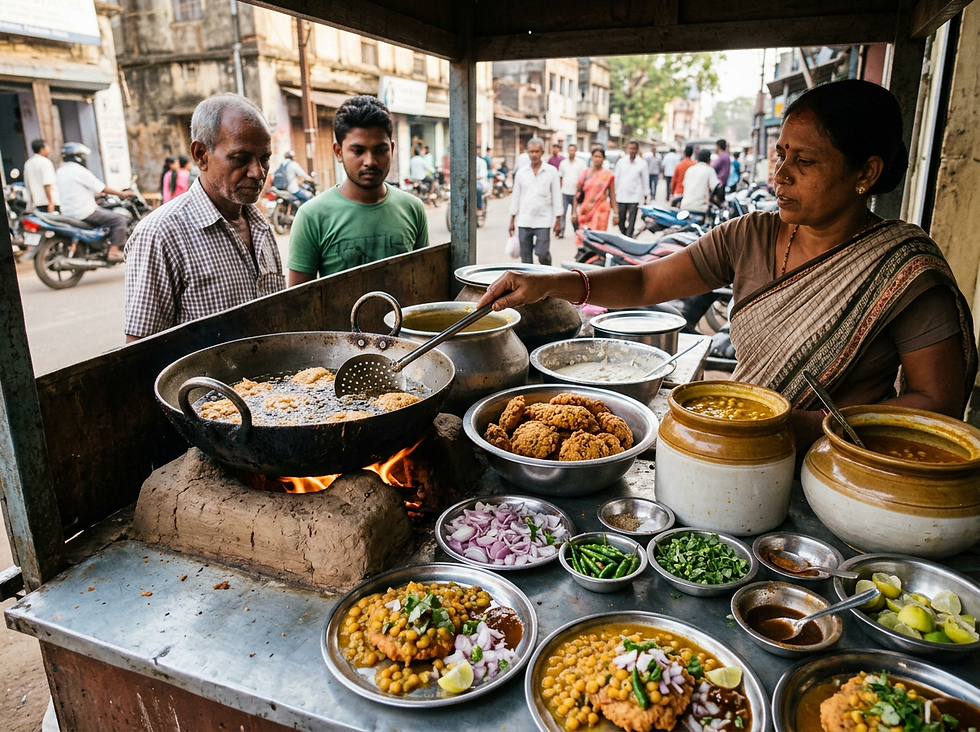
Hot fried snacks have a loyal following in Puri. Bara with ghuguni, alu chop, piaji, and other fritters are easy to find and best eaten fresh. They match perfectly with tea after a long temple visit or a walk near Swargadwar beach.
Khaja and chhena sweets show Puri’s softer side
Puri’s sweet shops deserve attention. Khaja is the most iconic, with its crisp layers and light sweetness. It travels well, which makes it a common food souvenir. Visitors also look for Odia sweets made with chhena, such as chhena poda in many parts of Odisha, along with locally available sweets that vary by shop.
A simple street food trail could look like this:
Time | What to try | Why it works |
Morning | Dahi bara aloo dum | Filling, tangy, and easy to find |
Afternoon | Khaja with tea | Light enough after temple visits |
Evening | Gupchup and fried snacks | Best with the lively beach and market mood |
Dinner | Fish curry or vegetarian thali | A proper close to the day |
Mini survey for readers: Pick one Puri street food you would queue up for on a busy evening.
Gupchup
Dahi bara aloo dum
Khaja
Fish fry
Bara ghuguni
Alu chop
The answers often reveal travel style. Some people chase spice, some look for nostalgia, and some want snacks that feel tied to the place.
Festivals make food part of Puri’s living history
Food in Puri cannot be separated from history. The city’s most famous landmark, the Jagannath Temple, has shaped its daily rhythms, festivals, economy, and food traditions for centuries. Puri is also one of the important pilgrimage centres in India, which gives its cuisine a constant flow of visitors and influences.
The Rath Yatra is Puri’s most widely known festival. During this grand chariot festival, Lord Jagannath, Balabhadra, and Subhadra are taken from the temple to the Gundicha Temple. The city fills with devotees, and food becomes part of the larger act of service. Pilgrims eat simple meals, local vendors prepare for huge crowds, and prasad remains central to the experience.
Other observances and seasons also shape food habits. During certain religious periods, many devotees prefer vegetarian meals. During coastal stays, travellers may move between temple food in the morning and seafood later in the day, depending on their customs and preferences.
Puri’s food traditions also connect with Odisha’s broader produce and climate. Rice is central. Lentils, pumpkin, raw banana, brinjal, leafy greens, coconut, mustard, and seasonal vegetables appear often. The result is food that feels rooted rather than ornamental.
Festivals do not just add special dishes. They change how people eat:
Meals become more communal.
Prasad carries emotional value.
Sweets gain ritual importance.
Street stalls serve larger crowds.
Simple vegetarian food becomes part of pilgrimage discipline.
That history is why the Famous food of Puri feels different from a standard travel checklist. It carries both appetite and meaning.
Dishes in this image: High-angle view of khaja sweets stacked in a Puri sweet shop

Image shows: High-angle view of khaja sweets stacked in a Puri sweet shop.
How to plan a memorable Puri food day
A good food day in Puri should balance devotion, local flavour, and easy walking. Trying everything at once can feel rushed, so it helps to build the day around neighbourhoods and meal times.
Start early near the temple area. If your visit includes Jagannath Temple rituals, keep the morning focused on that experience. Mahaprasad, when available as part of your visit plan, deserves attention without hurry. Eat it with respect for the temple customs and local rules.
For lunch, choose between a vegetarian Odia meal and a seafood thali. A simple rice meal with dalma, vegetables, and a sweet can be just as satisfying as fish curry. If seafood is the priority, ask for the fresh catch and go with a preparation that locals recommend.
Keep the late afternoon lighter. This is a good time for tea and khaja, especially if walking through markets. By evening, move towards the beach or busy snack streets for gupchup, dahi bara aloo dum, and fried snacks.
A balanced route may look like this:
Morning
Temple visit, Mahaprasad, or a simple Odia breakfast.
Midday
Rice meal with dalma, fish curry, or prawn curry.
Late afternoon
Khaja, tea, or a small sweet shop stop.
Evening
Street food near the beach or market lanes.
Before leaving
Pack khaja or other dry sweets from a trusted shop.
Food safety matters too. Drink bottled or properly filtered water, choose stalls with quick turnover, and eat fried snacks while they are hot. During peak festival days, crowds can be intense, so patience becomes part of the meal.
Dishes in this image: Close-up of dahi bara aloo dum served on a street food plate in Puri

Image shows: Close-up of dahi bara aloo dum served on a street food plate in Puri.
The takeaway for every hungry traveller
Puri’s food has many doors. Jagannath Mahaprasad opens the spiritual one. Seafood opens the coastal one. Street snacks open the everyday, joyful one. Sweets like khaja connect all three, moving from temple tradition to travel memory.
The best way to eat in Puri is with curiosity and respect. Taste the sacred food slowly. Ask what fish is fresh. Stand at a busy gupchup stall. Carry home khaja for someone who could not make the trip. And if a poll asks for your favourite Puri dish, do not be surprised if choosing only one feels almost unfair.
Travel, landmark, location, and shop information is based on publicly available online data at the time of writing. Details such as names, addresses, opening hours, availability, prices, and operating status may change. Please verify current details directly with the venue or official source before visiting.
Explore more city food guides
Continue exploring Indian food, landmarks and local markets: Pune · Surat · Srinagar · Leh · Port Blair


Comments