
Famous Foods of Sambalpur and Its Culinary History What Locals Love Most

Ask someone from Sambalpur about food, and the answer rarely starts with a restaurant. It starts with a memory. A plate of chaul bara outside a crowded lane. A bowl of pakhala on a hot afternoon. A sweet, crisp piece of sarsatia carried home in a paper packet. Food here is not just about taste. It is tied to the Mahanadi, temple traditions, old trade routes, farming seasons, and the everyday warmth of western Odisha.
Sambalpur’s food culture has grown from its geography. The Mahanadi river system shaped farming and fish-based meals. Forested belts and tribal food traditions added leafy greens, roots, fermented flavours, and seasonal ingredients. The history of Maa Samaleswari Temple gave the city a strong ritual food culture. Later, migration, markets, and college crowds turned simple snacks into local icons.
The result is a cuisine that feels grounded, filling, and deeply local.
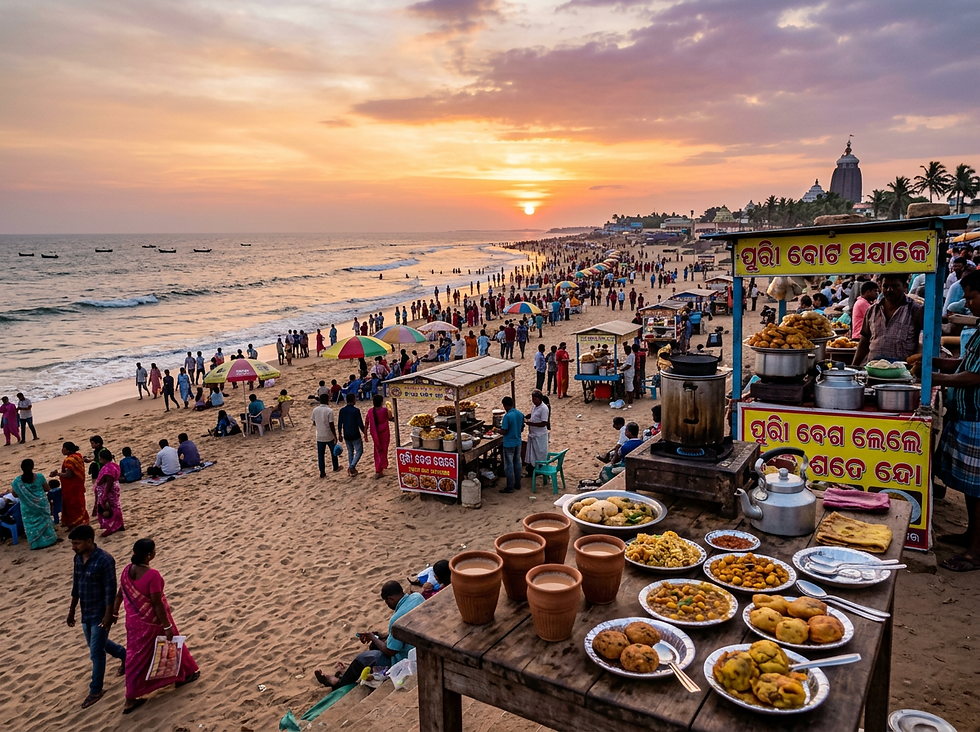
Dishes in this image: Wide-angle view of a Sambalpur street food stall serving chaul bara and ghuguni

Image shows: Wide-angle view of a Sambalpur street food stall serving chaul bara and ghuguni.
Sambalpur’s food story begins with the land and the river
To understand Sambalpur’s food, start with its setting. The city sits in western Odisha, close to the Mahanadi and the Hirakud region. Rice has long been central to daily meals, so many famous dishes begin with soaked, ground, puffed, or fermented rice.
That is why local favourites often feel humble at first glance. Chaul bara is made from rice and pulses. Pakhala is cooked rice soaked in water, often eaten with curd, fried vegetables, or fish. Pithas use rice flour, jaggery, coconut, sesame, or lentils. These are not fancy dishes created for display. They came from homes, farms, festivals, and roadside stalls.
Sambalpur’s history also connects food with faith. Maa Samaleswari, the presiding deity of the region, sits at the heart of local identity. During festivals and family rituals, food becomes an offering before it becomes a meal. Rice, sweets, pithas, dal, vegetables, and seasonal produce all carry cultural meaning.
The food also reflects western Odisha’s closeness to central India. You can taste a slightly different spice balance here compared with coastal Odisha. Mustard, garlic, dried red chillies, leafy greens, and simple slow-cooked gravies appear often. Flavours are not usually heavy. They are earthy, sharp, smoky, or mildly tangy.
That is one reason the Famous food of Sambalpur feels so personal to locals. It is not built around one royal dish or one restaurant brand. It is built around daily eating.
The dishes locals proudly call Sambalpuri favourites
Some foods become famous because tourists search for them. Others become famous because locals refuse to live without them. Sambalpur’s best-known dishes belong to the second group.
Chaul bara is the snack that wins every age group
If Sambalpur had to choose one street snack for public debate, chaul bara would easily enter the final round. These small fritters are made from a batter of rice and pulses, then fried until crisp outside and soft inside.
The usual serving style is simple:
Chaul bara served hot
Ghuguni made with yellow peas
Chopped onion and green chilli
Tamarind or spicy chutney in some stalls
The magic lies in texture. The bara should have a light crunch, not a hard shell. It should soak up the ghuguni without turning soggy too quickly. Every local has a favourite stall, and this is where engagement becomes fun.
Survey idea for readers
Ask your audience:
Which chaul bara style do you prefer?
Choice | What it says about your taste |
Extra crispy bara | You like strong texture and hot snacks |
Soft-centred bara | You care about balance |
More ghuguni | You want a filling plate |
More chutney | You enjoy sharp and spicy flavours |
This kind of poll works well because it is specific. People do not just say they love chaul bara. They defend their version of it.
Sarsatia is Sambalpur’s signature sweet
Sarsatia is one of Sambalpur’s most distinctive sweets. It is delicate, lacy, and crisp, with a look that stands apart from common Indian sweets. It is often associated strongly with Sambalpur and is usually made during special occasions or bought from traditional sweet shops.
The sweet is known for its unusual preparation and fragile texture. It is not syrup-heavy like many festive sweets. It has a light, crisp bite, which makes it memorable even for people tasting it for the first time.
Sarsatia also shows how Sambalpur’s culinary identity is not limited to snacks and meals. The city has its own sweet-making memory, shaped by local skill and family-run shops.
Opinion prompt
Ask readers:
Should sarsatia be promoted more widely as Sambalpur’s food identity?
Possible answers can include:
Yes, it deserves wider recognition
No, it should remain a local speciality
Only if traditional makers are credited
I have not tried it yet, but I want to
That last option matters. It invites participation from people outside Sambalpur too.
Dishes in this image: Close-up of sarsatia sweet arranged on a steel plate in Sambalpur
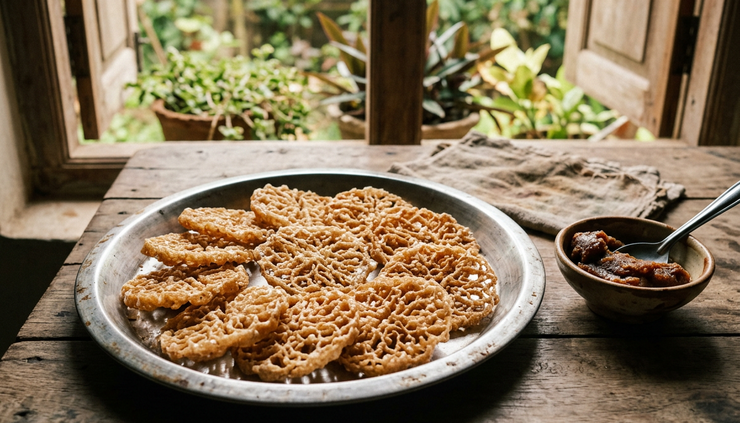
Image shows: Close-up of sarsatia sweet arranged on a steel plate in Sambalpur.
Pakhala is comfort food with history
Pakhala is found across Odisha, but Sambalpur gives it its own local rhythm. At its simplest, it is cooked rice soaked in water. It may be eaten plain, with curd, or with a mild tempering depending on the household. It is especially loved in summer.
Its history is practical. In a warm region, soaking rice helped make a cooling meal. It also reduced waste, since leftover rice could become the next day’s satisfying lunch. Over time, this practical habit became a beloved food tradition.
A good pakhala spread can include:
Fried brinjal or potato
Badi chura
Saag bhaja
Fish fry
Tomato chutney
Curd and green chilli
Pakhala carries a strong emotional value. For many people, it means home. It also shows how food history often grows from climate and labour. Farmers, workers, and families needed something cooling, filling, and easy to pair with available sides.
Dalma and santula show the wisdom of simple cooking
Dalma is a lentil and vegetable dish widely loved in Odisha. In Sambalpur homes, it becomes part of everyday comfort food. It may include dal, pumpkin, raw banana, papaya, brinjal, drumstick, or other seasonal vegetables. The seasoning is usually simple, letting the vegetables do the work.
Santula is another gentle dish made with vegetables, often lightly cooked and mildly seasoned. It is not meant to shock the tongue. It is meant to sit well with rice and keep the meal balanced.
These dishes tell us something important about Sambalpur’s food habits. Not every famous dish is fried, spicy, or festive. Some are famous because they appear again and again in family meals.
Festival foods connect Sambalpur’s kitchen with its cultural calendar
Sambalpur’s food history cannot be separated from festivals. The region celebrates seasonal and religious events with dishes that mark time, family, and harvest cycles.
Nuakhai brings new rice to the centre of the table
Nuakhai is one of the most important festivals of western Odisha. It celebrates the new harvest and carries deep emotional value for Sambalpur and nearby regions. The word itself is linked with eating the new crop.
On this day, families offer the new rice to the deity and then share food at home. Meals may include rice dishes, dal, vegetables, sweets, pithas, and local preparations. The exact menu changes from home to home, but the meaning stays the same. Food becomes gratitude.
Nuakhai also keeps older food traditions alive. Younger generations may move to Bhubaneswar, Raipur, Delhi, Bengaluru, or abroad, but many still associate Nuakhai with home food. A plate from this festival can say more about Sambalpur than a long speech.
Pithas carry both celebration and skill
Pithas are common across Odisha, yet each region has its own preferences, shapes, fillings, and festival links. In Sambalpur, households may prepare pithas such as manda, kakara, arisa, or other rice-based sweets depending on family tradition.
What makes pitha special is the labour behind it. Rice must be soaked, dried, ground, kneaded, filled, steamed, fried, or shaped. It takes time. That time is part of the culture.
Modern life has made ready-made sweets common, but pitha still holds its place during festivals, weddings, and family gatherings. It also creates another great engagement question.
Reader opinion topic
Which festival food should never disappear from Sambalpur homes?
Manda pitha
Kakara pitha
Arisa pitha
Sarsatia
Pakhala with traditional sides
Home-style dalma
This kind of question helps collect stories, not just votes. People often reply with memories of grandparents, village kitchens, or childhood trips.
Dishes in this image: Eye-level view of pithas and rice dishes prepared for a Sambalpur festival meal
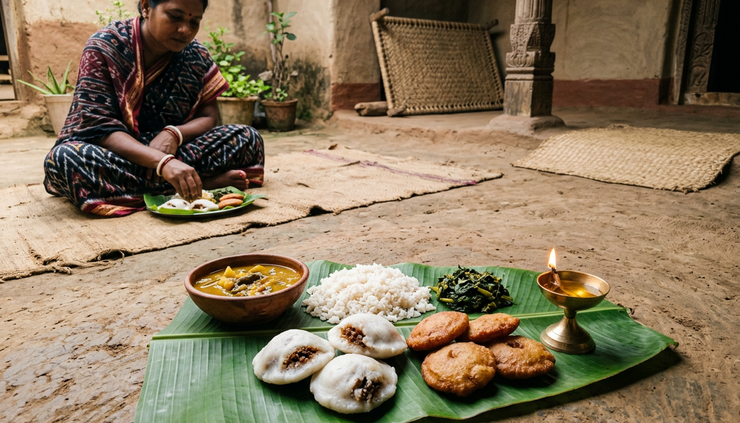
Image shows: Eye-level view of pithas and rice dishes prepared for a Sambalpur festival meal.
Street food and home food both define the city
Some cities divide their food identity into restaurant food and home food. Sambalpur blends both. A visitor can know the city through its street snacks, but a fuller picture comes only through a home meal.
Street food gives Sambalpur its easy public flavour. Chaul bara, bara ghuguni, samosa, spicy mixtures, and tea stalls create spaces where people meet without planning much. After tuition classes, office hours, shopping trips, and evening walks, food stalls become social points.
Home food gives the city its emotional base. Rice, dal, leafy greens, fish, vegetables, pakhala, chutneys, badi, and pithas build the everyday plate. These foods are shaped by what grows nearby, what the season allows, and what the family has always cooked.
The relationship between the two is important. Many famous street foods began as simple home-style ideas. Many home cooks also recreate street flavours during rainy evenings or family gatherings.
That is why any list of the Famous food of Sambalpur should include both sides. If the list only talks about restaurant dishes, it misses the soul of the place. If it only talks about home food, it misses the fun of the lanes.
Local fish and mustard flavours have river roots
Because of the Mahanadi and nearby water bodies, fish has a natural place in many Sambalpur households. Preparations may vary, but mustard-based gravies, fried fish, and simple curries are familiar in many Odia homes.
Fish dishes connect strongly with geography. River regions often develop practical ways of cooking fresh catch. Mustard paste, turmeric, garlic, green chillies, and mustard oil create flavour without needing too many ingredients.
Not every family eats fish, of course. Sambalpur’s food culture includes vegetarian, non-vegetarian, temple-linked, tribal, and festival-specific habits. That variety is part of what makes the local plate so rich.
How to turn Sambalpur food into a public conversation
A good food article should not end with a list. Sambalpur’s food culture becomes more interesting when people add their own memories. Surveys, polls, and opinion prompts can help create that exchange.
Here are useful topics that can get strong local participation.
Ask people to rank the top five Sambalpur foods
Give clear choices and allow one write-in answer. A sample list could include:
Chaul bara
Sarsatia
Pakhala
Dalma
Manda pitha
Bara ghuguni
Fish curry
Kakara pitha
Arisa pitha
10. Home-style saag bhaja
The write-in option is important because food pride is personal. Someone may nominate a village dish, a family pickle, or a sweet from one specific shop.
Collect stories about first food memories
Instead of asking only “What is your favourite dish?”, ask:
Which Sambalpur food reminds you of childhood?
Which dish do you miss when you leave the city?
Which food do you serve first to guests?
Which old recipe in your family should be preserved?
Which street stall has stayed in your memory for years?
These questions invite emotion. They also help document local food knowledge that may not appear in cookbooks.
Run a friendly debate between chaul bara and sarsatia
This is a perfect local food debate because both dishes represent different moods.
Chaul bara | Sarsatia |
Street snack | Traditional sweet |
Hot and savoury | Crisp and sweet |
Everyday favourite | Speciality item |
Best with ghuguni | Best as a delicate treat |
A poll like this does not need a serious winner. The fun lies in the arguments. Some people will choose chaul bara because it feels more common and accessible. Others will choose sarsatia because it feels unique to Sambalpur.
Map food memories by neighbourhood
Another strong engagement idea is a food memory map. Ask people to name the area where they had their best chaul bara, tea, sweets, pakhala meal, or festival food. Keep it respectful and avoid turning it into a fight between shops.
This can show how food lives across the city, not only in one market or one popular stretch.
Dishes in this image: Overhead view of a Sambalpur meal with pakhala, fried fish, saag, and chutney
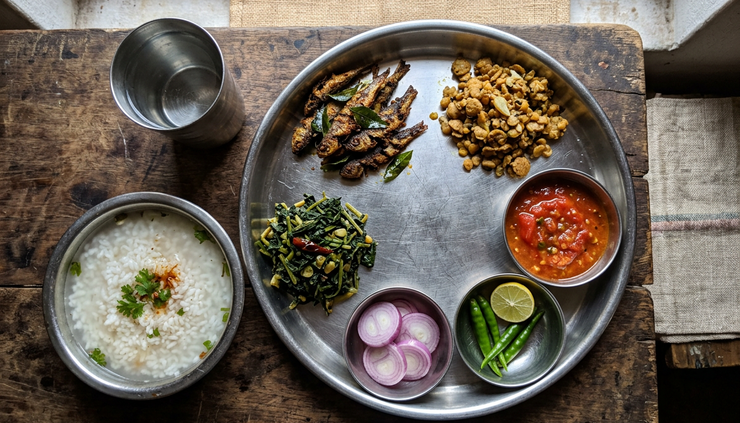
Image shows: Overhead view of a Sambalpur meal with pakhala, fried fish, saag, and chutney.
What Sambalpur’s food says about the city
Sambalpur’s food is not loud, but it stays with people. It tells the story of a river city, a temple town, a market centre, and a region proud of its harvest traditions. It shows how rice can become comfort, snack, sweet, festival food, and memory.
Chaul bara shows the social side of the city. Sarsatia shows the craft. Pakhala shows climate wisdom. Dalma and santula show balance. Pithas show family labour and celebration. Fish curries and mustard flavours show the pull of the river.
The best way to understand Sambalpur is to eat slowly and listen. Ask a local where to find the best chaul bara, and the answer may turn into a story. Ask about Nuakhai food, and someone may describe a whole family gathering. Ask about sarsatia, and you may hear pride in a sweet that deserves more attention.
Food in Sambalpur is not only what locals love most. It is how the city remembers itself, one plate at a time.
Travel, landmark, location, and shop information is based on publicly available online data at the time of writing. Details such as names, addresses, opening hours, availability, prices, and operating status may change. Please verify current details directly with the venue or official source before visiting.
Explore more city food guides
Continue exploring Indian food, landmarks and local markets: Pune · Surat · Srinagar · Leh · Port Blair


Comments