
Famous Foods of Cuttack A Taste of History Culture and Local Flavors

Cuttack does not ask you to understand it first. It simply feeds you. A plate of dahibara aloodum on a busy street, a square of smoky chhena poda, a paper cone of hot mixture, or a bowl of pakhala on a humid afternoon can explain the city better than any guidebook.
Set between the Mahanadi and Kathajodi rivers, Cuttack has been a capital, a trading centre, a festival city, and a meeting point for many communities. Its food carries those layers. Temple offerings, river fish, street snacks, festive sweets, and market foods all sit comfortably beside one another.
This guide explores the Famous food of Cuttack through its history, flavours, and everyday stories. It also includes quick opinion polls, because no food conversation in Odisha is complete without friendly disagreement.
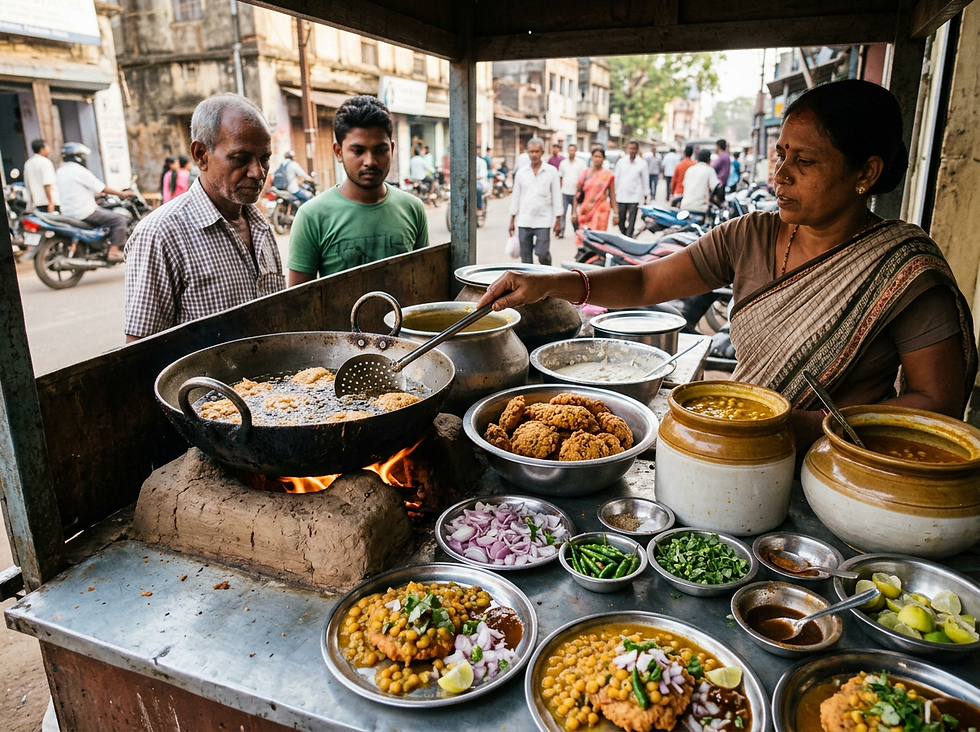
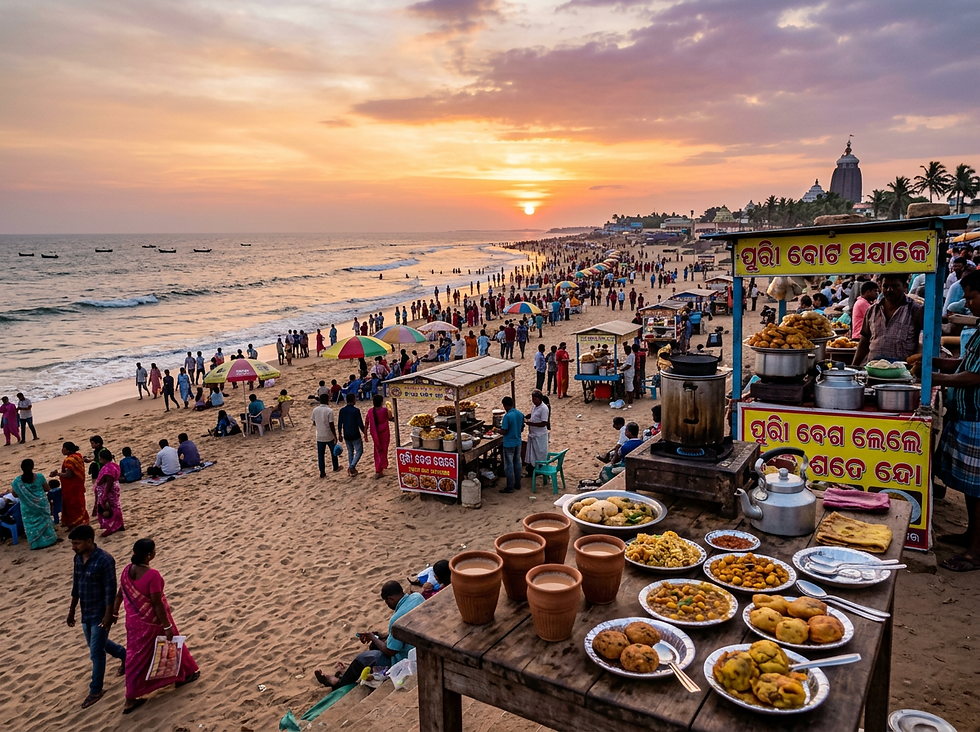
Dishes in this image: Wide-angle view of Cuttack street food stalls serving dahibara aloodum in the evening
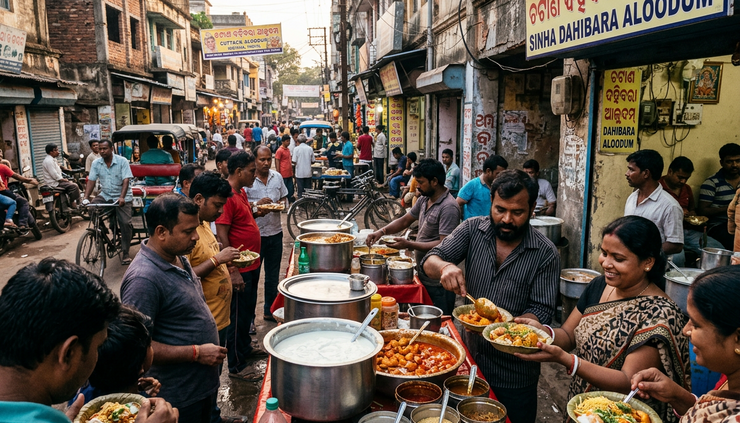
Image shows: Wide-angle view of Cuttack street food stalls serving dahibara aloodum in the evening.
Cuttack’s food history begins with rivers, trade, and tradition
Cuttack has always lived close to water. The Mahanadi and Kathajodi shaped its trade, movement, farming, and food habits. Rice became central to daily meals. Fish entered home kitchens in many forms. Seasonal vegetables, mustard paste, lentils, and fermented flavours became part of the local taste.
The city’s history also explains its food diversity. Cuttack served as the capital of Odisha for centuries and grew around forts, markets, religious sites, and artisan neighbourhoods. The famous Barabati Fort still reminds people of the city’s political past. Its old bazaars show another side of history, where traders, cooks, sweet-makers, and snack sellers helped shape the local palate.
Cuttack is also closely linked with Bali Jatra, the major fair that remembers Odisha’s ancient maritime links with Southeast Asia. While the fair is not only about food, it turns food into public memory. Families walk through the grounds, eat snacks, buy sweets, and pass down stories of sadhabas, the seafaring merchants of old Odisha.
Odisha’s temple food culture also plays a role. The Jagannath tradition, with its respect for rice, dal, vegetables, pithas, and sweets, has influenced food habits across the state. In Cuttack, that influence blends with street food innovation and market energy.
Here is a quick taste map of the city:
Food | What makes it special | Cultural link |
Dahibara aloodum | Cool curd vada with spicy potato curry and ghuguni | Street food identity |
Chhena poda | Baked cottage cheese sweet with caramelised edges | Odisha’s chhena sweet tradition |
Bara ghuguni | Fried lentil cakes with yellow pea curry | Market snack and breakfast culture |
Pithas | Rice-based festive cakes and dumplings | Odia festivals and home kitchens |
Machha besara | Fish cooked with mustard paste | River-based food habits |
Cuttack mixture | Spiced fried snack mix | Bazaar and tea-time culture |
Dahibara aloodum is the street food heart of Cuttack
If one dish carries Cuttack’s street food pride, it is dahibara aloodum. The base, dahi bara, comes from the wider Indian family of curd-soaked lentil dumplings. Cuttack made it its own by adding aloodum, ghuguni, chopped onions, coriander, roasted cumin, chilli powder, black salt, and sometimes a splash of tangy water.
The result is a dish of contrasts. The bara is soft and cool. The curd is lightly sour. The aloodum adds heat. Ghuguni gives body. Masala brings sharpness. Every spoonful changes a little depending on the vendor.
Cuttack’s version is usually served in leaf bowls or small plates, often eaten standing near the cart. It is breakfast for some, lunch for others, and an all-day craving for many. That flexibility is part of its charm.
The dish also reflects the old city’s habit of adapting food for public life. It is filling, affordable, quick to serve, and rich in flavour. It suits students, office-goers, shoppers, travellers, and families during evening outings.
Mini opinion poll
Which part of dahibara aloodum matters most?
[ ] Extra soft bara
[ ] Thick curd
[ ] Spicy aloodum
[ ] More ghuguni
[ ] Roasted masala on top
[ ] The vendor’s secret tangy water
If you have a favourite dahibara cart in Cuttack, share what makes it special. Is it the spice, the texture, the timing, or the memory attached to it?
Dishes in this image: Close-up of dahibara aloodum served in a leaf bowl with potato curry and spices
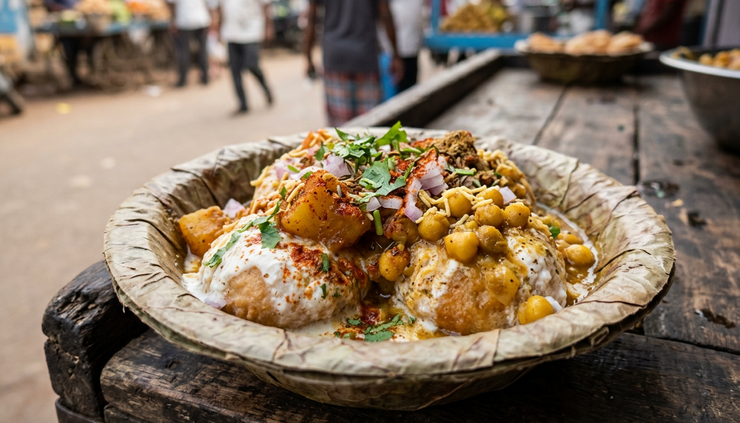
Image shows: Close-up of dahibara aloodum served in a leaf bowl with potato curry and spices.
Cuttack’s sweets show Odisha’s love for chhena and slow cooking
Odisha has a long and loved tradition of sweets made from chhena, or fresh cottage cheese. Cuttack enjoys that tradition deeply. Sweet shops across the city sell chhena-based desserts that connect everyday treats with festive hospitality.
Chhena poda brings smoky sweetness to the table
Chhena poda means “burnt cheese”, but the name does not do justice to the dish. It is made by mixing fresh chhena with sugar and often cardamom, then baking it until the surface turns brown and caramelised.
The flavour is rich without being too fussy. The edges taste smoky and deep. The inside stays soft and grainy. Good chhena poda has balance, with sweetness, warmth, and a slight nuttiness from slow baking.
While chhena poda is strongly associated with Odisha as a whole, Cuttack’s sweet shops helped make it a regular part of celebrations, train journeys, family visits, and festival purchases.
Rasagola carries a wider Odia story
Rasagola is central to Odisha’s sweet identity. The Odia tradition links it with religious offerings and festive food culture, especially around the Jagannath tradition. In Cuttack, rasagola is not just a dessert. It is a safe gift, a happy announcement, and a mark of hospitality.
The city’s rasagolas are usually soft, syrupy, and mild. Unlike sweets that depend on heavy spice or garnish, rasagola depends on texture. A good one should be spongy but not rubbery, sweet but not harsh.
Chhena jhili and other soft sweets
Chhena jhili, often associated with other parts of Odisha, is also popular in Cuttack sweet shops. It is made from chhena, shaped and fried, then soaked in syrup. The outside has a slight chew, while the inside stays soft.
Other sweets such as khaja, malpua, and different pithas also appear during festivals, weddings, temple visits, and seasonal gatherings. Together, they show how Cuttack keeps both shop-made and home-made sweet traditions alive.
Sweet tooth survey
Pick your Cuttack sweet mood:
[ ] Chhena poda with caramelised edges
[ ] Soft rasagola in light syrup
[ ] Chhena jhili after dinner
[ ] Khaja during festivals
[ ] Pitha made at home
What sweet reminds you of a visit to Cuttack, a family function, or a festival morning?
Dishes in this image: Eye-level view of chhena poda and rasagola arranged on a traditional steel plate
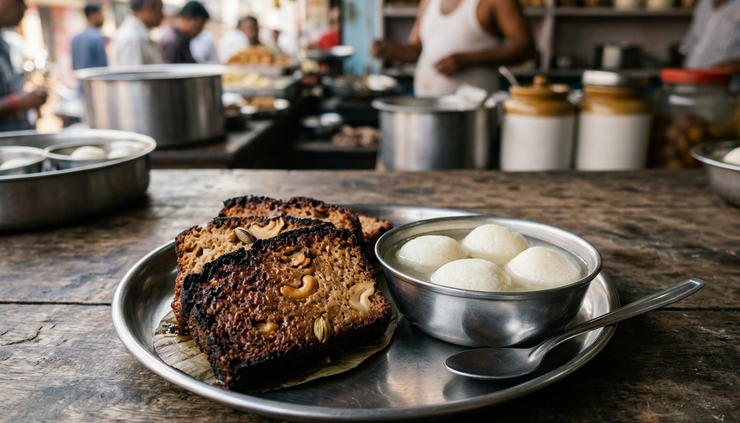
Image shows: Eye-level view of chhena poda and rasagola arranged on a traditional steel plate.
Market snacks and festival foods keep the city social
Cuttack’s snack culture is not limited to one famous dish. The city loves foods that can be eaten in markets, at tea stalls, during fairs, and on family walks.
Bara ghuguni is simple and satisfying
Bara ghuguni is a classic Odia snack combination. Bara is made from ground lentils, shaped and fried until crisp outside and soft inside. Ghuguni is a yellow pea curry cooked with spices. Together, they make a filling plate that works for breakfast or evening hunger.
The dish has the comfort of home food and the excitement of street food. It is not flashy. It wins through warmth, texture, and spice.
Gupchup brings the joy of standing around a stall
Gupchup, known elsewhere as pani puri or golgappa, has its own local personality in Odisha. In Cuttack, it often comes with spiced potato filling, tangy water, and a fast rhythm of serving. Part of the flavour is the experience itself, waiting for the next crisp puri before the last taste has fully faded.
Street foods like gupchup show how Cuttack turns eating into a shared activity. People gather around the stall, compare spice levels, ask for one more, and argue over which vendor gets the balance right.
Cuttack mixture belongs with tea and conversation
Cuttack mixture is a crunchy snack mix often made with sev, fried lentils, peanuts, flattened rice, spices, and other crisp elements. Every shop may have its own style. Some versions are hotter, some are more savoury, and some lean towards a richer fried flavour.
It suits the city’s tea-time habit. A handful of mixture with chai can turn a short break into a long conversation.
Pithas connect food to the festival calendar
Pithas are essential to Odia food culture. Varieties like manda pitha, kakara pitha, arisa pitha, and chakuli pitha are tied to festivals, seasons, and family kitchens. Many use rice flour, coconut, jaggery, lentils, or sesame.
In Cuttack, pithas connect the old and new city. Even when people buy from shops, the memory often points back to home kitchens, grandparents, and festival mornings.
River flavours and home-style meals reveal another side of Cuttack
Street food gets the loudest applause, but Cuttack’s home-style meals are just as important. They show how geography and climate influence the plate.
Rice is the centre of many meals. Dal, vegetable curries, saaga, bhaja, khatta, and fish preparations often surround it. Mustard paste is a key flavour in many Odia fish and vegetable dishes. It adds heat, sharpness, and depth without needing heavy masala.
Machha besara, fish cooked with mustard paste, reflects the riverine food habits of the region. The Mahanadi system supported fish eating across many communities, though food habits vary by household, caste, religion, and family tradition.
Then there is pakhala, cooked rice soaked in water and often eaten with curd, fried vegetables, fish fry, badi chura, or green chilli. It is especially loved in hot weather. Pakhala is not exclusive to Cuttack, but the city eats it with the ease of a place that understands summer.
These dishes may not always appear in tourist lists, yet they carry deep cultural memory. They belong to lunch tables, family visits, and quiet afternoons.
Home food poll
What tastes most like home?
Choice | Vote in your mind |
Pakhala with badi chura | ☐ |
Machha besara with rice | ☐ |
Dalma with vegetables | ☐ |
Saaga bhaja and rice | ☐ |
Chakuli pitha with curry | ☐ |
If Cuttack food brings back a memory, write about it in the comments. A grandmother’s pitha, a Sunday fish curry, a college-days snack stall, or a Bali Jatra food walk all count.
Dishes in this image: Top-down view of an Odia home meal with rice, fish curry, pakhala sides, and vegetables
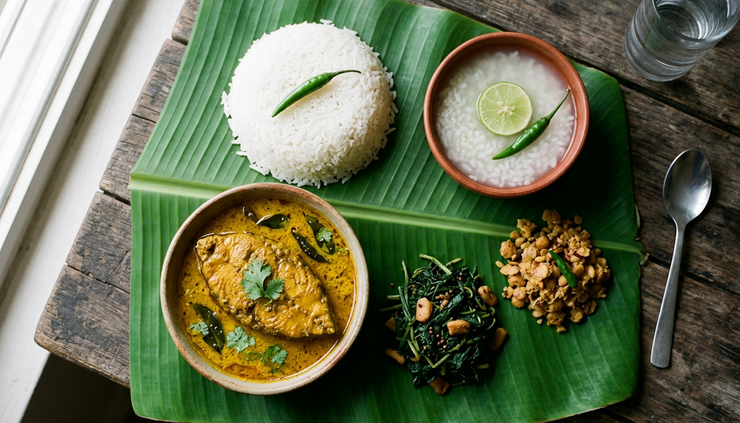
Image shows: Top-down view of an Odia home meal with rice, fish curry, pakhala sides, and vegetables.
Why Cuttack’s food memories last so long
The Famous food of Cuttack is not famous only because it tastes good. It lasts because it is tied to place. Dahibara aloodum belongs to the street corner. Chhena poda belongs to the sweet shop box carried home. Pitha belongs to festival mornings. Pakhala belongs to summer afternoons. Mixture belongs to tea and talk.
Food in Cuttack also carries the city’s mixed character. It is old but practical. Proud but open to change. Deeply Odia, yet shaped by trade, travel, markets, and public gatherings. The same city that celebrates silver filigree and remembers maritime history also knows how to build a meal from curd, lentils, potatoes, spice, and patience.
Before leaving this page, try this final reader survey:
Your Cuttack food rank
Number these from 1 to 5 in your personal order.
[ ] Dahibara aloodum
[ ] Chhena poda
[ ] Bara ghuguni
[ ] Pakhala
[ ] Cuttack mixture
Then add the dish you think is missing. Food lists are never final, especially in a city where every neighbourhood has its own loyal stall, sweet shop, and family recipe.
Cuttack’s best foods do more than fill a plate. They hold stories of rivers, fairs, temples, markets, and homes. The next time you eat in the city, slow down for a moment. Ask who made the dish, when it is usually eaten, and what memory it carries. That is when Cuttack begins to taste like history.
Travel, landmark, location, and shop information is based on publicly available online data at the time of writing. Details such as names, addresses, opening hours, availability, prices, and operating status may change. Please verify current details directly with the venue or official source before visiting.
Explore more city food guides
Continue exploring Indian food, landmarks and local markets: Pune · Surat · Srinagar · Leh · Port Blair

Comments