
Famous Foods of Lakshadweep A Flavorful Guide to Fish Curry Coconut Dishes and Local Sweets

Lakshadweep tastes like the sea, coconut groves, wood smoke, and slow cooking. On these coral islands, food is shaped by what is close at hand: fresh fish, grated coconut, rice, chillies, curry leaves, and simple spices carried through generations.
The famous foods of Lakshadweep are not built around heavy sauces or elaborate restaurant-style plating. They are home-style, coastal, and deeply practical. Fish is dried, fried, curried, smoked, or cooked with coconut milk. Rice appears in many forms. Coconut turns up in chutneys, curries, sweets, and even everyday snacks.
For travellers, this is the charm. A meal in Lakshadweep can feel both familiar and completely new, especially for those who know Kerala’s coastal food. The islands share cultural and culinary links with Kerala, yet their food has its own rhythm, shaped by isolation, the lagoon, and the daily catch.
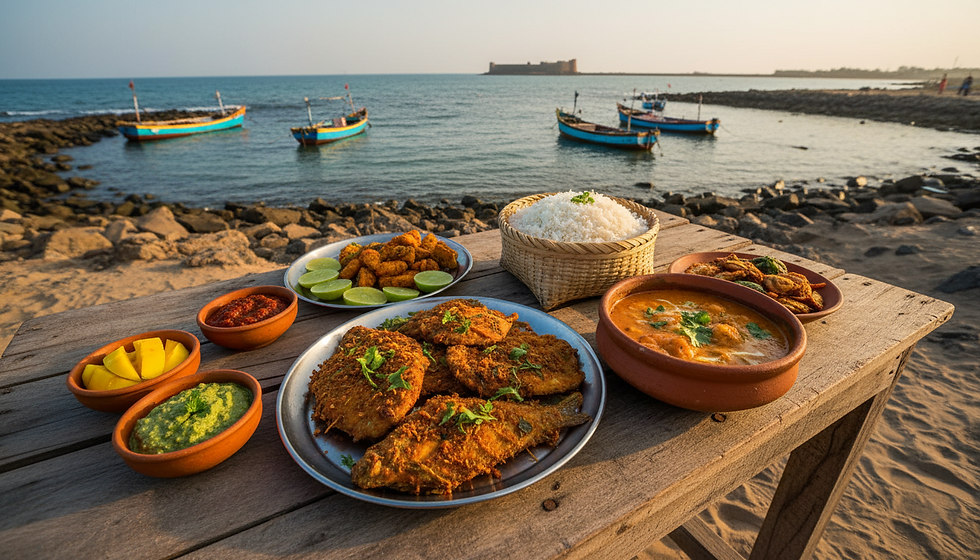
Dishes in this image: Wide-angle view of a Lakshadweep island meal served near the sea.

Image shows: Wide-angle view of a Lakshadweep island meal served near the sea..
Fish sits at the heart of Lakshadweep cooking
It is almost impossible to talk about Lakshadweep food without talking about fish. The islands sit in the Arabian Sea, and seafood is part of daily life. Tuna is especially important, but reef fish and other local catches also appear in homes and small eateries.
The best fish dishes here often follow a simple rule: do not hide the freshness. Cooks use coconut, chilli, turmeric, tamarind or kokum-like souring agents where available, and curry leaves to build flavour, but the fish remains the main character.
Ask around in an island kitchen and the answer is often the same: good fish does not need too much fuss. Freshness, timing, and the right balance of heat and sourness matter more than a long list of ingredients.
Lakshadweep fish curry is comforting and sharp
Fish curry is one of the most loved dishes on the islands. It varies from household to household, but a few features remain common. The curry usually has a coconut base, a gentle heat from chillies, and a tang that cuts through the richness of the fish.
A typical version may include:
Fresh fish cut into firm pieces
Grated coconut or coconut milk
Turmeric and chilli powder
Green chillies
Curry leaves
Onion or shallots
Tamarind, raw mango, or another souring ingredient, depending on local practice and availability
The cooking method is slow and careful. The masala is not rushed. The fish goes in only when the curry base is ready, because overcooking can make it dry. The result is a curry that tastes rich but not heavy, best eaten with steamed rice.
In many coastal homes, the pot used for fish curry matters too. Clay pots are valued because they hold heat well and give curries a rounded, earthy character. Even when modern cookware is used, the old method remains the guide: gentle heat, patient simmering, and no unnecessary stirring once the fish is added.
Fried fish keeps things simple
Fried fish in Lakshadweep is usually direct and satisfying. The fish is rubbed with turmeric, chilli, salt, and sometimes ginger-garlic paste or lime. It is then shallow-fried until the outside turns crisp and the inside stays moist.
This is the sort of dish that needs little explanation at the table. It works with rice, coconut chutney, or a thin curry. It also makes sense in the island setting, where the catch of the day can move from boat to pan with very little delay.
Dried and smoked fish add depth
Drying fish is both a preservation method and a flavour tradition. On islands where weather and access shape daily food habits, drying or smoking fish helps families store protein for later use. Dried fish can be cooked with coconut, chillies, onion, and spices, turning a practical ingredient into a punchy side dish.
Its flavour is stronger than fresh fish, so a little goes a long way. When balanced with coconut, it becomes salty, smoky, and deeply savoury.
Coconut gives Lakshadweep food its signature taste
If fish is the heart of Lakshadweep cuisine, coconut is its soul. It grows abundantly across the islands and appears in almost every part of the meal. Coconut is grated, roasted, ground into paste, pressed into milk, and used in sweets.
This is where the island’s food becomes especially memorable. Coconut softens chilli heat, thickens curries, adds sweetness to snacks, and brings aroma to simple rice dishes.
Dishes in this image: Close-up of grated coconut being mixed with spices for island cooking.

Image shows: Close-up of grated coconut being mixed with spices for island cooking..
Coconut-based fish preparations are everyday favourites
Many of the famous foods of Lakshadweep use coconut not as a garnish, but as the base of the dish. In fish curries, coconut may be ground into a smooth paste with spices. In other preparations, coconut milk creates a mellow, creamy gravy.
A coconut fish curry from the islands often tastes different from a hotel-style curry because it is lighter and more direct. The coconut does not overpower the fish. It supports it.
The best versions have three clear layers:
The sweetness and body of coconut
The heat of chilli and pepper
The brightness of souring agents or fresh curry leaves
This balance makes the curry ideal for hot coastal weather. It is filling, but not too rich.
Coconut chutney is more than a side
Coconut chutney in Lakshadweep may be served with rice-based dishes, snacks, or fish. It can be mild or fiery, depending on the cook. Fresh grated coconut is ground with green chillies, salt, and sometimes onion, curry leaves, or tamarind.
What makes it special is freshness. Coconut loses aroma quickly once grated, so chutney made just before a meal has a clean, sweet flavour that bottled or packaged versions cannot match.
Coconut rice and simple island meals
Rice is a staple across the islands, and coconut often joins it in subtle ways. Coconut rice, or rice served with coconut-rich curries and sides, makes up the backbone of many meals. The food is not always elaborate. A plate of rice, fish curry, coconut chutney, and fried fish can be enough.
That simplicity is part of the pleasure. Lakshadweep food does not try to impress with excess. It wins through balance, freshness, and the deep comfort of well-practised cooking.
Rice, bread, and snacks round out the island table
Lakshadweep meals often bring together rice, fish, coconut, and small savoury items. The islands share links with Kerala and the wider Malabar coast, so travellers may recognise certain dishes or techniques. Yet the local versions carry an island identity.
Steamed rice remains the most common partner for fish curry. It absorbs the coconut gravy and balances the heat. In some homes, rice-based batters and breads also appear, especially for breakfast or evening meals.
Pathiri and soft rice breads pair beautifully with curry
Pathiri, a soft rice flour flatbread associated with Malabar cuisine, is enjoyed in many coastal Muslim households and fits naturally with fish curries. Thin, mild, and slightly chewy, it lets the curry shine.
With a coconut fish curry, pathiri works almost like a spoon. It soaks up gravy without becoming too heavy. This makes it a good choice for anyone who wants a break from plain rice but still wants the full flavour of the curry.
Savoury snacks often use fish and coconut
Evening snacks in Lakshadweep may include fish-based fillings, coconut mixtures, and rice or wheat wrappers, depending on the household. Some snacks resemble familiar Kerala treats, while others are more local in style.
A good island snack often has contrast:
A crisp or soft outer layer
A moist filling
Heat from chilli or pepper
Sweetness from coconut or onion
A clean finish from curry leaves
These snacks are usually not restaurant showpieces. They are made for tea time, family gatherings, or guests who arrive hungry after a boat ride or walk by the shore.
Dishes in this image: Eye-level view of fried fish and rice breads on a banana leaf.

Image shows: Eye-level view of fried fish and rice breads on a banana leaf..
Local sweets bring coconut and jaggery together
Lakshadweep sweets tend to be homely rather than ornate. Coconut, rice, jaggery, and cardamom are common flavours. These sweets are often made for family occasions, festivals, or as small treats with tea.
What makes them appealing is their gentle sweetness. They do not need heavy cream or elaborate decoration. Fresh coconut and jaggery do most of the work.
Coconut ladoo is simple and loved
Coconut ladoo is a natural fit for the islands. Grated coconut is cooked with jaggery or sugar until it binds, then shaped into small balls. Cardamom may be added for aroma.
The texture depends on the cook. Some versions are soft and moist. Others are slightly chewy. Either way, the flavour is unmistakably coconut-forward.
For travellers interested in the famous foods of Lakshadweep, coconut sweets are worth seeking out because they show another side of the cuisine. The same ingredient that thickens a fish curry can also become a tender sweet served with tea.
Rice and coconut sweets feel festive
Rice flour and coconut appear in several traditional sweet preparations across the region. They may be steamed, pan-cooked, or shaped into dumplings with sweet coconut filling. Jaggery adds depth, while cardamom gives a warm fragrance.
Steaming is especially well-suited to island cooking. It keeps sweets soft and light, and it does not require much oil. The result is a dessert that feels comforting without being heavy.
Banana and coconut make easy island desserts
Bananas are often paired with coconut in coastal cooking. They may be fried, cooked with jaggery, or served with coconut-based mixtures. These sweets are simple, quick, and satisfying after a fish-heavy meal.
The attraction lies in the contrast. After chilli, tamarind, and fried fish, a warm banana sweet with coconut feels calm and rounded.
Traditional cooking methods keep the flavour honest
Lakshadweep cuisine depends as much on technique as ingredients. Many dishes use basic tools and slow methods that protect flavour.
Grinding fresh coconut is one of the most important steps. Coconut paste made at home has a texture and aroma that ready-made versions rarely match. The paste thickens curries naturally and carries spices evenly.
Slow simmering gives fish curry its body. Once fish is added, cooks handle it gently. Shaking the pot instead of stirring helps keep the pieces whole.
Shallow-frying gives fish a crisp crust without burying it under batter. The spices cling to the surface, and the fish remains the focus.
Drying fish reflects island practicality. It preserves the catch and creates an ingredient with intense flavour. When cooked with coconut, dried fish becomes a bold side dish that can transform a simple plate of rice.
Steaming is common for rice-based foods and sweets. It keeps food soft, clean-tasting, and suited to warm weather.
These methods show why Lakshadweep food feels so grounded. It is not complicated for the sake of being complicated. It comes from everyday life.
Dishes in this image: Overhead view of coconut sweets and tea served in a coastal home.

Image shows: Overhead view of coconut sweets and tea served in a coastal home..
What to try first when tasting Lakshadweep food
For a first taste of Lakshadweep, start with the dishes that show the main flavours clearly. A simple meal can tell you more than a long menu.
Try this combination if available:
Fish curry with steamed rice
Fried fish with chilli and turmeric
Coconut chutney
A coconut-based vegetable or fish side
Coconut ladoo or another jaggery sweet
This meal gives you the full arc of the cuisine: sea, spice, coconut, rice, and sweetness.
Travellers should also stay open to home-style variations. The same fish curry may taste different from one island to another, or even from one family to the next. Some cooks make it fiery. Some keep it mellow. Some use a thicker coconut paste. Others prefer a thinner, sharper gravy.
That variation is part of the appeal. Food in Lakshadweep is not frozen into one fixed recipe. It moves with the catch, the season, the cook, and the occasion.
A final taste of the islands
The famous foods of Lakshadweep are built on a short list of powerful ingredients: fish, coconut, rice, chilli, curry leaves, and jaggery. Yet from these basics, the islands create meals that feel generous and memorable.
Fish curry brings warmth and tang. Fried fish adds crunch and spice. Coconut dishes give body and sweetness. Rice breads and steamed foods bring comfort. Local sweets close the meal softly, often with jaggery and cardamom.
The best way to understand Lakshadweep cuisine is to eat it slowly. Notice the freshness of the fish, the texture of grated coconut, the balance of chilli and sourness, and the way every dish seems connected to the sea. That connection is what makes the food unforgettable.
Travel, landmark, location, and shop information is based on publicly available online data at the time of writing. Details such as names, addresses, opening hours, availability, prices, and operating status may change. Please verify current details directly with the venue or official source before visiting.
Explore more city food guides
Continue exploring Indian food, landmarks and local markets: Pune · Surat · Srinagar · Leh · Port Blair


Comments