
Famous Foods of Dadra and Nagar Haveli A Flavorful Guide to Local Dishes and Home Cooking

The most memorable meals in Dadra and Nagar Haveli rarely arrive with ceremony. They come from a clay pot opened near a wood fire, a hot rotla slapped straight onto a plate, or a fish curry ladled beside steaming rice. This small region, tucked between Gujarat and Maharashtra, carries a food culture shaped by forests, farms, river life, tribal communities, and neighbouring states.
The famous foods of Dadra and Nagar Haveli are not only about taste. They tell stories of seasonal cooking, slow methods, shared meals, and everyday ingredients used with skill. For travellers, this cuisine offers a softer, earthier side of western India. For home cooks, it is full of practical ideas: roasted grains, root vegetables, fresh herbs, simple spices, and patient cooking.
Dishes in this image: Wide-angle view of a rustic meal from Dadra and Nagar Haveli served on banana leaves.

Image shows: Wide-angle view of a rustic meal from Dadra and Nagar Haveli served on banana leaves..
The food culture of Dadra and Nagar Haveli begins with land and season
Dadra and Nagar Haveli’s food sits at a natural meeting point. Gujarat brings farsan, lentil dishes, kadhi, and a love for sweet-savoury balance. Maharashtra adds bhakri, fish curries, peanuts, and coconut in some homes. Tribal communities such as the Warli, Kokna, Dhodia, and other local groups bring forest produce, millets, roots, pulses, seasonal greens, and wood-fire cooking.
That mix makes the cuisine feel grounded. Many dishes are cooked for family meals rather than restaurant menus. The flavours are often less oily than city food, with more focus on smoke, grain, fresh chilli, garlic, sesame, groundnut, and the natural sweetness of vegetables.
A simple meal might include:
Nagli or ragi roti
Made from finger millet flour and eaten with chutney, curry, or jaggery.
Bajra or jowar rotla
Thick millet flatbreads that pair well with spicy and sour dishes.
Rice and dal
A comforting staple, especially where rice cultivation and river-side eating habits influence the plate.
Seasonal greens and root vegetables
Cooked with garlic, chilli, turmeric, and sometimes crushed peanuts.
Fish or chicken curry
Prepared in many local homes, especially where access to river fish or market fish is common.
The charm lies in how flexible the food is. A dish changes with the season, the crop, and the cook’s hand. That is why two homes may serve the same dish in slightly different ways.
Ubadiyu is the smoky winter favourite worth seeking out
If one dish deserves special attention, it is ubadiyu. It is one of the most loved winter dishes in and around Dadra and Nagar Haveli, Valsad, and nearby South Gujarat. Many travellers compare it to undhiyu, but ubadiyu has its own personality.
Ubadiyu is usually made with winter vegetables, fresh beans, purple yam, sweet potato, raw banana, potatoes, brinjal, and green garlic. The vegetables are mixed with spices and herbs, then packed into an earthen pot. Traditionally, the pot is sealed and placed upside down over a slow fire or buried among hot embers. The vegetables steam and roast at the same time, soaking up a smoky aroma.
The result is soft, earthy, and deeply comforting. The best ubadiyu tastes like winter itself: green garlic, root vegetables, mild heat, and smoke.
There is a lovely social side to this dish. In many homes, ubadiyu is not cooked for one person. It is made in a large batch, often for a group. Someone cleans the beans. Someone peels the yam. Someone checks the fire. When the pot is opened, the steam carries that unmistakable smell of roasted vegetables and herbs.
A traveller once described the first bite as “simple, but impossible to forget”. That feels accurate. Ubadiyu is not a fancy dish. Its beauty comes from patience.
How to try making ubadiyu at home
A true earthen-pot ubadiyu needs space and a safe outdoor cooking setup. At home, you can still get close to the flavour.
Use a heavy-bottomed pot or pressure cooker without the whistle for slow cooking. Layer the vegetables from firm to soft. Add plenty of green garlic if available. Use fresh methi leaves, coriander, ginger, green chilli, ajwain, turmeric, salt, and a little oil.
For a smoky touch, try the dhungar method. Heat a small piece of charcoal, place it in a steel bowl inside the cooked vegetables, add a few drops of ghee, and cover the pot for a few minutes. Use this carefully and only in a well-ventilated kitchen.
Serve ubadiyu with chutney, curd, or a thick millet rotla.
Dishes in this image: Close-up of ubadiyu vegetables being opened from a clay pot near a wood fire.

Image shows: Close-up of ubadiyu vegetables being opened from a clay pot near a wood fire..
Millet breads and rustic staples show the strength of daily food
The everyday breads of Dadra and Nagar Haveli are just as important as the festive dishes. Nagli, also called ragi or finger millet, is common in several tribal and rural kitchens. Bajra and jowar also appear often, especially as thick rotlas or bhakris.
These breads are filling, practical, and suited to hard-working days. They do not need rich gravies to shine. A hot rotla with garlic chutney, onion, curd, or a simple dal can make a complete meal.
Nagli roti has a deep, earthy flavour
Nagli flour has a slightly nutty taste and a darker colour. The dough can be tricky because millet flours do not behave like wheat. They need warm water and gentle handling. Many experienced cooks pat the dough by hand instead of rolling it thin.
To make it at home:
Mix nagli flour with a pinch of salt.
Add hot water slowly and bring it together.
Knead while warm until soft.
Pat into a round flatbread using wet hands.
Cook on a hot tawa, then finish directly over flame if comfortable.
Eat it hot. Once cold, millet breads can become firm, so serve them fresh.
Bajra rotla pairs beautifully with bold chutneys
Bajra rotla is thicker and more rustic than a wheat roti. It works well with garlic chutney, roasted brinjal, dal, kadhi, or ubadiyu. A spoon of ghee on top turns it into comfort food.
For travellers, this is often the dish that changes the pace of a meal. Instead of soft wheat rotis, a bajra rotla asks you to slow down. Tear a small piece, press it into curry, add onion or chilli, and the meal feels deeply local.
River fish, chicken curry, and homestyle gravies add warmth to the plate
Dadra and Nagar Haveli does not have one single curry that defines every home. The region’s non-vegetarian cooking changes by community, market access, and family taste. Still, fish and chicken dishes are an important part of many local meals.
Fish curries tend to be practical and homely. Local cooks may use river fish or market fish, with a base of onion, garlic, chilli, turmeric, coriander, and sometimes tamarind or kokum-like souring agents depending on availability and family tradition. Some versions use coconut, while others stay lighter and sharper.
Chicken curry may be cooked with onion, tomato, ginger, garlic, dry spices, and fresh coriander. In rural-style cooking, the gravy is often thicker and less polished than restaurant curry. That is part of its appeal. It tastes like food made to be eaten with bhakri, rice, or rotla, not photographed first.
One of the nicest memories connected to this kind of food is the quiet rhythm of a home kitchen. The curry simmers while rotlas cook one by one. Someone tastes the salt. Someone crushes chilli and garlic on a stone. The meal comes together without fuss, but every element matters.
Tips for recreating a local-style curry
Keep the spice list short. Do not overload the dish with too many masalas. Let the main ingredient speak.
Good basics include:
Onion, ginger, and garlic
Green chilli or dry red chilli
Turmeric and coriander powder
Fresh coriander leaves
Tamarind, lemon, or another souring ingredient
A small amount of ground peanut or coconut, if you want body
Cook the base slowly until the raw smell fades. Add fish near the end so it stays tender. For chicken, allow enough time for the meat to cook fully and absorb the gravy.
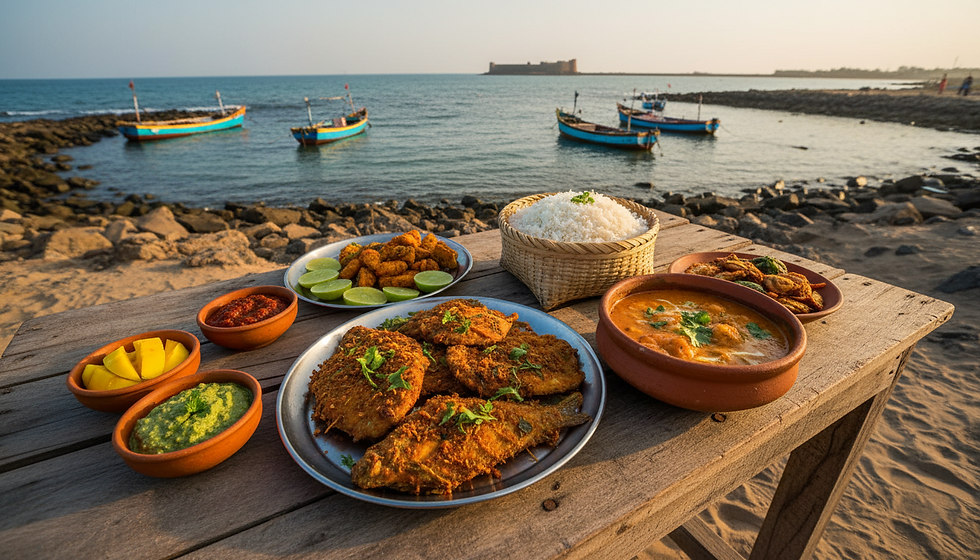
Dishes in this image: Eye-level view of a homestyle fish curry with rice and millet bread on a wooden table.

Image shows: Eye-level view of a homestyle fish curry with rice and millet bread on a wooden table..
Snacks, sweets, and neighbouring influences make the cuisine easy to love
The famous foods of Dadra and Nagar Haveli also include dishes shaped by nearby Gujarat and Maharashtra. In towns and markets, it is easy to find snacks that feel familiar across western India, yet they become part of the local food experience.
Khaman and dhokla bring a Gujarati touch
Khaman and dhokla are popular snacks in many parts of Gujarat and adjoining regions. They are light, steamed, and usually made from gram flour or fermented rice-lentil batter, depending on the version. The tempering of mustard seeds, curry leaves, green chilli, and sesame adds aroma.
They matter because they show how food moves across borders. Dadra and Nagar Haveli’s location means Gujarati flavours naturally enter tea-time plates, roadside shops, and home kitchens.
At home, khaman is one of the easier snacks to attempt. Use gram flour, curd or lemon juice, turmeric, salt, and a raising agent such as fruit salt. Steam it gently, then finish with a hot tempering.
Dudhi muthiya makes bottle gourd worth celebrating
Dudhi muthiya, made with grated bottle gourd, flour, spices, and herbs, is another dish that fits well into the region’s Gujarati-influenced food habits. It can be steamed and then lightly tempered, or sometimes pan-fried after steaming.
It is useful for home cooks because it turns a humble vegetable into something snackable. Grated dudhi keeps the muthiya moist. Besan, wheat flour, or millet flour gives structure. Sesame seeds, chilli, ginger, and coriander bring flavour.
Serve it with green chutney or curd for a light meal.
Lapsi, sheera, and festive sweets keep meals rooted in family life
For sweet dishes, many homes lean towards familiar western Indian preparations such as lapsi, sheera, kheer, and jaggery-based sweets. These are often tied to festivals, family gatherings, or small celebrations.
Lapsi, made with broken wheat, ghee, jaggery or sugar, and cardamom, has a special comfort. It is not flashy, but it carries the feeling of a family kitchen. In some homes, dry fruits are added. In others, it stays plain and warm.
Food culture is not only about what is rare. Sometimes the most meaningful dish is the one made on a festival morning, stirred slowly while everyone waits.
How to eat locally when travelling through Dadra and Nagar Haveli
The best way to understand this cuisine is to look beyond big menus. Local food often appears in homes, small eateries, roadside stalls, seasonal markets, and community settings. Silvassa, the main town, offers a good starting point, but smaller places may offer more rustic meals if you know where to ask.
When travelling, keep these tips in mind:
Ask for seasonal dishes, especially in winter.
Try millet breads instead of always choosing wheat rotis.
Look for ubadiyu when winter vegetables are available.
Taste local chutneys, pickles, and simple vegetable preparations.
Choose small, busy places where the food turns over quickly.
If invited to a home meal, accept with respect and curiosity.
A useful phrase to remember is to ask what is cooked fresh that day. Many of the region’s best dishes depend on what the cook has available, not what a printed menu promises.
If eating spicy food is a concern, ask for less chilli. Local food can range from mild to fiery depending on the cook. Curd, rice, and rotla help balance stronger flavours.
Practical tips for bringing the flavours home
Cooking Dadra and Nagar Haveli-inspired food at home does not require a restaurant kitchen. The key is to start with the right spirit: simple ingredients, seasonal produce, and patient cooking.
Here are a few ways to begin.
Cook with millets once a week
Try ragi, bajra, or jowar rotla with dal or curry. Millet flour takes practice, so start with small batches.
Use green garlic when in season
Green garlic changes the flavour of ubadiyu, chutneys, and vegetable dishes. It adds freshness without needing complex spices.
Choose root vegetables for slow cooking
Sweet potato, yam, potato, and raw banana hold up well in covered-pot dishes.
Keep chutneys fresh and sharp
A quick chutney of coriander, green chilli, garlic, lemon, and salt can lift a plain meal.
Respect the smoke, but stay safe
Wood-fire cooking gives traditional dishes their depth, but indoor kitchens need care. Use smoky tricks only when safe, or simply roast vegetables well for a deeper flavour.
Eat the food hot
Millet breads, steamed snacks, and rustic curries taste best soon after cooking. Timing matters more than decoration.
Dishes in this image: Top-down view of millet flour, green garlic, root vegetables, and spices arranged for local cooking.

Image shows: Top-down view of millet flour, green garlic, root vegetables, and spices arranged for local cooking..
A cuisine that rewards slow attention
The famous foods of Dadra and Nagar Haveli are not loud or showy. They are warm, seasonal, and rooted in place. Ubadiyu brings the drama of smoke and winter vegetables. Nagli and bajra rotlas show the strength of millet-based eating. Fish curries and chicken gravies add comfort. Snacks like khaman and muthiya reflect the region’s easy exchange with Gujarat and Maharashtra.
For travellers, the best approach is simple: ask what is local, eat what is seasonal, and stay open to home-style food. For cooks, start with one dish, perhaps a millet rotla or a pot of ubadiyu-style vegetables, and let the ingredients do most of the work.
A plate from Dadra and Nagar Haveli reminds us that memorable food does not always need rare spices or complicated technique. Sometimes it needs fresh produce, a steady flame, and someone willing to cook with care.
Travel, landmark, location, and shop information is based on publicly available online data at the time of writing. Details such as names, addresses, opening hours, availability, prices, and operating status may change. Please verify current details directly with the venue or official source before visiting.
Explore more city food guides
Continue exploring Indian food, landmarks and local markets: Pune · Surat · Srinagar · Leh · Port Blair


Comments