
Famous Foods of Kohima Nagaland A Must Try Guide to Local Flavors

Kohima does not serve food that tries to impress from a distance. It pulls you close with smoke, fermented flavours, fresh herbs, chillies, bamboo shoot, and the comfort of rice served with almost everything.
Food in Nagaland’s capital is direct, hearty, and deeply tied to home cooking. Many dishes are built around simple ingredients, but the flavour can be bold. Smoked meat, dried leaves, seasonal greens, fiery chutneys, and fermented soybean appear often. For anyone exploring the famous foods of Kohima (Nagaland), the real joy is in tasting how local kitchens turn everyday ingredients into meals with character.
Dishes in this image: Wide-angle view of a traditional Naga meal served on a wooden table with rice, smoked pork, chutney, greens, and bamboo shoot dishes
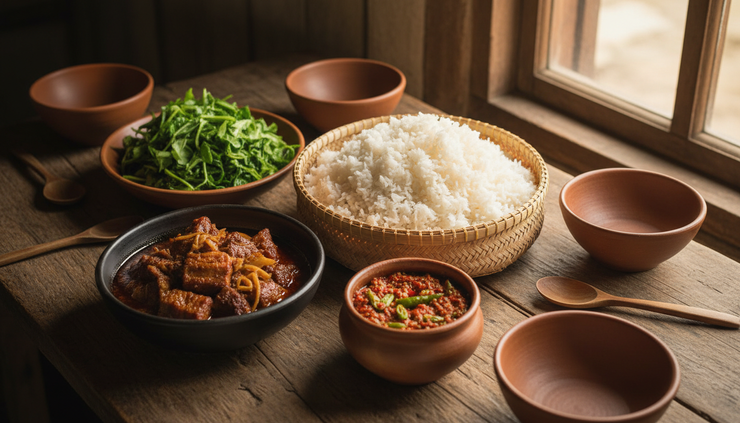
Image shows: Wide-angle view of a traditional Naga meal served on a wooden table with rice, smoked pork, chutney, greens, and bamboo shoot dishes.
Why Kohima’s food tastes so distinct
Kohima sits in the Naga Hills, and its food reflects the land around it. The climate supports leafy greens, herbs, chillies, bamboo, and local vegetables. Smoking, drying, and fermenting help preserve food and add deep flavour.
Rice is the centre of most meals. Around it come meat, greens, chutney, broth, and fermented elements. Pork is especially common, though chicken, beef, fish, snails, and vegetarian dishes also appear in local food culture. Food is often cooked with fewer spices than many Indian regional cuisines, but that does not mean it is mild. The power comes from smoked ingredients, fermented soybean, bamboo shoot, and chillies.
A few flavours appear again and again:
Smoked meat Often pork, cooked slowly until the fat, smoke, and salt settle into the dish.
Bamboo shoot Used fresh, dried, or fermented, with a sour and earthy bite.
Akhuni or axone Fermented soybean with a strong aroma and deep savoury taste.
Raja mircha Also known as bhut jolokia or king chilli, used carefully because it is extremely hot.
Wild and local greens Boiled, stewed, or cooked with meat for a clean, earthy balance.
Kohima’s food is not only about heat. A good meal balances smoky, sour, sharp, bitter, and savoury notes. That balance is what makes the local table memorable.
Must try meat dishes in Kohima
Meat dishes are among the best-known foods in Kohima, especially pork preparations. The cooking style is often slow and practical. You taste the ingredient first, then the smoke, then the chilli or fermented flavour.
Smoked pork with bamboo shoot
This is one of the most loved Naga dishes and a strong starting point for anyone new to Kohima’s food. Pieces of smoked pork are cooked with bamboo shoot, which cuts through the richness of the fat. The result is smoky, tangy, salty, and deeply satisfying.
The bamboo shoot may taste sharp at first, especially if you are not used to fermented or sour ingredients. After a few bites, it starts to make sense. It keeps the pork from feeling heavy and gives the dish its signature edge.
This dish usually pairs best with plain steamed rice. That simplicity matters. Rice softens the intensity and lets the smoky broth shine.
Pork with axone
Pork with axone, also written as akhuni, is another essential dish in Kohima and across many Naga food traditions. Axone is fermented soybean. It has a strong smell, but the taste is rich, savoury, and nutty.
When cooked with pork, axone creates a thick, comforting flavour. It adds depth without needing a long list of spices. Some versions include chilli, garlic, ginger, or local herbs, but the heart of the dish remains pork and fermented soybean.
If you enjoy foods like miso, fermented bean pastes, or strong cheeses, this dish may feel surprisingly familiar. If not, start with a small portion and eat it with rice.
Smoked beef or smoked meat stew
Many homes and eateries in Kohima serve smoked meat in stew-like preparations. The meat cooks with simple seasonings, greens, bamboo shoot, or chilli. The broth is often thin but flavourful, made for mixing into rice.
The appeal lies in the smoked aroma. It gives the dish warmth even when the ingredient list is short. A bowl of smoked meat stew on a cool Kohima evening feels exactly right.
Dishes in this image: Close-up of smoked pork cooked with bamboo shoot in a dark earthen bowl beside steamed rice

Image shows: Close-up of smoked pork cooked with bamboo shoot in a dark earthen bowl beside steamed rice.
Everyday dishes that show the soul of Naga cooking
Not every famous food in Kohima is fiery or meat-heavy. Some of the most comforting dishes are simple, nourishing, and built for daily eating.
Galho
Galho is often described as a Naga-style rice porridge, though that does not fully capture its comfort. It is made with rice, vegetables, and sometimes meat. The texture can range from soft and soupy to thick and filling.
It is the kind of dish that suits cold weather, travel fatigue, or a quiet meal after a long day. Galho is gentle compared with chilli-heavy dishes, but it still carries local flavour through greens, smoked meat, or fermented ingredients.
In Kohima, galho may appear in homes, local food stalls, or small eateries serving traditional meals. It is also a good choice if you want something warming but not too spicy.
Anishi with pork
Anishi is made from dried yam leaves. The leaves are processed and stored, then cooked later, often with pork. The flavour is earthy, slightly bitter, and rich when combined with meat.
This dish shows how Naga cooking respects preservation. Drying leaves is not only practical, it changes the flavour and texture. When simmered with pork, anishi brings a deep green taste that feels rustic and homely.
It may not be the first dish tourists recognise, but it is one of the dishes that gives a meal in Kohima real local depth.
Boiled vegetables and local greens
A traditional meal often includes boiled vegetables or greens. These may sound plain, but they play an important role. They balance smoked pork, fermented soybean, and chilli chutney.
The vegetables are usually cooked simply, with salt, herbs, or a mild broth. They cleanse the palate and make the meal feel complete. In many Naga meals, this kind of side dish is not an afterthought. It is part of the balance.
Bamboo shoot curry
Bamboo shoot appears in many forms. It may be cooked with pork, fish, chicken, or vegetables. Its sour, woody, slightly funky taste is central to the food identity of the region.
If you are trying bamboo shoot for the first time, expect something different from the usual North Indian or South Indian flavour profile. It has a clean sharpness that grows on you.
Chutneys, chillies, and fermented flavours
Kohima’s side dishes can be as memorable as the main course. A small spoonful of chutney can change the whole meal.
Raja mircha chutney
Raja mircha, also called king chilli, is one of the hottest chillies in the world. In Kohima, it is often used in chutneys, pickles, and meat dishes. A chutney made with raja mircha may include tomato, garlic, fermented fish, dried fish, or local herbs.
The heat can be intense. The best way to enjoy it is with rice and a main dish, not by eating a large spoonful on its own. A tiny amount can add fruitiness, smoke, and powerful heat.
For visitors, this is a must try, but with respect. Ask before assuming the spice level is manageable.
Akhuni chutney
Akhuni is not only used with pork. It can also appear in chutneys and side preparations. The flavour is strong, savoury, and fermented. It works well with rice and boiled vegetables.
Akhuni’s aroma can surprise first-time eaters. Local diners often enjoy it for the same reason others enjoy aged pickles, fermented fish, or strong spices. It brings a flavour that cannot be copied by fresh ingredients.
Dried fish chutney
Dried fish chutney is another bold side often found in Naga meals. It may be pounded with chilli, garlic, and salt. The taste is smoky, salty, and sharp.
A little goes a long way. It pairs beautifully with plain rice and boiled greens. If you enjoy strong coastal-style dried fish flavours, this chutney may become a favourite.
Dishes in this image: Overhead view of Naga chilli chutneys in small bowls with raja mircha, dried fish, garlic, and herbs
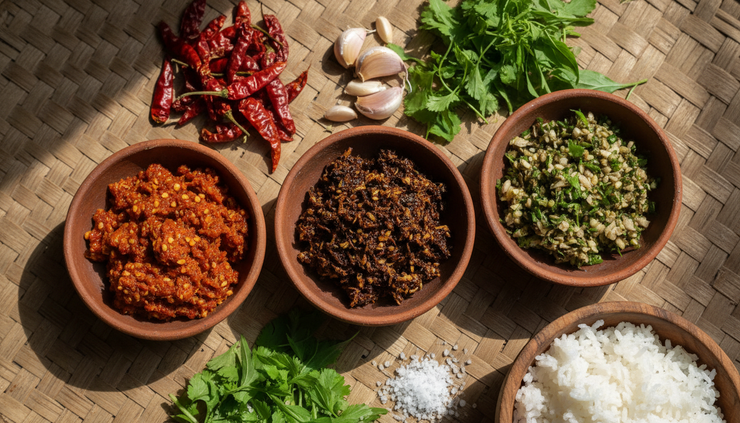
Image shows: Overhead view of Naga chilli chutneys in small bowls with raja mircha, dried fish, garlic, and herbs.
Snacks, drinks, and market foods to look for
Kohima’s food story is not limited to plated meals. Markets, home kitchens, festivals, and small eateries offer many chances to taste local flavours in a more casual way.
Sticky rice preparations
Sticky rice appears in parts of Naga food culture and may be served during special occasions or as a simple snack. It can be eaten plain, paired with savoury dishes, or used in local preparations depending on the community and household tradition.
Its soft, chewy texture feels comforting and works well with strong flavours. If you find it served with chutney or smoked meat, try the combination.
Local pickles
Pickles made with bamboo shoot, chilli, or local vegetables can add instant brightness to a meal. They are sharp, salty, and sometimes very hot. A small amount with rice can lift the entire plate.
Pickles also make a good food souvenir if bought from a reliable local seller and packed properly for travel.
Zutho and local rice beer
Zutho is a traditional rice beer associated with Naga communities. It is often homemade and linked with social gatherings, festivals, and local hospitality. Availability can vary, and visitors should enjoy it respectfully where it is appropriate and legal.
The flavour is usually mild compared with stronger alcoholic drinks. It reflects the role of rice beyond the dinner plate.
Food at local markets
Kohima’s markets can be eye-opening for food lovers. You may see smoked meats, seasonal greens, bamboo shoot, chillies, local beans, fermented products, herbs, and forest produce. These markets help explain why the food tastes the way it does.
They also show how closely local food follows the season. What appears on a plate often depends on what is fresh, preserved, or available nearby.
When walking through markets, be curious but polite. Ask before photographing people or stalls. Food is part of daily life, not a display.
How to enjoy Kohima food if you are trying it for the first time
The flavours of Kohima can be bold, especially if you are new to fermented foods or very hot chillies. A little preparation helps you enjoy the meal better.
Start with a mixed plate if available. Rice, one meat dish, one vegetable dish, and one chutney give you a fair sense of the cuisine. Do not begin with the hottest chutney as your first bite. Let the meal build.
Here are a few practical tips:
Eat strong dishes with rice. Rice softens chilli, salt, smoke, and fermentation.
Ask about spice levels. Local “medium spicy” may still feel hot to visitors.
Try fermented foods in small portions first. Axone, bamboo shoot, and dried fish can be intense, but they are central to the cuisine.
Balance pork dishes with greens. This reflects how many traditional meals are meant to be eaten.
Choose local-style eateries. Small restaurants and home-style kitchens often serve the most memorable meals.
Kohima food is best approached with patience. The first bite may surprise you. The second may make more sense. By the end of the meal, the smoky, sour, and savoury flavours often feel deeply comforting.
Dishes in this image: Eye-level view of a Kohima market stall with smoked meat, bamboo shoot, chillies, and leafy greens arranged in baskets

Image shows: Eye-level view of a Kohima market stall with smoked meat, bamboo shoot, chillies, and leafy greens arranged in baskets.
What makes a Kohima meal memorable
A meal in Kohima is memorable because it feels rooted. The food does not hide its ingredients. Pork tastes smoky and rich. Bamboo shoot tastes sour and earthy. Chilli tastes fierce. Greens taste fresh and grounding. Fermented soybean tastes bold and savoury.
That honesty is the charm.
If you want a starter list, begin with these:
Dish | Why try it |
Smoked pork with bamboo shoot | Smoky, tangy, and deeply local |
Pork with axone | A classic fermented soybean flavour |
Galho | Soft, warming, and comforting |
Anishi with pork | Earthy dried yam leaves with rich meat |
Raja mircha chutney | Fiery, sharp, and unforgettable |
Boiled local greens | A simple balance to strong dishes |
Kohima’s cuisine rewards open-minded eating. It may feel different from more familiar Indian restaurant food, but that is exactly why it is worth seeking out. The dishes carry the climate, the hills, the preservation methods, and the habits of home kitchens.
The best way to experience it is simple. Sit down to a local meal, take rice first, add a little curry or smoked pork, taste the chutney carefully, and let each flavour settle. Kohima’s food is bold, but it is also balanced, practical, and full of warmth. For a traveller who enjoys real regional cooking, that is more than enough reason to come hungry.
Travel, landmark, location, and shop information is based on publicly available online data at the time of writing. Details such as names, addresses, opening hours, availability, prices, and operating status may change. Please verify current details directly with the venue or official source before visiting.
Explore more city food guides
Continue exploring Indian food, landmarks and local markets: Pune · Surat · Srinagar · Leh · Port Blair


Comments