
Famous Foods of Gangtok Sikkim A Culinary Journey Through Local Flavors and Traditions

Steam rising from a bamboo basket, the sharp scent of fermented greens, the warmth of butter tea on a cold hill morning, Gangtok’s food has a way of staying with you. It is not loud or showy. It is comforting, layered, and shaped by the mountain weather, local farms, and the many communities that call Sikkim home.
The famous foods of Gangtok (Sikkim) are often described through momos and thukpa, and yes, both deserve their fame. But the city’s culinary world goes much deeper. It includes fermented soybean, nettle soup, buckwheat pancakes, chilli-laced chutneys, fresh cheese, and slow-cooked meats that taste best when clouds are hanging low over the hills.
This is a food journey through Gangtok’s traditional dishes, local ingredients, and flavours that feel deeply tied to place.
Dishes in this image: Wide-angle view of a Gangtok food stall serving steaming momos in bamboo baskets
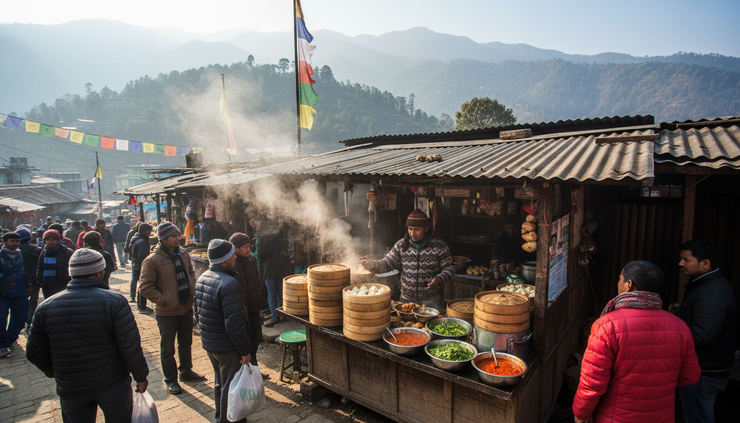
Image shows: Wide-angle view of a Gangtok food stall serving steaming momos in bamboo baskets.
Gangtok’s food is shaped by mountains, migration, and fermentation
Gangtok sits in a region where food traditions from Nepali, Bhutia, Lepcha, and Tibetan communities meet naturally. The result is a kitchen culture that feels both familiar and distinct. Rice, noodles, meat, leafy greens, and dairy are common, but the real character comes from fermentation, chillies, local herbs, and slow cooking.
On a chilly evening near MG Marg, a small family-run eatery can tell you more about Gangtok than a guidebook. The menu may look simple, but each dish carries a story. A bowl of thukpa may come with hand-cut vegetables from nearby farms. A plate of momos may be served with a fiery red chutney that tastes of roasted chillies, tomato, garlic, and patience.
One home-style cook in Gangtok once explained her approach in a simple way during a casual kitchen conversation. She said that mountain food must do three things: warm the body, use what is available, and waste very little. That idea runs through many of the famous foods of Gangtok (Sikkim).
Local flavours often come from ingredients such as:
Dalle khursani
A small, round, famously hot chilli grown in Sikkim and nearby regions.
Gundruk
Fermented leafy greens, usually made from mustard, radish, or cauliflower leaves.
Kinema
Fermented soybean with a strong aroma and earthy taste.
Chhurpi
A traditional Himalayan cheese, eaten fresh or dried.
Buckwheat and millet
Common in traditional breads, pancakes, and drinks.
These ingredients are not garnish. They form the base of Sikkimese cooking.
Momos and thukpa are the comfort classics of Gangtok
Ask most travellers what they ate first in Gangtok, and the answer is often momos. They are easy to love: soft dumpling wrappers, juicy fillings, and chutney that can wake up every sense.
Momos are simple, but never boring
Momos in Gangtok usually come steamed, though fried and pan-fried versions are also common. Fillings may include vegetables, chicken, pork, or cheese. The best ones have thin wrappers and a filling that stays moist without becoming greasy.
The chutney matters just as much as the dumpling. In many places, it is made with red chillies, tomatoes, garlic, and sometimes sesame. Some versions are smoky. Some are sharp. Some are so hot that the first bite makes you pause.
A small plate of momos on a cold day feels practical and perfect. That is part of their charm. They are snack, meal, and social ritual all at once.
Thukpa brings warmth in a bowl
Thukpa is a noodle soup with Tibetan roots, loved across Gangtok. It usually includes noodles, vegetables, and meat or egg, served in a clear or lightly spiced broth. The flavours are not heavy. They build slowly.
A good bowl of thukpa tastes clean and nourishing. Carrot, cabbage, onion, greens, garlic, and pepper often come together with soft noodles. In cold weather, thukpa does not just feed you. It settles you.
There is also gyathuk, another noodle soup, and thenthuk, where hand-pulled pieces of dough replace regular noodles. These dishes remind you that noodles in Gangtok are not fast food by default. They are mountain comfort.
Dishes in this image: Close-up of steamed momos with red chilli chutney on a wooden table
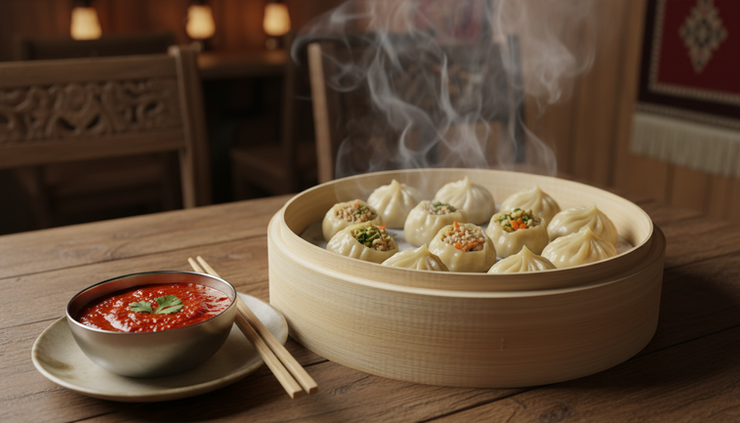
Image shows: Close-up of steamed momos with red chilli chutney on a wooden table.
Traditional Sikkimese dishes reveal deeper local flavours
Beyond momos and thukpa, Gangtok offers dishes that may surprise first-time visitors. These foods are more strongly tied to local homes and traditional kitchens. They carry fermented, earthy, smoky, and sour notes that make Sikkimese cuisine memorable.
Gundruk soup is tangy, earthy, and deeply local
Gundruk is made by fermenting leafy greens and drying them for later use. In a region where preserving food matters, this ingredient has long been valuable.
Gundruk soup has a sour, earthy flavour that feels rustic in the best way. It is often cooked with onion, tomato, garlic, and chillies. Some versions include potatoes or soybeans. The taste is bold but not rich. It wakes up the appetite.
For travellers used to fresh greens, gundruk can feel new at first. The flavour has depth, a little like pickled greens, but warmer and more savoury. It is one of those dishes that explains local food habits better than any food trend can.
Kinema curry is for curious eaters
Kinema, made from fermented soybeans, is one of the most distinctive foods in Sikkim. It has a strong smell, a sticky texture, and a deep, nutty flavour. In Gangtok, it may be cooked into a curry with tomatoes, onions, turmeric, chillies, and herbs.
Not everyone falls in love at first bite. That is part of its character. Kinema asks for attention. It tastes ancient, practical, and proud.
A local cook once described kinema to me as the kind of food that people miss most when they leave home. That makes sense. Fermented foods often carry memory. They are tied to kitchens, seasons, and family habits.
Phagshapa is rich but balanced
Phagshapa is a pork dish associated with Sikkimese and Tibetan-style cooking. It is often made with strips of pork, radish, and dried chillies. Unlike many Indian pork curries, it is not usually cooked with a heavy masala base.
The result is rich, salty, warming, and clean-tasting. The radish cuts through the fat, while the chillies bring heat without hiding the pork. It is a good example of how Gangtok’s food can feel bold without using too many spices.
Sha phaley is crisp, juicy, and satisfying
Sha phaley is a Tibetan-style bread stuffed with meat or vegetables, then fried until crisp. It is sometimes described as a meat pie, but that does not fully capture it. The outer layer is chewy and crisp, while the filling stays juicy.
It is especially good with soup or a sharp chutney. In Gangtok, it works well as a filling snack after a long walk through the city’s steep roads.
Local ingredients give Gangtok its unmistakable taste
The famous foods of Gangtok (Sikkim) depend on ingredients that suit the climate. Some are grown in kitchen gardens. Some are preserved for long winters. Some are part of older food traditions that continue in everyday cooking.
Dishes in this image: Eye-level view of local Sikkim ingredients including dalle chillies, greens, and chhurpi

Image shows: Eye-level view of local Sikkim ingredients including dalle chillies, greens, and chhurpi.
Dalle khursani brings heat with fragrance
Dalle khursani is small and round, but it has serious heat. It is often used in chutneys, pickles, and meat dishes. What makes it special is not heat alone. It also has a fruity aroma that gives depth to food.
A little goes a long way. In Gangtok, chutneys made with dalle khursani can turn a basic meal of rice and vegetables into something unforgettable.
Chhurpi adds chew, salt, and mountain character
Chhurpi comes in soft and hard forms. The soft version may be used in curries, soups, or fillings. The hard version is chewy and often eaten slowly, almost like a snack that lasts.
For many visitors, chhurpi is an acquired taste. It can be salty, milky, and firm. But it also gives insight into how dairy is preserved and enjoyed in Himalayan regions.
Buckwheat and millet connect food to the land
Buckwheat appears in traditional pancakes and breads, while millet is used in food and local drinks. These grains handle mountain conditions better than many others. Their flavours are earthy and slightly nutty.
In some homes, buckwheat pancakes may be served with local cheese, vegetable curry, or chutney. They are simple, filling, and deeply satisfying.
Nettle, fiddlehead fern, and seasonal greens add freshness
Sikkimese cooking often uses seasonal greens, including nettle and fiddlehead fern when available. Nettle soup, known locally in some communities as sisnu, has a delicate flavour once cooked. Fiddlehead ferns are usually stir-fried or cooked with light seasoning.
These foods show another side of Gangtok’s cuisine. It is not only about dumplings and noodles. It is also about foraging, seasonality, and knowing what the hills provide.
What to eat in Gangtok from breakfast to dinner
Food in Gangtok fits the rhythm of the day. Mornings are cool, afternoons are made for snacks, and evenings call for something warm.
Time of day | What to try | Why it works |
Morning | Butter tea with bread or a light noodle soup | Warm, simple, and suited to the weather |
Midday | Thali with rice, dal, local greens, pickle, and curry | A balanced way to taste everyday food |
Afternoon | Momos, sha phaley, or wai wai sadeko | Quick, filling, and easy to find |
Evening | Thukpa, gyathuk, phagshapa, or kinema curry | Comforting dishes with deeper flavours |
Sweet break | Sel roti or local sweets when available | Best with tea, especially during festive periods |
Wai wai sadeko deserves a mention. It is a popular snack made with crushed instant noodles tossed with onion, tomato, chilli, coriander, and lemon. It is crunchy, spicy, tangy, and very addictive. It may not be ancient, but it has become part of casual hill-town eating.
Sel roti, a ring-shaped rice flour bread common in Nepali homes and festivals, also appears in Gangtok’s food culture. It is lightly sweet, crisp at the edges, and soft inside. With tea, it feels like a small celebration.
If you want a fuller meal, look for a local thali. It may include rice, dal, vegetable curry, pickle, greens, and sometimes meat. The pickles are often the highlight. A spoonful of chilli pickle or fermented garnish can change the whole plate.
Where the real flavour of Gangtok lives
Restaurants introduce you to the famous foods of Gangtok (Sikkim), but the deepest flavours often live in smaller eateries, family kitchens, and market-side stalls. The best food experiences are rarely rushed.
A good approach is to order one familiar dish and one unfamiliar dish. Pair momos with gundruk soup. Try thukpa one day and kinema curry the next. Ask whether the chutney uses dalle khursani. Taste chhurpi before deciding whether you like it.
Markets are also worth exploring. Even if you do not cook, seeing local greens, chillies, cheese, and fermented ingredients helps you understand the food better. The cuisine starts to make sense when you see what people buy for home.
Dishes in this image: Overhead view of a Sikkimese meal with thukpa, gundruk soup, rice, pickles, and chhurpi

Image shows: Overhead view of a Sikkimese meal with thukpa, gundruk soup, rice, pickles, and chhurpi.
Travellers sometimes arrive in Gangtok expecting only hill-station snacks. They leave remembering fermented greens, hot chilli chutneys, and soups that taste like cold evenings. That is the beauty of the city’s food. It welcomes you with momos, then slowly opens the door to older, deeper flavours.
The famous foods of Gangtok (Sikkim) are best experienced with curiosity. Eat slowly. Try the chutney before judging the heat. Order the dish you cannot pronounce. Talk to the person serving it if they have time. Gangtok’s culinary culture is not hidden, but it rewards attention.
A trip through its food is also a trip through its homes, farms, weather, and communities. Start with a steaming plate of momos, stay for the thukpa, and make room for gundruk, kinema, chhurpi, phagshapa, and everything else the mountains have kept warm.
Travel, landmark, location, and shop information is based on publicly available online data at the time of writing. Details such as names, addresses, opening hours, availability, prices, and operating status may change. Please verify current details directly with the venue or official source before visiting.
Explore more city food guides
Continue exploring Indian food, landmarks and local markets: Pune · Surat · Srinagar · Leh · Port Blair


Comments