
Famous Foods of Dimapur Traditional Flavors History and Reader Favorites

Dimapur is often called the gateway to Nagaland, but its food tells a deeper story than any gate or road sign can. A plate of smoked pork with bamboo shoot, a bowl of galho, a spoonful of axone, or a market packet of dried fish carries memory, trade, migration, harvest seasons, and home cooking habits passed down across generations.
The city sits at a meeting point of communities. Naga tribes, Dimasa heritage, Assamese influence, Bengali kitchens, Nepali eateries, and North Indian food stalls all shape what people eat here. That mix makes Dimapur one of the most interesting food cities in the North East.
Ask ten people about the Famous food of Dimapur, and the answers will not be identical. Some will say pork with axone. Some will name smoked meat. Some will talk about chutneys, local greens, momo stalls, or rice meals served with fierce chutney on the side. The best answer is not one dish, but a full table.
Dishes in this image: Wide-angle view of a Dimapur food table with rice, smoked pork, bamboo shoot curry, chutney, and local greens.
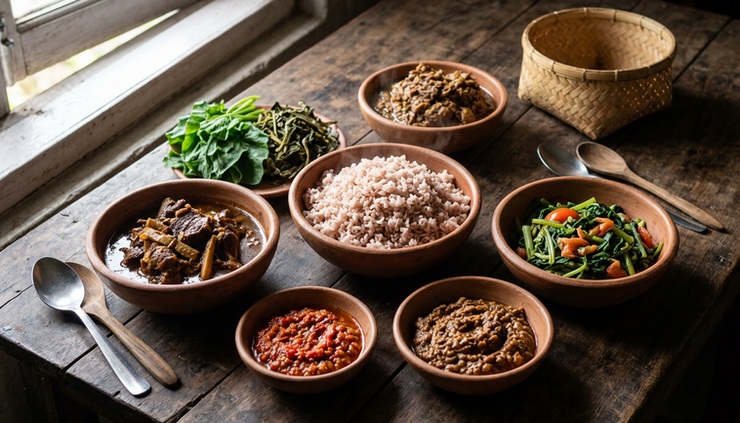
Image shows: Wide-angle view of a Dimapur food table with rice, smoked pork, bamboo shoot curry, chutney, and local greens..
Dimapur’s food history lives in its kitchens
Dimapur’s food culture cannot be separated from its location. It has long been a point of movement between the plains and the hills. Traders, farmers, students, workers, and families have brought ingredients and recipes into the city, while local tastes have shaped them into something distinctly Dimapur.
The area also carries traces of the Dimasa Kachari kingdom, remembered today through historic ruins and local memory. That longer history reminds us that Dimapur was not merely a transit town. It was a centre of settlement, exchange, and cultural contact.
Food reflects this layered past in simple ways:
Rice remains the centre of most meals.
Smoked and dried foods show older preservation methods.
Fermented ingredients add depth and help food last longer.
Local herbs, chillies, and seasonal greens connect cooking to the land.
Market eating reflects Dimapur’s role as a commercial hub.
Traditional Naga food often uses fewer packaged spices than many mainland Indian cuisines. Flavour comes from smoke, fermentation, herbs, meat fat, dried fish, bamboo shoot, ginger, garlic, and chillies. The result can feel clean, intense, earthy, and bold all at once.
That does not mean Dimapur has one fixed food identity. The city keeps absorbing new influences. A family lunch may be Naga-style rice and pork, while an evening snack may be momo, chow, samosa, or tea with biscuits. This mix is part of the city’s charm.
Traditional dishes that define Dimapur’s table
Dimapur’s famous dishes are rooted in home kitchens more than restaurant menus. The same dish can taste different from one household to another because families follow their own methods for smoking meat, fermenting soybean, drying leaves, or grinding chutney.
Here are some of the dishes and flavours that often define the city’s food memory.
Smoked pork with bamboo shoot remains a favourite
Smoked pork is one of the most loved foods across many parts of Nagaland, and Dimapur is no exception. Pork is traditionally smoked over a hearth, which gives it a deep aroma and helps preserve it. When cooked with bamboo shoot, the dish gets a sharp, slightly sour flavour that cuts through the richness of the meat.
This dish speaks to older cooking habits. In hill regions, smoking and drying meat helped families store food for longer periods. Bamboo shoot, often fermented or preserved, brought seasonal produce into the pot even after the fresh harvest had passed.
A good smoked pork curry usually does not need heavy masala. The power lies in the quality of the smoked meat, the bamboo shoot, and the slow cooking.
Axone brings fermentation to the centre of flavour
Axone, also called akhuni in some contexts, is fermented soybean. It has a strong aroma and a rich, savoury taste. For many people, it is comfort food. For others trying it for the first time, it can be surprising.
In Dimapur, axone appears in chutneys, meat dishes, and home-style curries. It pairs especially well with pork, dried fish, and chillies. The ingredient has deep cultural value among several Naga communities, especially because fermentation has long been a practical way to preserve food and build flavour.
The smell of axone cooking can instantly remind someone of home. That is why it often appears in conversations about the Famous food of Dimapur.
Galho is the comfort bowl of Nagaland
Galho is often described as a Naga-style rice porridge, though that simple description does not capture its comfort. It is usually made with rice, leafy vegetables, and meat or fermented ingredients. Some versions are mild and soothing. Others carry strong smoky or fermented notes.
Galho works as a family meal because it is filling, flexible, and easy to adapt. It can use whatever greens are available. It can be made richer with meat or kept lighter. It reflects a practical style of cooking where nothing goes to waste.
Historically, dishes like galho matter because they show how food met daily needs. Not every traditional dish was festive. Some were everyday foods that warmed the body, fed the family, and used seasonal produce wisely.
Dishes in this image: Close-up of smoked pork with bamboo shoot served with rice and chilli chutney.
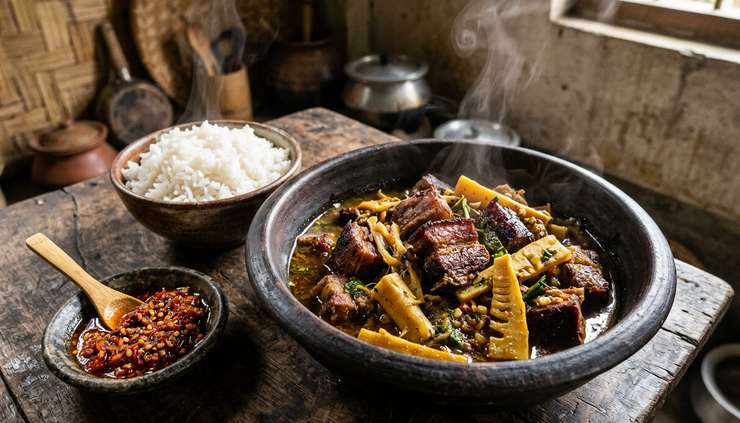
Image shows: Close-up of smoked pork with bamboo shoot served with rice and chilli chutney..
Anishi carries the taste of preserved greens
Anishi is made from processed and fermented yam leaves, closely associated with Ao Naga food traditions. It is often cooked with smoked pork or other meats. The flavour is earthy, slightly bitter, and deeply savoury.
Its historical importance lies in the way it preserves leafy greens. Before refrigeration became common, communities used drying, smoking, and fermentation to keep ingredients usable across seasons. Anishi is one of those foods that turns preservation into flavour.
For many families, anishi is not a casual dish. It carries identity. Cooking it can feel like keeping a piece of community history alive.
Akini and chutneys bring sharpness to the meal
Akini, made from perilla seeds, appears in different forms across Naga kitchens. It may be roasted, ground, and cooked with meat or used for its nutty taste. Alongside it, chutneys made with king chilli, dried fish, garlic, tomato, or fermented soybean bring fire and character to the meal.
Naga chutneys are rarely side notes. They can define the whole plate. A small amount can change plain rice into a full experience.
Fish, snails, and local greens add variety
Dimapur’s markets often show the city’s food range. Fresh fish, dried fish, snails, river produce, seasonal vegetables, wild herbs, and leafy greens appear alongside meat and everyday staples.
Many homes cook fish with bamboo shoot or fermented ingredients. Greens may be boiled, lightly cooked, or added to rice dishes. These foods remind us that Dimapur’s traditional eating habits are not only about pork, even if pork gets most of the attention.
Dish or ingredient | What makes it special | Historical or cultural link |
Smoked pork | Deep smoky flavour, long cooking, rich texture | Traditional preservation and hearth cooking |
Bamboo shoot | Sour, sharp, earthy taste | Seasonal produce preserved for later use |
Axone | Strong fermented soybean flavour | Fermentation as food memory and preservation |
Galho | Rice-based comfort meal with greens or meat | Everyday family cooking and seasonal eating |
Anishi | Fermented yam leaves, often cooked with pork | Preserved greens linked to community identity |
King chilli chutney | Fiery heat with strong aroma | Local chilli culture and shared meal traditions |
Markets and street food show Dimapur’s mixed identity
Dimapur’s traditional food shines at home, but the markets and streets reveal how the city eats every day. Local markets are filled with ingredients that may not always appear in tourist-friendly restaurant lists. Bamboo shoot, smoked meat, fermented soybean, dried fish, local greens, chillies, herbs, and handmade products often sit beside familiar vegetables and spices.
This is where Dimapur’s history as a trading centre becomes visible. People from different communities buy, sell, bargain, and exchange food knowledge. A market visit can teach more about the city’s food culture than a polished menu.
The street food side tells another story. Momo stalls, chow, fried snacks, tea shops, rolls, and rice meals reflect the movement of students, office workers, travellers, and shopkeepers. These foods may not all be “traditional” in the strict sense, but they are part of modern Dimapur.
That blend matters. A city’s food culture is not frozen in the past. Dimapur respects older tastes while making room for new cravings.
Dishes in this image: Eye-level view of a Dimapur market stall with bamboo shoot, local greens, dried fish, and chillies.
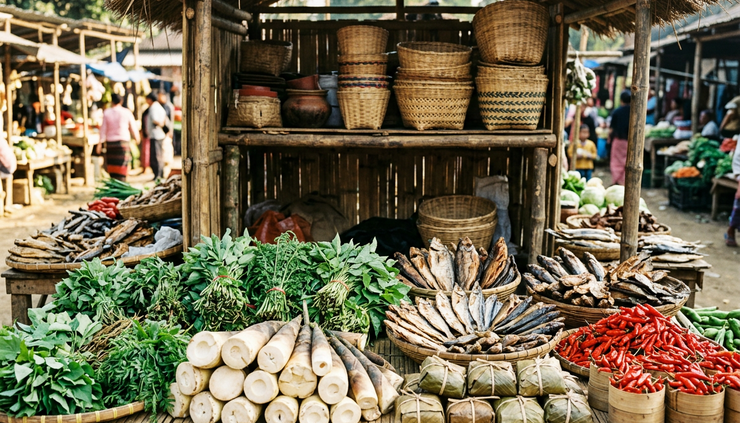
Image shows: Eye-level view of a Dimapur market stall with bamboo shoot, local greens, dried fish, and chillies..
Reader poll on Dimapur’s favourite foods
Food memories become richer when more people join the conversation. If this blog had a community table, this would be the moment to pass around the plates and ask everyone to vote.
Here is a simple opinion poll to copy into the comments or share with friends and family:
Which Dimapur food would you choose first?
Smoked pork with bamboo shoot
Pork with axone
Galho
Anishi with smoked meat
Fish with bamboo shoot
King chilli chutney with rice
Momo or chow from a favourite street stall
A family dish not listed here
What matters most in a great Dimapur meal?
Smoky flavour
Fermented depth
Chilli heat
Fresh local greens
A homely rice plate
A recipe made by parents or grandparents
Where does the best food memory come from?
Home kitchen
Village gathering
Dimapur market
Roadside stall
Festival meal
Friend’s home
These questions are more than fun. They help reveal how people connect food with place. One person may remember a grandmother drying leaves for anishi. Another may remember a first taste of axone in a hostel room. Someone else may think of market mornings, smoky kitchens, or late evening momos after class.
If you grew up in Dimapur, moved there, studied there, worked there, or visited only once, your food memory still adds something valuable.
Share a family recipe or food story
Traditional food survives when people cook it, talk about it, and teach it. Recipes often change slightly from home to home, and those differences deserve attention.
If you have a family recipe from Dimapur or Nagaland, consider sharing:
The name of the dish
The community or family connection, if you are comfortable sharing it
The main ingredients
One cooking tip that makes it special
A memory linked to the dish
For example, someone might say their smoked pork must be cooked slowly until the fat softens. Another family may insist that bamboo shoot should be rinsed only lightly so the flavour stays strong. Someone else may have a vegetarian galho recipe made with local greens and no meat.
These details matter because they show that food history is not only found in books. It also lives in kitchens, smoke-blackened hearths, market baskets, lunch plates, and family conversations.
Dishes in this image: Top-down view of hands serving galho with greens and chilli chutney on a simple dining mat.
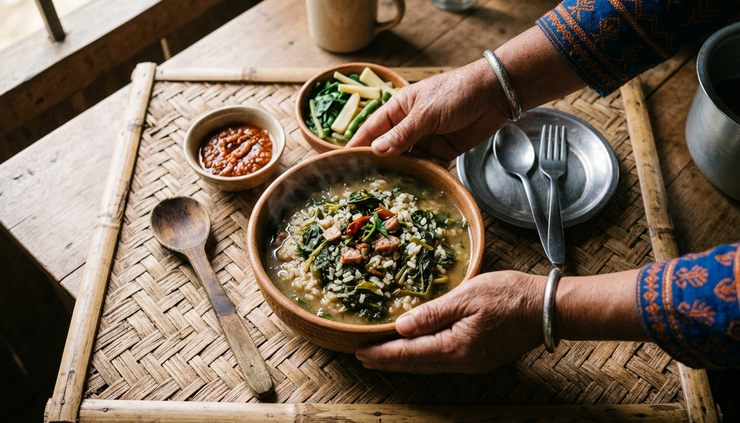
Image shows: Top-down view of hands serving galho with greens and chilli chutney on a simple dining mat..
What Dimapur’s food tells us about the city
Dimapur’s food tells a story of movement, resilience, and belonging. Smoked meat points to older preservation methods. Fermented soybean and preserved leaves show patience and skill. Rice meals reflect everyday comfort. Market ingredients show trade and contact. Street food shows a city that keeps changing.
The most famous dishes are not famous only because they taste good. They carry memory. They connect people to community, season, migration, and family.
That is why Dimapur’s food culture feels so rich. It is traditional without being still. It is local without being narrow. It welcomes many influences while holding on to flavours that people recognise as home.
So here is the question to leave on the table: which Dimapur dish would you vote for, and what story comes with it?
Share the food, the recipe, or the memory. A city’s flavour grows stronger when its people keep adding their voices.
Travel, landmark, location, and shop information is based on publicly available online data at the time of writing. Details such as names, addresses, opening hours, availability, prices, and operating status may change. Please verify current details directly with the venue or official source before visiting.
Explore more city food guides
Continue exploring Indian food, landmarks and local markets: Pune · Surat · Srinagar · Leh · Port Blair


Comments