
Famous Foods of Bhubaneswar A Must Try Guide for Food Lovers

Bhubaneswar can surprise you with how quietly serious it is about food. At first glance, the city is known for temples, neat roads, and a slower rhythm than many Indian metros. Spend a day eating here, and a different side appears: tangy dahibara from a street cart, warm dalma in a simple lunch thali, smoky fish cooked with mustard, and chhena poda that tastes like caramel, cottage cheese, and celebration in one bite.
The best meals in Bhubaneswar are rarely loud. They are balanced, seasonal, and rooted in Odia kitchens. Mustard, curd, rice, lentils, vegetables, fresh chhena, and mild spices do most of the work. If you are exploring the famous foods of Bhubaneswar, start with appetite, curiosity, and enough time for second helpings.
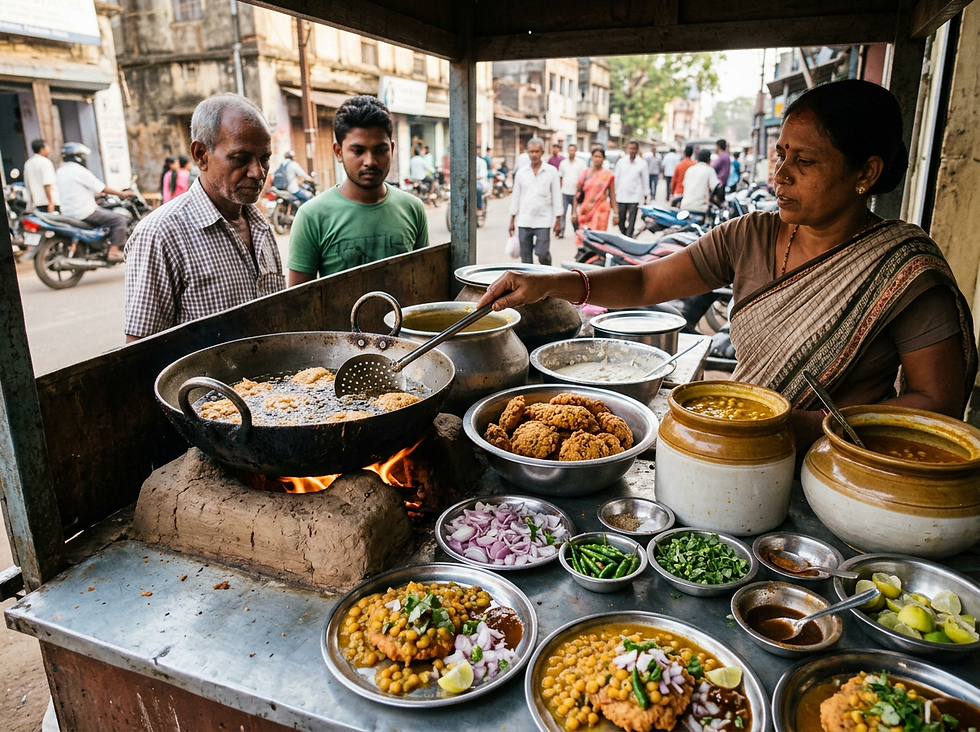
Dishes in this image: Wide-angle view of a Bhubaneswar street food stall serving dahibara aloodum

Image shows: Wide-angle view of a Bhubaneswar street food stall serving dahibara aloodum.
Start with Bhubaneswar’s beloved street food
Street food in Bhubaneswar is filling, affordable, and full of contrast. You get soft with crunchy, sour with spicy, and warm with chilled, often in the same bowl. Many snacks work as breakfast, evening bites, or a quick lunch when the day is too packed for a full thali.
Dahibara aloodum is the city’s comfort snack
If one dish captures Bhubaneswar’s street food mood, it is dahibara aloodum. Soft lentil vadas are soaked in lightly spiced curd, then topped with aloodum, a spicy potato curry. Many sellers add ghuguni, chopped onions, fresh coriander, black salt, roasted cumin powder, and crunchy sev.
The dish is famous across Odisha, and Bhubaneswar has fully made it its own. The magic lies in the temperature play. The dahi cools the palate, while the aloodum brings heat and depth. A good serving should not taste watery or overly sweet. It should be creamy, tangy, earthy, and gently spicy.
You will often find dahibara aloodum carts in market areas, near offices, and around busy junctions. Morning is a great time to try it, when the vadas are fresh and the chutneys still bright.
Bara ghuguni is simple and satisfying
Bara ghuguni is another staple that rarely disappoints. Bara is a crisp fried lentil fritter, while ghuguni is a yellow peas curry. Together, they make a hearty snack that feels almost like a meal.
The bara should be crisp outside and soft inside. The ghuguni should be thick enough to cling to it. Some vendors serve it with onion, green chilli, coriander, and a squeeze of lime. If you enjoy spice, ask for a little extra masala, but start mild if you are new to Odia street food.
Chaat and gupchup bring the evening crowd
Bhubaneswar also loves chaat. Gupchup, known as pani puri in many parts of India, is especially popular in the evening. The puris are filled with potato, peas, and tangy water. The Odia-style filling often has a softer spice profile, but the sour punch can be sharp and addictive.
You can also look for dahi bara chaat, papdi chaat, and aloo chaat around markets. These are not unique only to Bhubaneswar, but the local balance of curd, cumin, black salt, and chilli gives them a distinct taste.
Eat a proper Odia meal with rice, dalma, and seasonal sides
A food trip in Bhubaneswar is incomplete without a proper Odia meal. Rice sits at the centre, supported by lentils, vegetables, leafy greens, chutneys, fried sides, curd, and sweets. The cooking is flavourful but usually not heavy. It respects the ingredient more than the masala.
Dishes in this image: Eye-level view of an Odia thali with dalma, rice, vegetables, and chutney

Image shows: Eye-level view of an Odia thali with dalma, rice, vegetables, and chutney.
Dalma is the soul of an Odia lunch
Dalma is one of Odisha’s most loved dishes. It combines lentils with vegetables such as raw banana, papaya, pumpkin, brinjal, drumstick, or beans. The seasoning is usually gentle, with cumin, ginger, dried red chilli, bay leaf, and sometimes ghee.
A bowl of dalma tastes wholesome rather than flashy. It is filling, nourishing, and easy to pair with rice. In Bhubaneswar, you will find it in Odia thalis, home-style restaurants, and canteens that serve traditional meals.
What makes dalma special is its flexibility. Every household has a version. Some make it thick, some keep it light. Some add more vegetables, while others let the dal dominate. The best versions taste clean, warm, and slightly sweet from the vegetables.
Pakhala bhata is perfect for hot days
Bhubaneswar’s warm weather makes pakhala bhata especially appealing. Pakhala is cooked rice soaked in water, often lightly fermented or mixed with curd. It is served with salt, green chilli, onion, fried fish, badi chura, mashed potato, saaga, or crisp vegetable fries.
This is comfort food with deep local roots. It cools the body, suits the climate, and turns leftover rice into something refreshing. Many Odia households treat pakhala not as a backup meal, but as a seasonal favourite.
If you try it for the first time, order sides with texture. Badi chura, made from crushed sun-dried lentil dumplings, adds crunch. Fried fish or aloo bharta adds richness. A spoon of curd can make the whole plate softer and more balanced.
Santula and saaga show the lighter side of the cuisine
Odia food is not only about fried snacks and rich curries. Dishes like santula and saaga show how clean and vegetable-forward the cuisine can be.
Santula is a lightly cooked vegetable dish, often made with boiled or sautéed seasonal vegetables and mild seasoning. It is soft, simple, and easy to digest. Saaga refers to leafy greens, cooked with minimal spices. It pairs beautifully with rice and dal.
These dishes may not shout for attention, but they help complete the meal. They also explain why traditional Odia food feels balanced even when the plate is full.
Try fish, mutton, and mustard-rich curries
Bhubaneswar’s food culture includes excellent non-vegetarian dishes, especially fish and mutton. Odisha’s long coastline and river systems influence the way people cook seafood and freshwater fish. Mustard is a key flavour, and curries often taste sharp, earthy, and aromatic without being too heavy.
Machha besara is a must for fish lovers
Machha besara is fish cooked in a mustard-based gravy. The word “besara” usually points to a paste made with mustard seeds, garlic, green chilli, and sometimes cumin. The result is a curry with a bold but clean bite.
The mustard flavour should feel strong, but not bitter. Fish varieties may change depending on availability, and local preferences vary. The curry is best eaten with hot steamed rice, because rice softens the sharpness of the mustard and lets the fish stand out.
If you enjoy Bengali mustard fish, machha besara will feel familiar yet different. Odia versions are often more rustic and less sweet, with a quiet heat from green chillies.
Chingudi and crab curries are worth seeking out
Prawn, known locally as chingudi, appears in several Odia dishes. Chingudi malai curry style preparations are popular in eastern India, but Odisha also has its own mustard and spice-led prawn curries. Coconut may appear in some versions, especially in richer preparations.
Crab curries can also be found in places that serve coastal Odia food. They are messy to eat, but rewarding. Expect bold masala, fresh coriander, and plenty of rice on the side.
Mutton curry is a weekend favourite
Mutton curry in Bhubaneswar is often cooked in a home-style masala with onion, ginger, garlic, whole spices, and potatoes. It is richer than everyday dalma or santula, but still feels rooted in family cooking.
You may see it served with rice, paratha, or chakuli pitha. A good mutton curry should have tender meat, a deep brown gravy, and enough spice to warm the mouth without hiding the meat.
Dishes in this image: Close-up of mustard fish curry served with steamed rice

Image shows: Close-up of mustard fish curry served with steamed rice.
Save room for sweets and festive bites
Bhubaneswar has a strong sweet tooth, and Odia sweets deserve more attention than they often get. Many are made with chhena, the fresh cheese also used in famous eastern Indian desserts. Others come from festival kitchens, temple traditions, and homes where pitha is still made with care.
Chhena poda is Odisha’s iconic baked sweet
Chhena poda means “burnt cheese”, but that name does not do it justice. It is made with fresh chhena, sugar or jaggery, cardamom, and sometimes nuts or raisins. The mixture is baked until the top turns dark and caramelised.
The best chhena poda has a smoky caramel crust and a soft, grainy centre. It is sweet, but not syrupy. The flavour is deeper than most milk sweets because baking changes the sugar and chhena into something almost cake-like.
You will find chhena poda in sweet shops across Bhubaneswar. Buy a small slice first, then go back for more if it is fresh and fragrant.
Rasagola and rasabali show the chhena tradition
Odisha has a long relationship with chhena sweets. Rasagola, soft chhena balls cooked in syrup, is widely loved across the state. In Bhubaneswar, sweet shops often serve versions that are soft, juicy, and lighter than they look.
Rasabali is another rich sweet to try. It is made from flattened chhena patties soaked in thickened sweet milk. It is creamy, festive, and best shared after a meal.
Pitha brings the taste of home
Pitha is not one item, but a broad family of traditional cakes and dumplings. Some are steamed, some are fried, and some are cooked on a griddle. They often use rice flour, coconut, jaggery, lentils, or sesame.
Look for:
Chakuli pitha A soft rice and lentil pancake, often eaten with curry or chutney.
Kakara pitha A fried sweet made with semolina or wheat, often filled with coconut and jaggery.
Arisa pitha A festive rice flour and jaggery pitha with a chewy texture.
Manda pitha A steamed dumpling usually filled with coconut and jaggery.
Pitha is closely linked to festivals, but you can still find some varieties in local food outlets, markets, and traditional Odia restaurants.
Know where and how to eat in Bhubaneswar
The joy of eating in Bhubaneswar comes from mixing street stalls, simple thali places, sweet shops, and restaurants that serve Odia meals. Do not limit yourself to one style of dining. The city rewards variety.
Dishes in this image: Top-down view of chhena poda slices on a plate

Image shows: Top-down view of chhena poda slices on a plate.
Visit local markets and older neighbourhoods
Old Town, with its temples and lanes, is a good area to experience traditional snacks and sweets. Market zones such as Unit 1 and other busy food pockets are useful for street food, quick meals, and evening snacks. Ekamra Haat is also a good stop if you want crafts and regional food in one place.
The most reliable approach is simple: choose places with steady local footfall. Fresh turnover matters, especially for curd-based snacks, fried items, and sweets.
Order an Odia thali when you are unsure
If a menu feels confusing, order an Odia thali. It gives you a broad sense of the cuisine in one sitting. A good thali may include rice, dalma, vegetable curry, saaga, khatta, bhaja, papad, chutney, curd, and a sweet.
Non-vegetarian thalis may add fish, prawn, chicken, or mutton. If you want to understand how the flavours work together, eat slowly. Mix rice with one dish at a time instead of combining everything at once.
Ask for spice levels before ordering
Odia food is not always extremely spicy, but street food can vary. Mustard curries can feel sharp, and some aloodum or ghuguni servings carry more chilli than expected. If you prefer mild food, ask before toppings go in.
For sweets, freshness matters more than fame. Chhena-based sweets taste best when they have not sat too long. Look for shops where trays are moving and staff are cutting or serving fresh batches.
A simple one-day eating plan
If you have only one day in Bhubaneswar, use this easy route:
Time | What to eat | Why it works |
Morning | Dahibara aloodum or bara ghuguni | Fresh, filling, and very local |
Lunch | Odia thali with dalma and saaga | Best way to taste the everyday cuisine |
Evening | Gupchup, chaat, or pakhala if available | Light, tangy, and suited to the weather |
Dinner | Machha besara or mutton curry with rice | A deeper taste of Odia home-style cooking |
Dessert | Chhena poda or rasabali | A sweet finish rooted in Odisha’s chhena tradition |
This plan keeps the day balanced. It also leaves room for small bites between meals, which is often where the best food memories happen.
Dishes in this image: Eye-level view of a small Odia sweet shop counter in Bhubaneswar

Image shows: Eye-level view of a small Odia sweet shop counter in Bhubaneswar.
What to remember before your Bhubaneswar food trip
Bhubaneswar’s food is not built around one dramatic dish. Its charm comes from layers. A bowl of dahibara aloodum shows the city’s love for street food. Dalma and pakhala reveal the comfort of Odia homes. Machha besara brings in the sharp beauty of mustard. Chhena poda proves that a simple sweet can become unforgettable when it is made well.
Come ready to eat across the day, not just at lunch or dinner. Try a street cart, sit down for a thali, buy sweets by the slice, and leave space for something you did not plan. That is the best way to taste Bhubaneswar, one honest plate at a time.
Travel, landmark, location, and shop information is based on publicly available online data at the time of writing. Details such as names, addresses, opening hours, availability, prices, and operating status may change. Please verify current details directly with the venue or official source before visiting.
Explore more city food guides
Continue exploring Indian food, landmarks and local markets: Pune · Surat · Srinagar · Leh · Port Blair


Comments