
Famous Foods of Andaman and Nicobar Islands Local Flavors Dishes and Culinary Traditions

The first thing that reaches you in the Andamans is often not the sea breeze, but the smell of fish frying in turmeric, coconut, green chilli, and curry leaves. Food here is shaped by water on every side, by forests and plantations, and by people who arrived from Bengal, Tamil Nadu, Andhra Pradesh, Kerala, Myanmar, and other parts of India.
That mix makes the famous foods of Andaman and Nicobar Islands different from mainland coastal dishes. The flavours are familiar, but the setting changes everything. Fish tastes fresher. Coconut appears in more forms. Rice anchors most meals. A simple curry can carry traces of Bengali home cooking, Tamil spice, Burmese influence, and island practicality.
For food lovers and travellers, this is a place to eat slowly, ask politely, and notice where each dish comes from.
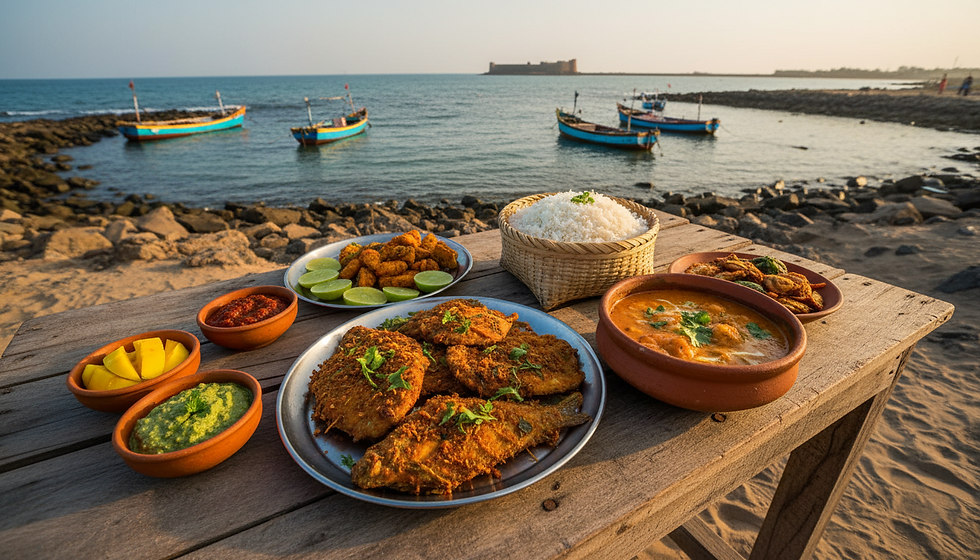
Dishes in this image: Wide-angle view of a seafood meal beside the Andaman coast

Image shows: Wide-angle view of a seafood meal beside the Andaman coast.
Island food is built on seafood, rice, coconut, and migration
The Andaman and Nicobar Islands do not have one single cuisine. They have many food traditions living side by side. Port Blair, Havelock Island, Neil Island, and smaller inhabited areas all reflect different communities and histories.
Seafood is the most visible part of the food culture. Fish, prawns, crabs, squid, and lobster appear grilled, fried, curried, steamed, or cooked in coconut milk. The catch changes with the season and the sea. Many local kitchens still cook with the idea that the day’s fish should decide the menu.
Rice is the dependable base. It pairs with fish curry, dal, coconut gravies, vegetable stews, and pickles. In many homes, lunch means rice with something sour, spicy, and fish-based.
Coconut is more than an ingredient. It is a cooking medium, a thickener, a garnish, and sometimes the main flavour. Coconut milk softens chilli heat. Grated coconut adds texture. Coconut oil brings a coastal aroma, though many homes also cook with mustard oil or other regional oils depending on family background.
The islands also carry the food memories of settlers. Bengali families brought fish curries, mustard, rice, and sweets. Tamil and Telugu communities added idli, dosa, sambar, rasam, and spicy seafood preparations. Malayali influence shows up in coconut-rich curries and appams. Burmese and Karen influences can be seen in some noodle soups, fermented flavours, and simple, herb-forward dishes in parts of the islands.
A careful traveller also learns what not to demand. Some Indigenous communities in the Andaman and Nicobar Islands have protected ways of life, and their food traditions are not tourist attractions. Respect for local restrictions and privacy is part of eating responsibly here.
Popular seafood dishes tell the story of the sea
The most famous foods of Andaman and Nicobar Islands are often seafood dishes, but each one has a different mood. Some are homestyle comfort meals. Others are beach-shack favourites. A few are celebratory dishes ordered when the catch is special.
Fish curry is the everyday classic
Fish curry is the dish most visitors remember because it feels both simple and complete. Local fish is cooked with turmeric, chilli, onion, tomato, garlic, tamarind or raw mango in some versions, and sometimes coconut milk. Bengali-style fish curry may use mustard and a lighter gravy. South Indian-influenced versions often lean on curry leaves, tamarind, and a sharper spice base.
The origin of the dish lies in migration and geography. Almost every Indian coastal region has fish curry, but in the Andamans it becomes an island staple because fresh fish is widely available and rice is the natural partner.
Its cultural significance is quiet but deep. Fish curry is not only restaurant food. It is home food, lunch food, and family food. It feeds workers, schoolchildren, travellers, and boat crews. When locals speak about “good fish curry”, they often mean the kind made without fuss, where the fish stays tender and the gravy tastes of the sea.
Grilled fish is loved for its freshness
Grilled fish is common near beaches, resorts, and local food stalls. The preparation is direct. A whole fish or fillet is rubbed with salt, chilli, turmeric, ginger, garlic, lime, and sometimes local spices, then cooked over heat until the edges char.
The charm lies in restraint. A fresh catch does not need heavy sauce. Lime, onion, and a little chutney are enough.
This style of cooking connects to island life in an obvious way. Fishers, families, and small eateries can cook quickly with what is available. For travellers, it is one of the best ways to taste the difference between frozen seafood and fish that has not travelled far.
Prawn coconut curry brings sweetness and heat together
Prawn coconut curry is one of the richest dishes associated with the islands. The prawns are cooked in coconut milk with onion, garlic, ginger, green chilli, turmeric, and sometimes curry leaves or coriander. The gravy is creamy, but it should not feel heavy.
The dish has clear links to South Indian and coastal Indian cooking, especially Kerala and Tamil food traditions. Yet the island version often feels lighter because the prawns are fresh and the spicing is adjusted to suit the catch.
This curry is popular in homestays and seafood restaurants because it feels festive without being complicated. It also shows how coconut works in island kitchens, not as decoration, but as the body of the dish.
Dishes in this image: Close-up of prawn coconut curry served with rice

Image shows: Close-up of prawn coconut curry served with rice.
Crab curry is messy in the best way
Crab curry is not a polite dish, and that is part of the appeal. The crab is cooked in a spicy masala with onion, tomato, ginger, garlic, chilli, and sometimes coconut. Diners crack shells, pull out sweet meat, and use rice or bread to catch the gravy.
Crab dishes often reflect the cooking background of the family or restaurant. A Bengali-style crab curry may taste different from a Tamil-style one. Some versions are fiery. Others are mellow and coconut-rich.
The cultural meaning is linked to abundance and sharing. Crab is not always an everyday meal. When it appears, it often turns lunch into an event.
Lobster is the special-occasion star
Lobster is widely associated with island dining, especially among visitors. It may be served grilled with butter and garlic, cooked in a masala, or prepared with chilli and herbs.
While lobster appears on many tourist menus, it is best enjoyed with awareness. Responsible seafood choices matter on islands. Asking what is fresh and locally available is better than ordering only what sounds luxurious. Many good cooks will guide diners towards the catch of the day.
The dish has become culturally significant in the travel sense. For many visitors, a lobster meal by the sea becomes their food memory of the Andamans. For locals, seafood is less about spectacle and more about freshness, season, and respect for the sea.
Beyond seafood, island meals show many communities at the table
Seafood gets the attention, but the famous foods of Andaman and Nicobar Islands include everyday dishes shaped by settlers, workers, and families who made the islands home.
Bengali-style meals bring mustard, fish, and sweets
Bengali food has a strong presence in the islands. Many families from Bengal settled here over generations, and their food habits became part of the local rhythm.
A Bengali-style plate may include rice, dal, fried vegetables, fish curry, chutney, and sweets. Mustard oil, mustard paste, nigella seeds, and green chillies often add sharpness. Fish preparations such as macher jhol feel right at home because island life also depends on fresh fish.
The significance of Bengali food here is tied to memory. For many families, these dishes carry stories of migration and rebuilding. A fish curry in Port Blair can taste like a dish from Kolkata or rural Bengal, but with island fish and island air.
South Indian breakfasts are local favourites
Idli, dosa, vada, sambar, rasam, and coconut chutney are easy to find in many parts of the islands. These dishes reflect Tamil, Telugu, and Malayali communities, as well as the practical needs of daily life.
They are affordable, filling, and familiar to travellers from the mainland. A plate of idli with sambar in the morning, followed by fish curry and rice for lunch, is a very island way to eat across cultures in one day.
Appam and stew also appear in some homes and restaurants with Kerala influence. The soft rice appam pairs beautifully with coconut-based vegetable stew, chicken curry, or seafood gravy.
Chilli curry captures the island taste for heat
Chilli curry is a dish many travellers hear about while exploring local menus. It usually refers to a spicy curry made with fish, prawns, crab, or chicken, using fresh chillies and a punchy masala. It is not always one fixed recipe. The name signals heat, appetite, and bold flavour.
Its origin is less formal than some classic dishes. It comes from the practical, adaptable cooking of local restaurants and homes, where cooks adjust spices based on what they have.
This kind of food matters because it shows how island cuisine changes in real time. Recipes are not museum pieces. They shift with ingredients, customers, and family habits.
Dishes in this image: Eye-level view of a local breakfast plate with dosa and coconut chutney

Image shows: Eye-level view of a local breakfast plate with dosa and coconut chutney.
Nicobari and local ingredients deserve care and respect
The Nicobar Islands have distinct food traditions, many of them connected to coconut, fish, roots, fruits, and community life. Nicobari food is often described through ingredients such as coconut, pandanus fruit, tubers, banana, fish, and pork in some community contexts. Cooking may include steaming, roasting, fermenting, or slow cooking, depending on the dish and occasion.
For outsiders, this topic needs respect. Not every community dish is available, explained, or meant for casual tourism. Some food traditions are private, ceremonial, or tied to community identity. Travellers should not pressure locals for access to protected communities or staged “tribal food” experiences.
What can be appreciated responsibly is the way island ingredients shape cooking across the region.
Key local ingredients include:
Fresh fish and shellfish The core of many meals, from simple fries to rich curries.
Coconut Used as milk, grated flesh, oil, and garnish.
Rice The base for daily meals across many communities.
Banana and plantain Used ripe, raw, fried, or as a serving leaf.
Tropical fruits Papaya, pineapple, mango, and banana often appear in markets and home kitchens.
Tamarind and lime Used to brighten seafood and balance rich coconut gravies.
Local greens and root vegetables Cooked simply with spices, coconut, or dal.
One Port Blair home cook once described island cooking to me as “using what the sea and market give you that morning.” That line explains why the same dish may taste different from one place to another. A fish curry changes with the fish. A chutney changes with the coconut. A meal changes with the tide, the weather, and the cook’s home state.
What to eat first on a food trip through the islands
A traveller short on time should not try to “complete” island food. That is impossible. A better plan is to taste across styles, from breakfast stalls to beach shacks to local restaurants.
Start with a South Indian breakfast. Order idli, dosa, or vada with sambar and coconut chutney. It gives a sense of everyday food that locals eat before work, school, and travel.
For lunch, choose rice and fish curry. Ask what fish is fresh. If the restaurant serves a curry with a local catch, take that over a generic order. Add a vegetable dish or dal to understand the home-style plate.
For an evening meal near the coast, try grilled fish or prawns. Keep it simple. Lime, onion, and a light chutney are enough. If crab or lobster is fresh and fairly sourced, order it as a shared dish rather than a solo feast.
For a richer meal, look for prawn coconut curry or crab curry. These dishes show the comfort side of island cooking. They are best with plain rice, not too many extras.
If sweets are available, Bengali influence may appear in rasgulla, sandesh-style sweets, or payesh in homes and community gatherings. Fresh fruit is also a good way to end a meal, especially after spicy seafood.
Dishes in this image: Overhead view of a market basket filled with island ingredients

Image shows: Overhead view of a market basket filled with island ingredients.
A useful rule is to ask simple questions:
What is fresh today?
Is this curry spicy or mild?
Is the seafood local?
Which dish do regular customers order?
Can the gravy be cooked with less chilli?
These questions work better than asking for the most famous dish. Local cooks often guide polite diners towards the best meal of the day.
The real flavour of the islands is in the mix
The famous foods of Andaman and Nicobar Islands are not defined by one spice paste or one signature plate. They come from a meeting of sea, migration, memory, and local ingredients. A Bengali fish curry, a Tamil-style dosa breakfast, a coconut prawn curry, grilled reef fish, and a careful taste of local produce all belong to the same food story.
The best meals here are rarely the most complicated ones. They are fresh, direct, and rooted in place. Eat what is seasonal. Choose small local restaurants when possible. Respect community boundaries. Ask about the catch. Leave room for coconut, rice, lime, and stories.
That is how the islands reveal themselves, one plate at a time.
Travel, landmark, location, and shop information is based on publicly available online data at the time of writing. Details such as names, addresses, opening hours, availability, prices, and operating status may change. Please verify current details directly with the venue or official source before visiting.
Explore more city food guides
Continue exploring Indian food, landmarks and local markets: Pune · Surat · Srinagar · Leh · Port Blair


Comments