
Famous Foods of Aizawl Mizoram A Delicious Guide to Local Flavors

Aizawl tastes gentle at first, then memorable. The food does not shout with heavy spice or rich gravies. It wins you over with smoke, bamboo shoot, fermented flavours, boiled greens, sticky rice, and fresh chillies crushed just before eating.
Mizoram’s capital sits across steep green hills, and its food carries the same clean, earthy character. Meals are usually built around rice, vegetables, pork, chicken, fish, bamboo shoot, mustard leaves, local herbs, and fermented ingredients. Oil is used with restraint. Heat comes from chillies rather than thick masalas. The result is food that feels light, homely, and deeply rooted in the region.
This guide to the Famous foods of Aizawl (Mizoram) covers the dishes worth looking for, the flavours that define Mizo cooking, and the small eating habits that make a meal in Aizawl feel complete.
Dishes in this image: Wide-angle view of a traditional Mizo meal served with rice, pork, greens, and chutney

Image shows: Wide-angle view of a traditional Mizo meal served with rice, pork, greens, and chutney.
What makes Aizawl food so distinctive
The first thing to understand about Aizawl’s food is its balance. A typical Mizo meal may look simple, but every item has a purpose. Rice gives comfort. Greens bring freshness. Meat adds depth. Chutney brings fire. Fermented ingredients add a sharp, savoury edge.
Mizo cooking often uses boiling, steaming, smoking, and light stir-frying. This makes many dishes less greasy than food from several other Indian regions. Spices are not absent, but they are used differently. Instead of layers of garam masala, cumin, coriander, and cream, Aizawl’s kitchens often rely on:
Fresh green and red chillies
Ginger and garlic
Local herbs
Bamboo shoot
Fermented soybean
Smoked meat
Mustard leaves and other greens
Rice is central to almost every meal. It may be eaten with pork, fish, lentils, chutneys, boiled vegetables, or broth-like dishes. A plate can seem mild until hmarcha rawt, the fiery chilli chutney, arrives on the side. One spoon can change the whole character of the meal.
Pork also plays a major role in Mizo cuisine. Smoked pork, fresh pork, pork cooked with mustard leaves, and pork with bamboo shoot are common favourites. Chicken, fish, and vegetables are also widely eaten, so there is still plenty to enjoy for those who do not eat pork.
Another key feature is the love for fermented flavours. Fermented soybean, locally used in many homes, has a strong aroma and deep umami taste. It may surprise first-time visitors, but it is one of the flavours that gives the food its local identity.
Dishes in this image: Close-up of smoked pork pieces cooked with bamboo shoot in a metal bowl
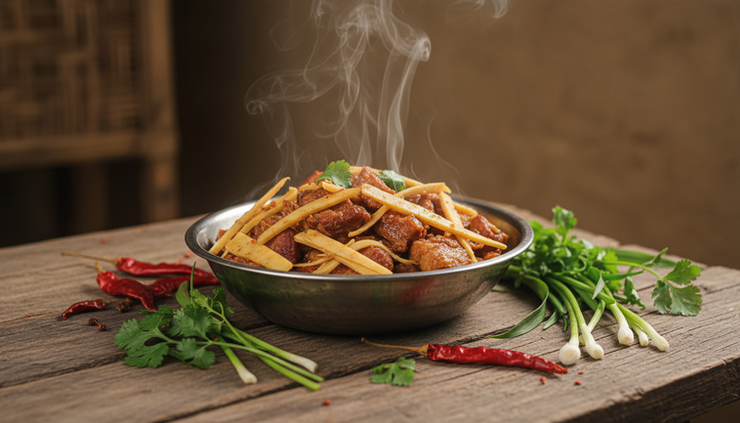
Image shows: Close-up of smoked pork pieces cooked with bamboo shoot in a metal bowl.
Must-try traditional dishes in Aizawl
Aizawl has many everyday dishes that rarely feel restaurant-made in the usual sense. They feel like food from someone’s home kitchen. That is part of their charm. If you are tasting Mizo food for the first time, start with these classics.
Bai
Bai is one of the most loved dishes in Mizoram. It is a simple, nourishing preparation made with vegetables, greens, bamboo shoot, and sometimes pork or fermented soybean. The ingredients vary from home to home, so no two bowls taste exactly the same.
The flavour is clean, slightly earthy, and sometimes faintly bitter, depending on the greens used. Bai is usually eaten with rice and a chilli chutney. It is a good place to begin because it captures the everyday style of Mizo cooking.
Vawksa rep
Vawksa rep means smoked pork, and it is one of the best-known foods associated with Mizoram. Pork is smoked until it develops a deep aroma, then cooked with vegetables, bamboo shoot, or leafy greens.
The smoke is the star. It gives the meat a rich, rustic taste without needing a heavy sauce. If you enjoy slow-cooked meat, this dish is likely to stay with you long after the meal.
Sawhchiar
Sawhchiar is a comforting rice and meat dish that is often compared to a light khichdi or meat porridge, though its taste and character are distinctly Mizo. It is usually made with rice and meat, often chicken or pork, cooked together until soft and satisfying.
It is warm, filling, and especially pleasant on cool Aizawl evenings. The texture is soft rather than dry, making it easy to enjoy even for someone new to local food.
Chhum han
Chhum han refers to steamed or boiled mixed vegetables, usually served as part of a meal. It may include cabbage, beans, leafy greens, squash, or other seasonal vegetables.
This dish shows how much Mizo cooking values freshness. It is not hidden under thick spice. The vegetables taste like themselves, and that is exactly the point.
Hmarcha rawt
Hmarcha rawt is a chilli chutney that can lift even the simplest plate of rice and vegetables. It is usually made by crushing chillies with onion, ginger, salt, and sometimes other local ingredients.
It is hot, sharp, and fresh. A small amount is enough for many people, but chilli lovers may keep going back for more. If you ask for it in Aizawl, be ready for real heat.
Dish | What it is | Best enjoyed with |
Bai | Vegetable and greens-based dish, sometimes with pork or fermented soybean | Steamed rice and chilli chutney |
Vawksa rep | Smoked pork cooked with greens or bamboo shoot | Rice and boiled vegetables |
Sawhchiar | Soft rice dish cooked with meat | A light chutney or broth |
Chhum han | Boiled or steamed seasonal vegetables | Pork, fish, or bai |
Hmarcha rawt | Fresh crushed chilli chutney | Almost any Mizo meal |
Dishes in this image: Eye-level view of bai served with rice and crushed chilli chutney
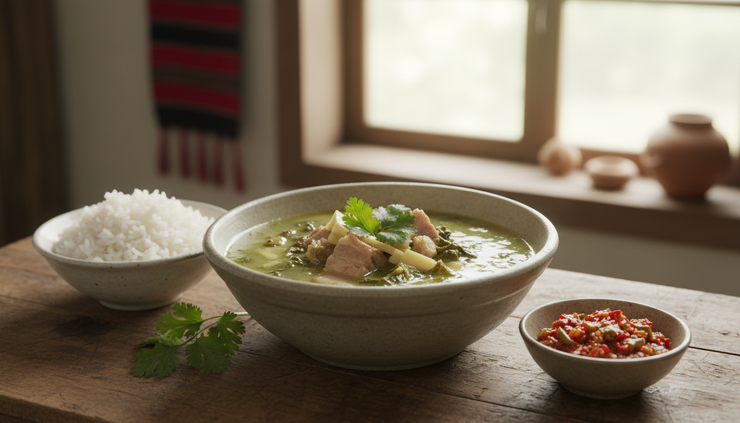
Image shows: Eye-level view of bai served with rice and crushed chilli chutney.
Street snacks and everyday flavours worth finding
Traditional meals are only one part of eating in Aizawl. The city also has snacks, tea-time foods, and casual dishes that show its links with neighbouring regions and local tastes.
Sanpiau
Sanpiau is a popular street-style dish in Mizoram, especially loved as a light but satisfying snack. It is usually made with rice porridge or rice-based elements, served with meat, herbs, spring onion, and seasonings. The exact style can vary, but it often feels warm, savoury, and easy to eat.
It is the kind of food that works well in the evening, when you want something filling but not too heavy.
Bekang
Bekang is fermented soybean, known for its strong smell and bold flavour. It may be used in chutneys, mixed with vegetables, or added to dishes for depth.
First-time eaters may need a moment to adjust. The flavour is intense, salty, and earthy. Once you get used to it, bekang can make plain rice taste far more interesting.
Bamboo shoot preparations
Bamboo shoot is one of the defining ingredients of the region. It can be cooked with pork, added to bai, mixed with fish, or used in vegetable dishes.
Its flavour is slightly tangy and earthy. In some dishes it is subtle, while in others it becomes the main taste. For many visitors, bamboo shoot is the ingredient that makes Mizo food feel different from familiar mainland Indian meals.
Koat pitha
Koat pitha is a local sweet snack often made with rice flour and banana, then fried. It is soft inside, lightly crisp outside, and mildly sweet.
It pairs well with tea and makes a good break from chilli-heavy foods. The sweetness is usually gentle, so it does not feel overly rich.
Mizo-style chutneys
Chutneys in Aizawl are not just side dishes. They are flavour builders. Some are chilli-heavy. Some use fermented soybean. Some include tomato, onion, garlic, or local herbs.
A meal of rice, boiled vegetables, and chutney may look modest, but it can be surprisingly satisfying. The chutney gives heat, salt, sourness, and aroma in one spoon.
How to eat like a local in Aizawl
Eating well in Aizawl is not only about ordering the right dish. It is also about understanding how the meal comes together.
A standard plate often includes rice, one or two vegetable dishes, a meat or fish preparation, and a chutney. Rather than treating each dish as separate, try combining small portions. A bite of rice with bai tastes soft and mild. Add hmarcha rawt and the same bite becomes fiery and bright. Add smoked pork and it turns deeper.
Start with small servings of chutney, especially if you are not used to strong chillies. Mizo chillies can be very hot, and the chutneys are often fresh rather than cooked down. That means the heat can feel sharp.
If you are trying smoked pork, eat it with rice and greens. The rice balances the salt and smoke, while the greens keep the meal from feeling heavy. If fermented soybean appears on the plate, taste a little first. Its aroma can be bold, but its flavour adds great depth when mixed with rice.
Vegetarian travellers can still enjoy Aizawl’s food, though choices may be easier in home-style eateries than in meat-focused places. Look for bai without meat, chhum han, bamboo shoot dishes, rice preparations, chutneys, and seasonal greens. Since ingredients can vary, it is best to ask clearly whether pork, fish, or fermented items have been added.
Aizawl’s food culture also rewards curiosity. Menus may not always explain every dish in detail, and home-style places may serve what is fresh that day. Asking politely about ingredients can lead to a better meal.
Here are a few practical tips:
Ask for rice with local vegetable dishes if you want a gentle start.
Try smoked pork only if you enjoy strong, savoury flavours.
Keep water nearby when tasting hmarcha rawt.
Choose bamboo shoot dishes for a clear taste of the region.
Try koat pitha with tea when you want something sweet and simple.
Dishes in this image: Overhead view of koat pitha and tea on a small wooden table
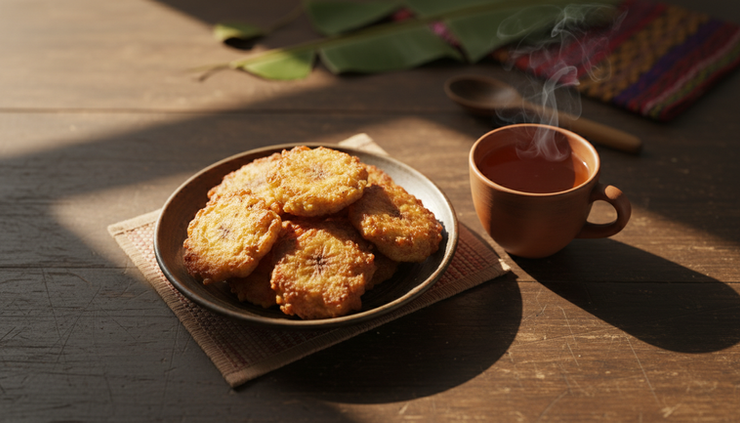
Image shows: Overhead view of koat pitha and tea on a small wooden table.
Where Aizawl’s food tastes best
Some of the best food in Aizawl is found in simple local eateries, market-side stalls, family kitchens, and small restaurants serving Mizo meals. The cooking style suits places that prepare fresh food in small batches. A fancy setting is not required.
Local markets are also useful for understanding the ingredients behind the cuisine. You may see leafy greens, chillies, smoked meats, bamboo shoot, and fermented products that appear later on the plate. Even a short walk through a food market can explain the flavours better than a menu.
For a first meal, choose a basic Mizo thali-style spread if available. It gives you rice, vegetables, chutney, and a main dish in one sitting. After that, look for specific dishes such as vawksa rep, bai, sawhchiar, or sanpiau.
The best approach is to eat slowly and compare flavours. Aizawl’s food is not designed around one dramatic dish. It is built through contrast: plain rice with hot chutney, smoky pork with clean greens, soft sawhchiar with sharp sides, and fermented flavours with mild vegetables.
A final taste of Aizawl
The famous foods of Aizawl are memorable because they stay close to the land. They use humble ingredients, but treat them with care. Smoke, steam, bamboo shoot, chillies, greens, rice, and fermented flavours come together in a way that feels honest and deeply local.
If you are visiting Aizawl, do not stop at one dish. Begin with bai and rice, try vawksa rep if you eat pork, warm up with sawhchiar, taste bamboo shoot in more than one form, and finish with koat pitha and tea. Keep hmarcha rawt on the side, but respect its heat.
Aizawl’s food is not about excess. It is about balance, freshness, and flavour that grows on you with every meal.
Travel, landmark, location, and shop information is based on publicly available online data at the time of writing. Details such as names, addresses, opening hours, availability, prices, and operating status may change. Please verify current details directly with the venue or official source before visiting.
Explore more city food guides
Continue exploring Indian food, landmarks and local markets: Pune · Surat · Srinagar · Leh · Port Blair


Comments