
Vijayawada Famous Foods Guide with History Culture and Local Flavours

Vijayawada does not let hunger stay polite for long. Step out near a railway station, a temple lane, a college road, or a late-evening tiffin stall, and the air starts telling you what to eat before any menu does. There is hot oil, curry leaves, roasted chilli powder, ghee, tamarind, jaggery, and the sharp comfort of Andhra pickles.
The Famous Foods of Vijayawada are not just restaurant dishes. Many grew from home kitchens, temple offerings, farming habits, trade routes, and the city’s place on the banks of the Krishna River. Vijayawada sits at a natural crossroads, so its food carries the flavours of coastal Andhra, Rayalaseema heat, Telangana influence, and old town snacking culture.
This guide walks through the dishes that define the city, with their taste, background, and the little local details that make them worth seeking out.
Dishes in this image: Wide-angle view of Vijayawada street food stalls serving hot snacks at dusk

Image shows: Wide-angle view of Vijayawada street food stalls serving hot snacks at dusk.
Vijayawada’s snack culture begins with heat, crunch, and chutney
Ask a Vijayawada local where to begin, and the answer often comes with a time of day. Morning is for idli or dosa. Late afternoon is for punugulu. Evening belongs to bajji stalls, tea counters, and tawa smoke. The city eats in shifts, and each shift has its own mood.
Punugulu
Punugulu are small, deep-fried dumplings made from fermented dosa or idli batter. The batter is usually a mix of rice and urad dal, sometimes with chopped onions, green chillies, cumin, and curry leaves. A good punugulu has a crisp, lightly craggy outside and a soft, slightly tangy centre.
Its history is tied to the practical rhythm of South Indian homes. Leftover fermented batter was too good to waste, so it became a snack. Over time, what began as kitchen thrift became a street food favourite. In Vijayawada, punugulu are usually served with coconut chutney, ginger chutney, or a spicy red chutney that wakes up the whole plate.
Culturally, punugulu feel democratic. Students eat them after class, families pick them up on the way home, and travellers grab a plate near busy junctions. They are quick, affordable, and deeply satisfying. The best ones are eaten standing up, while the vendor drops the next batch into oil with the confidence of long practice.
Mirchi bajji
Mirchi bajji is Andhra’s love letter to chilli. Large green chillies are slit, sometimes filled with tamarind, ajwain, or a spiced mixture, then dipped in gram flour batter and fried until golden. In Vijayawada, many vendors cut the fried bajji open and top it with chopped onions, lemon juice, coriander, and a dusting of chilli powder.
The dish reflects the region’s long-standing love for bold flavours. Chillies came to India centuries ago through trade, and Andhra cuisine made them central to its identity. Vijayawada’s mirchi bajji carries that legacy in a form made for roadside eating.
This is not only about spice. A good mirchi bajji balances heat with sourness, crunch, and freshness. The gram flour coating softens the chilli’s bite, while lemon and onion add lift. Locals often pair it with tea, especially during cloudy evenings or after a short rain.
Cut mirchi
Cut mirchi is the clever second life of mirchi bajji. The fried chilli fritters are chopped into pieces and fried again until extra crisp. They are then tossed or topped with onions, coriander, lemon, and masala.
Its appeal lies in texture. If mirchi bajji is soft heat wrapped in batter, cut mirchi is sharper, crunchier, and more intense. It is a common sharing snack, especially when a group wants something spicy but not a full meal.
Cut mirchi also says something about Vijayawada’s food instinct. The city likes food that is immediate and lively. Nothing remains plain if a squeeze of lemon, a spoon of chutney, or a second fry can make it better.
Tiffin favourites show the softer side of the city
Vijayawada’s breakfasts are generous without being heavy. Tiffin centres open early, and the best ones often have a steady line before the day has properly begun. The choices may look familiar across South India, but the local style gives them a clear Andhra accent.
Dishes in this image: Close-up of soft idlis with karam podi, ghee, and chutneys on a steel plate

Image shows: Close-up of soft idlis with karam podi, ghee, and chutneys on a steel plate.
Idli with karam podi and ghee
Idli may be gentle, but Vijayawada gives it attitude. Soft steamed rice cakes arrive with chutney and sambar, but the real pleasure often comes from karam podi, a dry spiced powder made with lentils, chillies, garlic, sesame, or other household variations. Add hot ghee, press the idli into the powder, and the plainest breakfast turns fragrant and rich.
The history of idli is old and widely shared across South India, with many regional forms. In Andhra homes, podi became an essential companion because it stored well and added instant flavour to rice, idli, dosa, and upma. Each family has a version, and people can be quietly loyal to the podi they grew up with.
In Vijayawada, idli with ghee and karam podi is more than breakfast. It is comfort food for early train journeys, temple visits, office mornings, and family breakfasts. A local tip is to let the ghee melt into the podi for a few seconds before the first bite. That small pause changes the dish.
Dosa and pesarattu
Dosa in Vijayawada can be crisp, thin, and golden, often served with chutneys that lean spicier than in many other regions. Masala dosa is common, but plain dosa with chutney and podi has its own loyal following.
Pesarattu, made from green gram batter, has a special place in Andhra food. It is usually thinner than an omelette, earthy in flavour, and often paired with upma in a combination called MLA pesarattu in many Andhra eateries. The name is popularly linked to old canteen and political culture, though stories vary from place to place.
Pesarattu’s cultural value comes from its home-style strength. It feels nourishing, direct, and practical. Green gram has long been used in regional cooking, and the dish fits the agricultural character of Andhra kitchens. In Vijayawada, it sits comfortably between healthful breakfast and indulgent tiffin, especially when served with ginger chutney.
Ghee karam dosa
Ghee karam dosa is for anyone who thinks dosa should arrive with drama. A dosa is spread with red chilli paste or karam, roasted on the tawa, enriched with ghee, and folded while still crisp at the edges.
It is not an ancient palace dish. It belongs more to the energetic tiffin-centre culture of Andhra towns and cities. Yet it captures a modern Vijayawada truth: people here enjoy familiar food with high flavour. The ghee carries the chilli, the dosa adds crunch, and the chutney cools each bite just enough.
Meals in Vijayawada carry the memory of Andhra homes
Lunch in Vijayawada often centres on rice. The plate may include dal, vegetable curry, rasam, sambar, curd, pickle, fry, papad, and a spoon of ghee. The meal is built around balance, but Andhra balance does not mean mildness. Sour, spicy, salty, and rich flavours all get a role.
Andhra meals
A classic Andhra meal is one of the best ways to understand the city. Steamed rice forms the base. Pappu, or dal, may come with tomato, spinach, cucumber, or leafy greens. Pulusu brings tamarind sourness. Fryums or appadams add crunch. Pickles such as avakaya, made with raw mango and chilli, add fire.
The history of this meal format is rooted in agrarian life. Rice cultivation shaped coastal Andhra food, while seasonal vegetables, pulses, and pickles helped households eat well through the year. Pickling, especially, became an art because it preserved produce and concentrated flavour.
The cultural significance is clear during family meals. Food is often mixed by hand, course by course, with rice. A spoon of ghee softens dal. Pickle sharpens curd rice. Rasam resets the palate. The meal teaches rhythm.
For travellers searching for the Famous Foods of Vijayawada, a full Andhra meal offers the broadest introduction. It may look simple at first, but each serving tells a piece of the region’s food story.
Gongura pachadi
Gongura, or sorrel leaves, has a sour, green, unmistakable flavour. In pachadi form, the leaves are cooked down and ground with chillies, garlic, and spices. The result is sharp, earthy, and addictive with hot rice and ghee.
Gongura is strongly associated with Andhra cuisine. Its sourness suits the region’s taste for bold, appetite-building food. Many homes serve it as a pachadi, pickle, or part of a mutton curry. In Vijayawada, gongura pachadi often appears in meals and traditional restaurants.
Its cultural role is emotional as much as culinary. For many Telugu families, gongura tastes like home. People living away from Andhra often carry jars of gongura pickle because it survives travel and brings back the flavour of family kitchens.
Pulihora
Pulihora is tamarind rice, usually cooked with turmeric, curry leaves, mustard seeds, green chillies, peanuts, and a well-reduced tamarind mixture. It is sour, nutty, lightly spicy, and highly portable.
Its history is closely tied to temple food and festive cooking. Tamarind rice keeps well, travels well, and can be made in large quantities. That made it suitable for prasadam, journeys, celebrations, and community meals.
In Vijayawada, pulihora has a special resonance because of the city’s temple culture, especially around Kanaka Durga Temple on Indrakeeladri Hill. During festive periods, tamarind rice carries a devotional mood. Even outside temples, it remains a dish people associate with auspicious days, train trips, and packed meals from home.
Dishes in this image: Eye-level view of an Andhra meals thali with rice, pappu, gongura pachadi, pulihora, and pickles
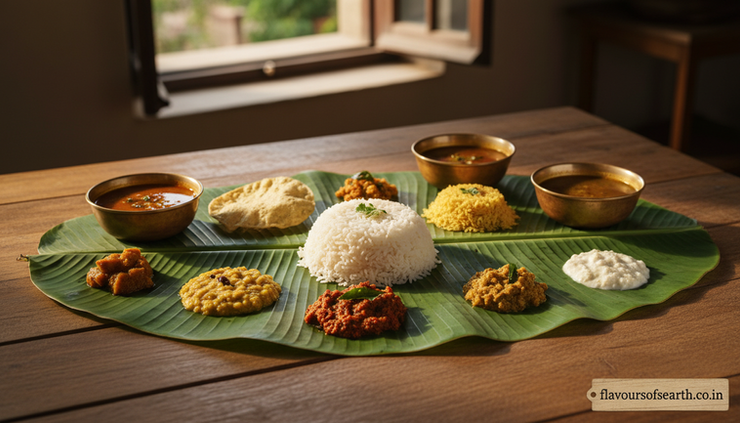
Image shows: Eye-level view of an Andhra meals thali with rice, pappu, gongura pachadi, pulihora, and pickles.
Meat, seafood, and river-city flavours add depth
Though vegetarian tiffins and meals are central to Vijayawada, the city also has a strong appetite for spicy non-vegetarian food. Chicken fry, mutton curry, fish pulusu, and prawn dishes reflect the wider coastal Andhra pantry.
Andhra chicken fry
Andhra chicken fry is usually dry or semi-dry, with chicken cooked in chilli, ginger-garlic paste, curry leaves, garam masala, and sometimes a final toss of pepper or coriander. It is intense, fragrant, and best with rice, biryani, or chapati.
The dish reflects a restaurant and home-cooking style that grew popular across Andhra towns. Unlike cream-heavy gravies, Andhra chicken fry depends on spice, browning, and the flavour of curry leaves. It is direct and punchy.
In Vijayawada, it works as both a side dish and a main event. Many local diners order it alongside meals, turning a rice plate into something festive. It is also common at family gatherings, where the best pieces disappear early.
Kodi kura
Kodi kura, or chicken curry, is a Telugu home-style favourite. The gravy often includes onions, tomatoes, spices, chilli powder, and sometimes coconut or poppy seed paste depending on the household or restaurant style. The result can be fiery, thick, and deeply savoury.
Its cultural significance comes from celebration. Chicken curry appears at Sunday lunches, special visits, and festive meals. In many homes, the aroma of kodi kura signals that the day is not ordinary.
Vijayawada versions tend to be bold rather than delicate. The gravy is usually built to mix with rice, so it carries enough spice and body to coat each grain.
Fish pulusu and royyala iguru
The Krishna River and the wider coastal belt influence Vijayawada’s taste for fish and prawns. Fish pulusu is a tamarind-based fish curry with chilli, onions, fenugreek, curry leaves, and regional spice blends. It tastes better after resting, when the fish absorbs the sour gravy.
Royyala iguru is a prawn dish, often thicker and more concentrated than a curry. Prawns cook with onions, chilli, ginger-garlic, and spices until the masala clings to them.
These dishes reflect the geography of Andhra Pradesh. River fish, coastal seafood, tamarind, and chilli meet in one pot. For travellers, fish pulusu offers one of the clearest examples of how the region uses sourness not as a background note, but as the heart of a dish.
Sweets and festive bites complete the Vijayawada table
No food trail in Vijayawada should end with only spice. The city has a fondness for sweets that come from nearby towns, festive kitchens, and old Andhra traditions. Many are bought as gifts, packed for journeys, or served during festivals.
Pootharekulu
Pootharekulu are delicate paper-like sweet rolls from the Godavari region, widely loved across Andhra Pradesh and often available in Vijayawada sweet shops. Thin rice starch sheets are layered with ghee, sugar or jaggery, and sometimes dry fruits.
The name roughly refers to coated sheets, and the making of pootharekulu requires skill. The thin edible sheets are prepared on hot inverted pots, a craft passed through generations in specialist families.
Its cultural significance lies in its delicacy. Unlike heavy sweets, pootharekulu feel almost airy until the ghee and sugar melt on the tongue. They are popular as gifts because they show care, craft, and regional pride.
Bobbatlu
Bobbatlu, also called polelu in some Telugu homes, are sweet flatbreads stuffed with chana dal and jaggery, flavoured with cardamom, and roasted with ghee. They are soft, warm, and festive.
The dish is common during festivals such as Ugadi and other family celebrations. Its history is shared with related sweets across India, such as puran poli, but the Telugu version has its own texture and serving style.
In Vijayawada, bobbatlu often appear during festival seasons and at traditional sweet shops. Eaten warm with ghee, they slow the meal down. After Andhra spice, their sweetness feels especially comforting.
Bandar laddu
Bandar laddu comes from Machilipatnam, also known as Bandar, not far from Vijayawada. Even so, it has become part of the food-gifting culture in and around the city. Made with gram flour, ghee, and sugar, it has a grainy, rich texture and a flavour that feels old-fashioned in the best way.
Its history is linked to Machilipatnam’s long trading past and sweet-making traditions. Families travelling through Vijayawada often pick up regional sweets like Bandar laddu as edible souvenirs.
For visitors, it is a reminder that Vijayawada’s food map extends beyond city limits. The city gathers flavours from neighbouring towns and makes them part of its own table.
How to eat like a local in Vijayawada
The best Vijayawada food experiences are often simple. A steel plate at a tiffin centre. A paper plate of hot punugulu. A banana leaf meal. A sweet box tied up for the train.
A few local-style tips help:
Start early for tiffin The freshest idlis, dosas, and pesarattu usually appear in the morning rush.
Follow the chutney In Vijayawada, chutneys are not side characters. Ginger chutney, coconut chutney, peanut chutney, and red chilli chutney can define the meal.
Respect the spice, but do not fear it Andhra food can be hot, but it also has balance from tamarind, ghee, dal, curd, and jaggery.
Try one full meal before judging the cuisine Snacks show the city’s energy. A proper Andhra meal shows its depth.
Carry sweets home Pootharekulu, bobbatlu, and laddus make the food memory last longer than the trip.
The Famous Foods of Vijayawada tell the story of a city that eats with confidence. Its flavours are not shy. They are sour, spicy, crisp, soft, sweet, and generous. That is what makes the city special for food lovers and travellers.
Come hungry, keep an open mind, and leave room for one more plate of punugulu. In Vijayawada, that last plate is often the one you remember.
Travel, landmark, location, and shop information is based on publicly available online data at the time of writing. Details such as names, addresses, opening hours, availability, prices, and operating status may change. Please verify current details directly with the venue or official source before visiting.
Explore more city food guides
Continue exploring Indian food, landmarks and local markets: Pune · Surat · Srinagar · Leh · Port Blair


Comments