
Famous Foods of Coimbatore Flavours of Earth Taste History and Heritage

Coimbatore does not announce its food with drama. It serves it hot, honest, and fragrant, often on a banana leaf, with the quiet confidence of a place that has fed traders, mill workers, farmers, students, and travellers for generations.
Set at the edge of the Western Ghats, Coimbatore, or Kovai, carries the food identity of the Kongu region. The cooking is earthy, practical, and deeply tied to local produce. Coconut, shallots, curry leaves, millets, rice, lentils, country chicken, mushrooms, and the famous sweetness of Siruvani water all find their way into everyday meals.
The Famous foods of Coimbatore are not only dishes to taste. They are stories of farms, markets, temple streets, textile mills, bus stands, and family kitchens. Some are old Kongu favourites. Some grew in messes and roadside stalls. Together, they show why Kovai food feels both comforting and memorable.
Dishes in this image: Wide-angle view of a Coimbatore banana leaf meal with rice, sambar, poriyal, chutneys and fried snacks
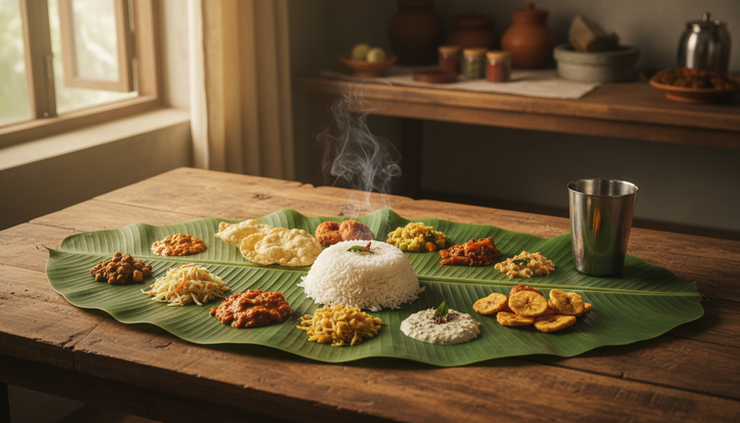
Image shows: Wide-angle view of a Coimbatore banana leaf meal with rice, sambar, poriyal, chutneys and fried snacks.
Flavours of Earth
The phrase Flavours of Earth suits Coimbatore because the city’s food stays close to the soil. Much of its taste comes from what grows around it. The Kongu belt has long depended on hardy crops, coconut groves, spice gardens, cattle, and seasonal vegetables. Meals were shaped by work, weather, and thrift.
Kongu cooking often uses fewer heavy spice blends than some other regional cuisines. Instead, flavour comes from roasting, grinding, slow simmering, and tempering. Coconut gives body. Curry leaves add aroma. Shallots bring sweetness. Black pepper, cumin, fennel, coriander, dried red chillies, and turmeric do the rest.
A simple plate in Coimbatore can say a lot. A soft idli dipped in sambar, a mound of arisi paruppu sadam with ghee, or a spicy roadside kaalan eaten from a paper plate all carry the same character. The food is filling, direct, and built around contrast: soft and crisp, mild and fiery, earthy and fresh.
On one early morning walk near a busy tiffin shop, I remember seeing people stand shoulder to shoulder with stainless steel plates in hand. Office-goers, auto drivers, students, and families were all eating the same breakfast. The idlis disappeared fast, the chutney buckets were refilled often, and nobody seemed in a hurry to over-explain why the food was good. One bite did the work.
Breakfast tastes that begin the Kovai day
Breakfast is one of the best ways to understand Coimbatore. It is quick enough for a working city, yet generous enough to feel like a full meal.
Idli, dosa and the beloved Kovai sambar
Idli and dosa are found across Tamil Nadu, but Coimbatore gives them its own gentle stamp. The idlis tend to be soft and airy, made from fermented rice and urad dal batter. Dosas range from thin and crisp to thick and spongy, depending on the shop and family tradition.
What makes a Kovai breakfast stand out is often the sambar. Many local versions are mildly sweet, richly lentil-based, and rounded with vegetables, tamarind, and spice. Coconut chutney, tomato chutney, and sometimes a green chutney complete the plate.
The cooking method matters. Good batter needs patient fermentation, especially in the city’s changing weather. The sambar tastes better when dal is cooked until creamy and then simmered with vegetables so that the flavours settle together.
Culturally, this breakfast belongs to everyone. It is served in homes, small hotels, railway-side eateries, and long-running restaurants. It is the city’s morning handshake.
Ghee roast dosa
A ghee roast dosa in Coimbatore is hard to ignore. It arrives wide, golden, crisp at the edges, and fragrant with ghee. The best ones balance crunch with a slight softness towards the centre.
Its roots lie in the wider South Indian dosa tradition, but the dish became a favourite in urban tiffin culture. In Coimbatore, where people have long gathered in hotels before work or after shopping, ghee roast became a small treat that still feels familiar.
The ingredients are simple: fermented batter, ghee, and a hot iron tawa. The skill sits in the hand that spreads the batter thin, controls the heat, and knows exactly when to fold it.
I once watched a cook make ghee roasts in quick succession on a large tawa. He did not measure a thing. A ladle of batter, a circular sweep, a spoon of ghee, a patient wait. The result was so crisp that it cracked gently when served, like the sound of a good morning.
Pongal with vadai
Ven pongal is comfort in its softest form. Rice and moong dal are cooked together until creamy, then seasoned with ghee, black pepper, cumin, ginger, curry leaves, and cashews. In Coimbatore, it is often paired with sambar and coconut chutney, with a crisp medu vadai on the side.
The dish has temple associations across Tamil Nadu and is also part of festival cooking, especially during Pongal season. In daily life, it is a breakfast that suits all ages. The pepper and cumin give warmth. The ghee carries aroma. The vadai adds crunch.
Dishes in this image: Close-up of a crisp ghee roast dosa with coconut chutney and sambar on a steel plate
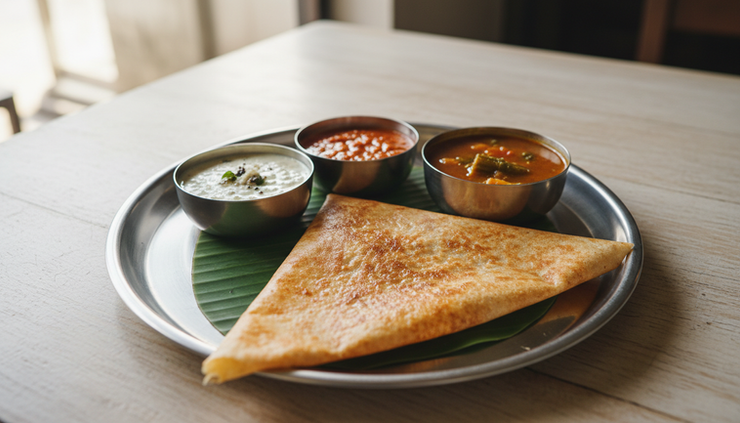
Image shows: Close-up of a crisp ghee roast dosa with coconut chutney and sambar on a steel plate.
Kongu meals that carry history
The heart of Coimbatore food lies in Kongu-style home cooking. These dishes grew from rural kitchens where food had to be nourishing, economical, and suited to hard work.
Arisi paruppu sadam
Arisi paruppu sadam is one of the most loved Kongu dishes. The name means rice and dal rice, but that simple translation does not explain its pull. Raw rice and toor dal are cooked together with shallots, tomatoes, garlic, cumin, turmeric, curry leaves, and sometimes a touch of chilli powder. A spoon of ghee on top makes it complete.
This dish reflects the agricultural life of the region. It uses pantry staples and turns them into a filling one-pot meal. It needs no elaborate side dish, though appalam, pickle, curd, or potato fry make it even better.
The cooking method is direct. Temper spices, sauté aromatics, add rice and dal, then cook until soft and well combined. Many homes make it in a pressure cooker, which suits modern life while keeping the old taste alive.
The first time I ate arisi paruppu sadam from a home kitchen, it came with a warning: “Eat it hot.” That advice was correct. With ghee melting into the rice and the smell of shallots rising from the plate, it felt less like a recipe and more like a family habit passed down without fuss.
Kongu chicken curry
Kongu chicken curry is known for its deep, rustic flavour. It often uses country chicken, though broiler chicken is common now. The masala may include shallots, garlic, ginger, dry red chillies, coriander seeds, pepper, cumin, fennel, curry leaves, and coconut.
Unlike creamy restaurant gravies, this curry usually has a stronger roasted-spice character. The masala is sautéed well, the chicken cooks slowly, and the gravy thickens as the oil separates. Some versions are semi-dry, made to be eaten with rice, dosa, chapati, or parotta.
The dish reflects the region’s preference for bold but balanced meat cooking. It is often served during family gatherings, weekends, and special meals. Every household has small differences in spice level, coconut use, and texture.
Pallipalayam chicken
Pallipalayam chicken is closely associated with the Kongu belt and is widely enjoyed in Coimbatore. It takes its name from Pallipalayam near Erode, but the dish has travelled through messes and homes across western Tamil Nadu.
The dish is usually made with chicken, small onions, dry red chillies, curry leaves, coconut pieces, and minimal spices. That restraint is the charm. The chicken is fried or slow-cooked until the masala clings to each piece. Coconut bits add chew and sweetness, while dry chillies bring heat.
Its cultural importance comes from mess food and local gatherings. It is not delicate dining. It is food meant to be shared, eaten hot, and remembered.
Dishes in this image: Eye-level view of Kongu chicken curry served with rice on a banana leaf
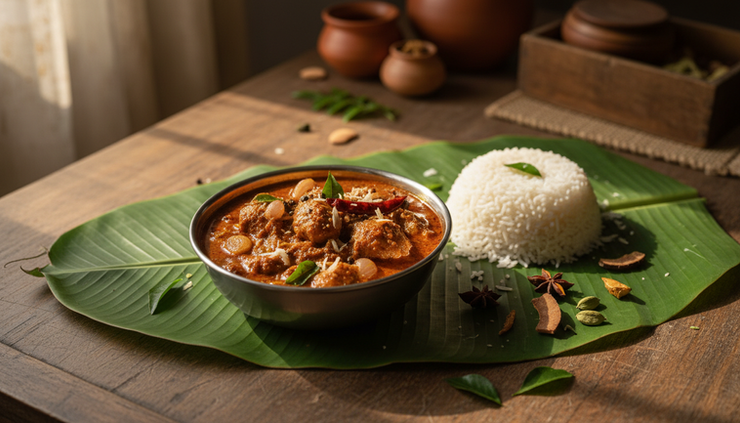
Image shows: Eye-level view of Kongu chicken curry served with rice on a banana leaf.
Street foods with a Coimbatore accent
Coimbatore’s street food has its own energy. Evening stalls near markets, colleges, bus stops, and shopping streets serve snacks that are spicy, hot, and easy to eat while standing.
Kaalan masala
Kaalan is one of the city’s most recognisable street snacks. Despite the Tamil word meaning mushroom, many stalls make it with chopped mushrooms mixed with cabbage, flour, and spices, then fried and tossed in a thick masala. Some versions lean more heavily on cabbage, but the flavour remains bold and addictive.
The dish likely grew from the street food habit of turning affordable ingredients into something filling and dramatic. The cooking method gives it character. The mushroom and cabbage mixture is fried first, then tossed on a hot tawa with chilli powder, sauces, onions, and coriander. The final plate is saucy, spicy, and slightly crisp in parts.
Eating kaalan is part of the experience. It usually comes on a small plate or banana leaf, with a spoon that gets coated in masala within seconds. I remember tasting it on a cool evening when the steam from the tawa mixed with the smell of chilli and curry leaves. It was messy, hot, and exactly right.
Mutta parotta
Mutta parotta, or egg parotta, is another favourite. Parotta is shredded on a hot iron surface, then mixed with egg, onion, spices, and sometimes salna. The result is soft, rich, and deeply satisfying.
Parotta itself came into Tamil food culture through layered flatbread traditions and became a staple in roadside hotels. Coimbatore made it its own through late-night eateries, messes, and quick-service stalls that feed workers and travellers.
The sound of metal spatulas chopping parotta on a hot tawa is part of the dish’s identity. The cooking is fast, but the flavour depends on the parotta’s layers, the heat of the tawa, and the seasoning.
Bajji and bonda
Rain and bajji have a strong friendship in Coimbatore. Chilli bajji, raw banana bajji, onion bonda, and potato bonda are common evening snacks. They are made by dipping vegetables or seasoned fillings in gram flour batter and frying them until crisp.
These snacks belong to tea shops and home kitchens alike. Their ingredients are humble, but the timing matters. They must be eaten hot, usually with coconut chutney, tomato chutney, or tea.
Sweets, sips and gentle endings
A Coimbatore food trail is not complete without sweet dishes and drinks. The city may be known for spice, but it also has a softer side.
Elaneer payasam
Elaneer payasam, made with tender coconut water and coconut flesh, is a cooling dessert often served at weddings and special meals. It is not exclusive to Coimbatore, but the city’s love for coconut and its warm climate make it a natural fit.
The dessert usually combines tender coconut, milk or coconut milk, sugar, and cardamom. Some versions use condensed milk for richness. The key is to keep the flavour light. It should taste fresh, not heavy.
Its cultural role is clear at festive meals. After spicy curries and rice dishes, elaneer payasam calms the palate.
Filter coffee
Coimbatore’s filter coffee culture is strong, especially in homes and old-style hotels. Fresh decoction, boiled milk, and sugar are mixed and poured between a tumbler and dabarah to create foam.
Coffee reached South Indian homes through a long history of cultivation, trade, and changing social habits. In Coimbatore, it became part of breakfast, evening breaks, and guest hospitality. The taste depends on the coffee blend, the strength of decoction, and the milk.
There is something grounding about being handed a steel tumbler of hot filter coffee after a meal. It slows the conversation. It also proves that in Kovai, even a drink can feel like a tradition.
Siruvani water and the taste of place
Siruvani water, sourced from the Western Ghats, is often spoken of with pride in Coimbatore. Locals commonly describe it as unusually sweet. While water alone is not a dish, it shapes how food and drinks taste. Tea, coffee, rasam, and cooked rice all carry the influence of local water.
This is where the idea of Flavours of Earth becomes literal. Soil, rain, rivers, hills, and kitchens meet in the glass as much as on the plate.
Dishes in this image: Top-down view of Coimbatore street kaalan masala served hot on a banana leaf plate

Image shows: Top-down view of Coimbatore street kaalan masala served hot on a banana leaf plate.
How to enjoy Coimbatore food like a local
The best way to enjoy Coimbatore food is to mix planned meals with small discoveries. Start with breakfast at a trusted tiffin place. Try idli, ghee roast, pongal, and filter coffee. For lunch, look for a Kongu meal with arisi paruppu sadam or chicken curry. In the evening, follow the smell of kaalan, bajji, or parotta from a busy stall.
A few simple tips help:
Eat hot food while it is hot, especially dosa, pongal, bajji, and kaalan.
Ask for local favourites rather than only menu highlights.
Try meals on banana leaves when available.
Leave room for filter coffee or elaneer payasam.
Notice the chutneys, podis, and gravies. They often reveal the kitchen’s real skill.
Coimbatore’s food is not built on showiness. It is built on memory, weather, work, and hospitality. The dishes may look simple, but they carry the confidence of a region that knows its ingredients well.
Dishes in this image: Close-up of tender coconut payasam in a small brass bowl with filter coffee beside it
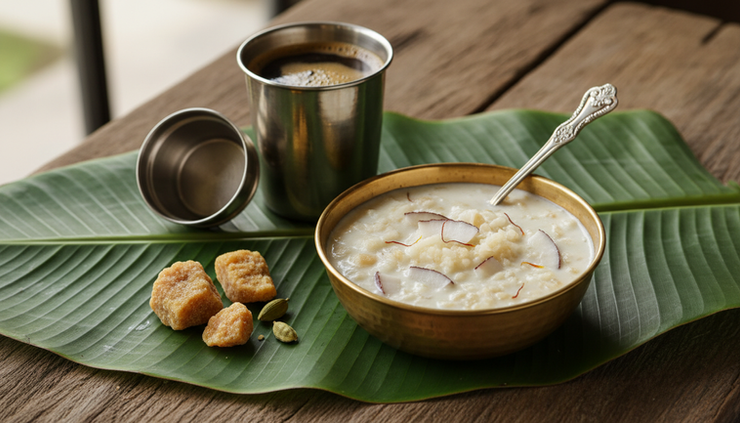
Image shows: Close-up of tender coconut payasam in a small brass bowl with filter coffee beside it.
A plate of arisi paruppu sadam, a crisp ghee roast, a fiery serving of kaalan, or a tumbler of filter coffee can explain Coimbatore better than a long speech. These foods come from the earth around the city and the people who cook with care. Taste them slowly, and Kovai’s history begins to feel close, warm, and very much alive.
Travel, landmark, location, and shop information is based on publicly available online data at the time of writing. Details such as names, addresses, opening hours, availability, prices, and operating status may change. Please verify current details directly with the venue or official source before visiting.
Explore more city food guides
Continue exploring Indian food, landmarks and local markets: Pune · Surat · Srinagar · Leh · Port Blair


Comments